Boiler Lifespan Estimator
How Long Will Your Boiler Last?
Based on the article "Can a Boiler Last 50 Years? Realistic Expectations and How to Extend Its Life," input your maintenance habits to estimate your boiler's potential lifespan.
It’s a common question: Can a boiler last 50 years? You’ve heard stories - an old gas boiler in a 1970s house still humming along, or a neighbor who swears their boiler is older than their kids. But is that realistic? Or just wishful thinking?
The short answer: no, a boiler almost never lasts 50 years under normal conditions. But that doesn’t mean you can’t get decades of reliable service out of it. What really matters isn’t age - it’s how you treat it.
What’s the Real Lifespan of a Modern Boiler?
Most manufacturers design modern boilers to last between 10 and 15 years. That’s not a guess - it’s based on engineering tests, material fatigue, and real-world failure data. Companies like Worcester Bosch, Vaillant, and Baxi all recommend replacement after 15 years, even if the unit still turns on. Why? Because efficiency drops sharply after that point.
Older boilers, especially ones built before the 1990s, were made with thicker steel, simpler parts, and less precision. Some of those units did survive 30, even 40 years. But they were never meant to be energy efficient. They burned more fuel, leaked more heat, and needed constant attention. Today’s boilers are built for efficiency, not endurance. They’re lighter, packed with electronics, and designed to be replaced after a decade or two.
There’s a reason you don’t see 50-year-old boilers in new builds or even in most retrofitted homes. The technology has moved on. A 50-year-old boiler would be a liability - not an asset.
What Actually Determines How Long a Boiler Lasts?
Age is just one factor. Three things decide whether your boiler lives or dies:
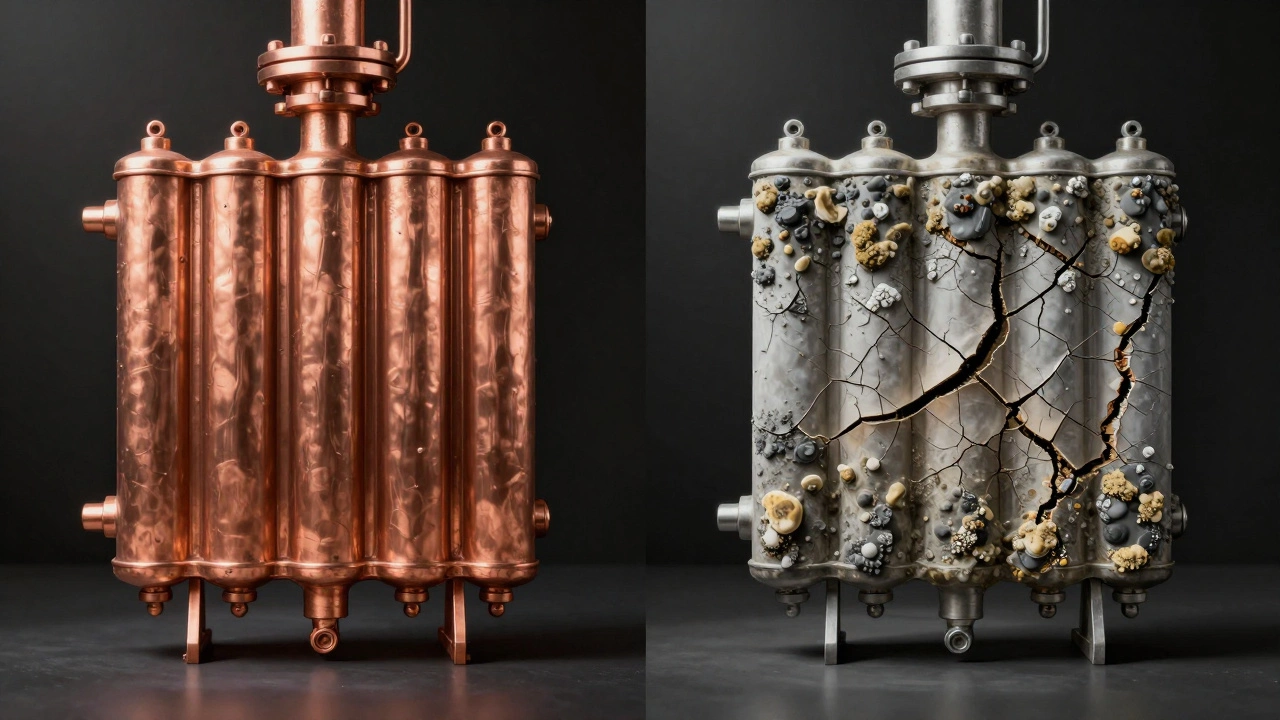
- Water quality - Hard water builds scale inside the heat exchanger. That’s like rust on a car engine, but worse. It blocks heat transfer, forces the boiler to work harder, and cracks the metal over time.
- Maintenance frequency - A boiler that gets a professional service every year lasts twice as long as one that’s ignored. Filters get cleaned, pressure is checked, and tiny leaks are caught before they become big problems.
- Usage patterns - A boiler running non-stop in a poorly insulated home wears out faster than one that cycles gently in a well-sealed house. Temperature spikes and constant on/off cycles stress the components.
In Auckland, where winters are mild but damp, condensation and salt air can speed up corrosion. Boilers near the coast often show signs of rust on external pipes or control panels after just 10 years. That’s not unusual. It’s geography.
Why 50 Years Is Unlikely - Even With Perfect Care
Let’s say you have a boiler that’s been serviced every year since 1985. You’ve installed a water softener. You’ve insulated the pipes. You’ve never let it freeze. You’ve even replaced the pump and expansion vessel.
Even then, you’re fighting physics. The heat exchanger - the heart of the boiler - is made of steel or copper. Both materials expand and contract with every heating cycle. Over 20,000 cycles, that’s thousands of tiny stress fractures. Eventually, one cracks. That’s when you get leaks, or worse - carbon monoxide seeping into your home.
Modern boilers also have electronic controls. Circuit boards, sensors, and displays don’t last 50 years. They fail from moisture, heat, or component aging. Replacing a control board at year 25 is possible. Replacing it at year 40? Good luck finding the part. Manufacturers stop making them after 10-15 years.
And let’s not forget safety regulations. A boiler from 1976 doesn’t meet today’s emissions standards. Insurance companies won’t cover homes with boilers older than 25 years. Some councils in New Zealand now require replacement if a boiler is over 20 years old during property inspections.
How to Make Your Boiler Last as Long as Possible
Want to squeeze every last year out of your boiler? Here’s what actually works:
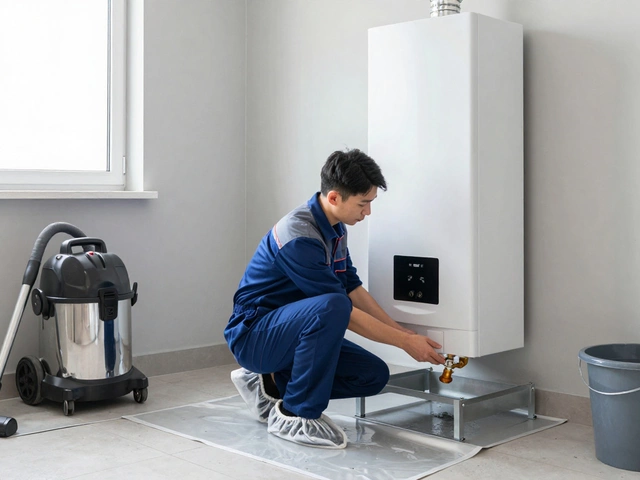
- Annual professional service - Don’t skip it. A qualified technician checks for gas leaks, flue blockages, and pressure issues. In New Zealand, look for a registered gas fitter with a current license.
- Install a magnetic filter - These catch rust and sludge before they clog the heat exchanger. They cost under $200 and pay for themselves in reduced repairs.
- Use a water softener if you have hard water - Auckland’s water varies by suburb. If your taps leave white residue, you’re likely in a hard-water zone. A softener can double your boiler’s life.
- Keep the system pressure between 1 and 1.5 bar - Too low and the boiler struggles. Too high and it strains the seals. Check it monthly.
- Insulate your pipes and tank - Less heat loss means fewer cycles. Fewer cycles mean less wear.
These steps don’t guarantee 30 years. But they can easily get you to 20-25, which is more than most people expect.
When to Replace - Even If It Still Works
Here’s the hard truth: if your boiler is over 15 years old and you’re still using it, you’re probably paying more in energy bills than you would in a new unit.
A 20-year-old boiler runs at 70-75% efficiency. A modern condensing boiler runs at 94-98%. That’s a 25% drop in efficiency. In a typical Auckland home, that means $400-$600 extra per year on heating bills.
Also, older boilers don’t have smart controls. Modern ones adjust output based on weather, time of day, and even your phone’s location. They learn your habits. They save money without you lifting a finger.
If your boiler is making strange noises - banging, gurgling, whistling - that’s a red flag. It’s not just annoying. It’s a sign of internal damage. Don’t wait for a leak. Replace it before it fails in winter.
What Happens When an Old Boiler Finally Fails?
It’s rarely dramatic. Most old boilers just stop working quietly. One morning, the heating doesn’t turn on. No smoke. No explosion. Just silence.
But that silence costs more than you think. Emergency repairs in winter can cost $800 just to get someone out. A replacement, if planned ahead, can be done for $3,000-$5,000. If you wait until it dies in a snowstorm, you’ll pay double.
And if you’re selling your home? Buyers will ask about the boiler. An old one can drop your property value. A new, efficient boiler? That’s a selling point.
Final Reality Check
Can a boiler last 50 years? Technically, maybe - if it was built in the 1950s, never touched, and never used. But in the real world? No. The idea of a 50-year boiler is a myth, passed down by nostalgia.
The real goal isn’t to make your boiler live forever. It’s to make it last as long as it should - 15 to 25 years - and then upgrade smartly.
Focus on maintenance. Track your energy bills. Listen to the sounds it makes. Replace it before it becomes a risk. That’s how you save money, stay safe, and avoid winter disasters.
Your boiler isn’t meant to outlive your children. But with good care, it can outlive your expectations.
Is it worth repairing a 20-year-old boiler?
It depends. If the repair is minor - like replacing a pump or thermostat - and the boiler is otherwise in good condition, yes. But if it’s leaking, making loud noises, or using more fuel than before, it’s likely nearing the end. Repairing a 20-year-old boiler is like patching a 20-year-old car. You’ll keep spending money. Eventually, replacement is cheaper.
Can I extend my boiler’s life with a water softener?
Yes, especially in areas with hard water like parts of Auckland. Hard water causes limescale buildup inside the heat exchanger, which reduces efficiency and causes overheating. A magnetic filter or water softener can prevent this buildup and extend your boiler’s life by 5-10 years. It’s one of the most cost-effective upgrades you can make.
Do modern boilers last longer than older ones?
Not necessarily. Modern boilers are more efficient and safer, but they’re not built to last longer. They use lighter materials and complex electronics that can fail sooner than old steel boilers. The trade-off is performance: a 10-year-old modern boiler uses 30% less fuel than a 10-year-old old boiler. That’s why replacement is recommended after 15 years - efficiency drops faster than reliability.
How often should I service my boiler?
Once a year. Always before winter. A qualified gas fitter will check the pressure, clean the burner, inspect the flue, and test for carbon monoxide leaks. Skipping services is the #1 reason boilers fail early. Many insurance policies require annual servicing to remain valid.
What are the signs my boiler needs replacing?
Rusty pipes or leaks around the boiler, strange noises (banging, whistling, gurgling), rising energy bills, inconsistent heating, or frequent repairs. If you’ve had three repairs in two years, it’s time to replace. Also, if your boiler is over 15 years old, even if it works, consider upgrading for safety and savings.