
Appliance Description Checker
Enter your appliance description details below. This tool checks if you've included all critical information repair technicians need to diagnose the issue quickly.
Description Analysis
When your fridge stops cooling or your washing machine starts shaking like it’s trying to escape the laundry room, the first thing a repair technician asks is: Can you describe the appliance? It sounds simple, but most people give vague answers like ‘it’s broken’ or ‘it doesn’t work anymore.’ That doesn’t help. To get the right fix fast, you need to describe your appliance clearly-what it is, what it’s doing, and what’s changed.
Start with the basics: type, brand, and model
Every appliance has three key identifiers: type, brand, and model number. You can’t fix what you can’t name. A ‘fridge’ isn’t enough. Is it a Samsung 4-door French door with a water dispenser? Or a compact Whirlpool top-freezer from 2018? The difference matters.Model numbers are usually found on a sticker inside the door, on the back, or under the bottom panel. For ovens, check the door frame. For dishwashers, look inside the door edge. If you can’t find it, take a photo of the whole unit. A technician can often match it by sight, but the model number tells them exactly which parts are compatible.
Brand matters too. A Bosch dishwasher doesn’t use the same pump as a LG one. Even within the same brand, models from different years have different wiring, sensors, or control boards. Describing just ‘a Kenmore washer’ won’t cut it-there are over 200 Kenmore washer models made by different manufacturers over the last 20 years.
What’s actually happening? Be specific about symptoms
Don’t say ‘it’s not working.’ Say exactly what you see or hear. Here’s how to describe common issues accurately:- Instead of: ‘The oven doesn’t heat.’ → Say: ‘The oven light comes on, but the heating element doesn’t glow red, and the temperature display stays at 0.’
- Instead of: ‘The fridge is noisy.’ → Say: ‘There’s a loud buzzing sound every 15 minutes, like a motor struggling, and it stops when I open the door.’
- Instead of: ‘The washing machine won’t spin.’ → Say: ‘It fills and agitates fine, but when it gets to the spin cycle, it just hums and doesn’t rotate. The drum feels stuck when I try to turn it by hand.’
Pay attention to timing. Does the problem happen right after startup? Only after running for 30 minutes? Only with a full load? These details help narrow down whether it’s a sensor, motor, thermostat, or control board issue.
Include recent changes or events
Appliances don’t fail out of nowhere. Something triggered it. Tell the technician:- Did you recently move the appliance?
- Was there a power surge or storm last week?
- Did you install a new water filter or change the water pressure?
- Did you use a different detergent or overload the machine?
One customer in Mount Roskill called because their dishwasher wasn’t draining. They didn’t mention they’d just started using a new brand of detergent pods. Turns out, the pods were too thick and clogged the drain pump. Simple fix-once they told the technician about the change.
Describe the appliance’s age and usage
An appliance that’s 12 years old and ran 5 loads a day for 10 years is a different story than one that’s 3 years old and barely used. Most repair technicians know the typical lifespan of common models:- Refrigerators: 10-15 years
- Washing machines: 10-12 years
- Dishwashers: 9-10 years
- Gas ovens: 15-20 years
- Heat pumps: 12-15 years
If your appliance is near or past its expected life, a repair might not be worth it. Parts become harder to find, and efficiency drops. A 14-year-old fridge using 1.5 times more power than a new model isn’t saving you money-it’s costing you.
Also mention how often you use it. A family of five running the dishwasher daily will wear out components faster than a single person using it twice a week. This helps the technician judge if the failure is normal wear or a defect.
What about features and settings?
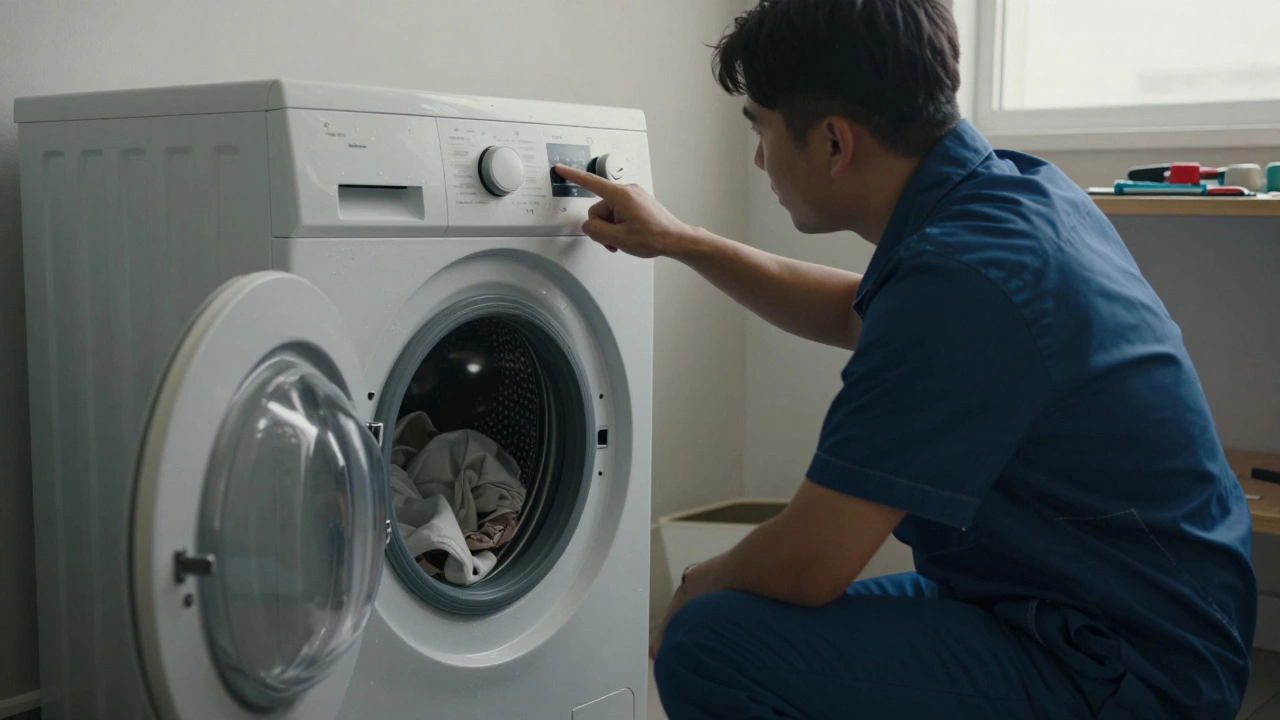
Modern appliances have settings that can mimic failure. A ‘delay start’ setting might make you think the machine is broken when it’s just waiting. A child lock on a microwave might prevent buttons from responding.Describe any features your appliance has:
- Smart connectivity (Wi-Fi, app control)
- Steam cleaning or self-cleaning cycles
- Ice and water dispensers
- Variable speed motors or inverter technology
For example, if your fridge has an ice maker that stopped making ice, say so. That’s a different issue than the fridge not cooling. The ice maker has its own water valve, thermostat, and motor. If you don’t mention it, the technician might focus on the cooling system and miss the real problem.
What doesn’t work? What still does?
This is one of the most useful things you can say. Don’t just list what’s broken-list what’s still working. For example:- ‘The oven light turns on, the fan runs, but the heating element doesn’t activate.’ → Points to a faulty heating element or relay.
- ‘The washing machine fills with water and drains fine, but it won’t spin.’ → Suggests a motor coupling or drum bearing issue.
- ‘The microwave turns on and the turntable spins, but nothing heats up.’ → Likely a failed magnetron or high-voltage diode.
This kind of detail lets technicians skip tests they don’t need to run. It cuts diagnosis time from 45 minutes to 10.
Don’t guess. Just report what you see
Avoid phrases like ‘I think it’s the fuse’ or ‘probably the compressor.’ You don’t need to diagnose it. Just report what happened. A technician doesn’t need your theory-they need your observations.One person in Otahuhu told the technician, ‘I think the circuit board is fried.’ The technician found a loose wire that had been rubbing against the metal frame. No board replacement needed. The guess led to a wasted trip and unnecessary cost.
Stick to facts: sounds, lights, error codes, smells, timing, and changes.
Keep a record for next time
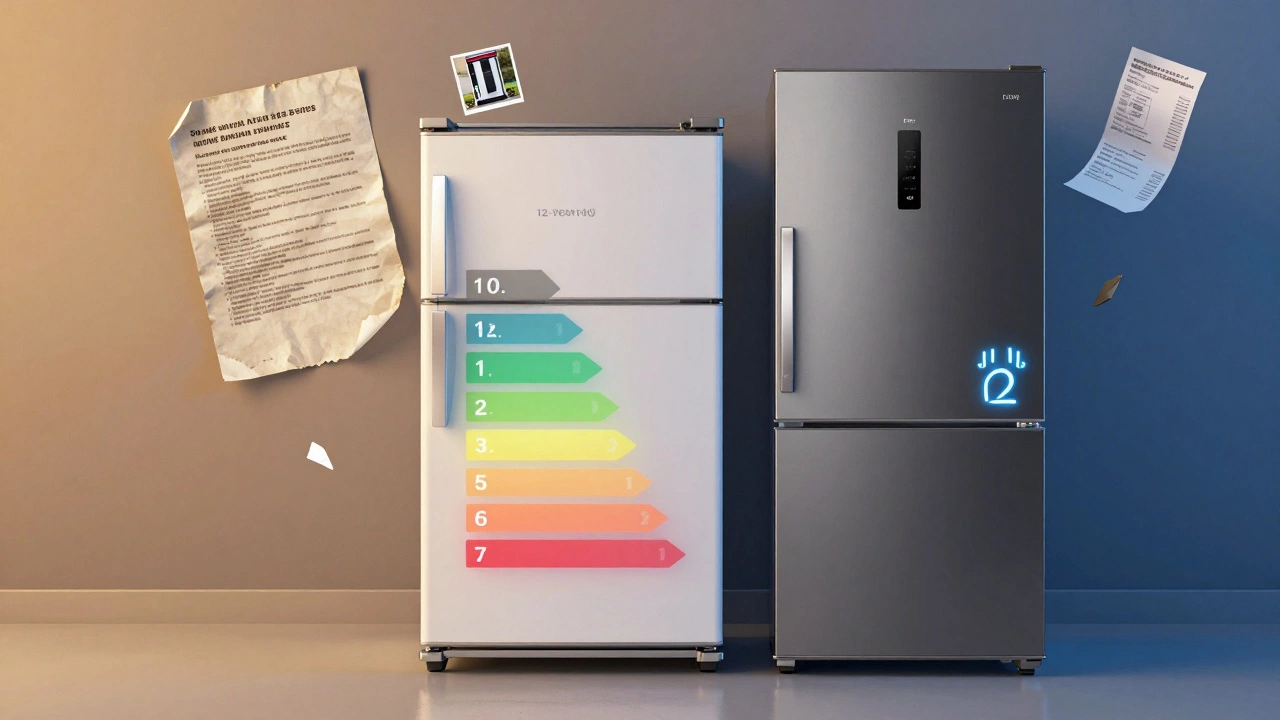
After your repair, write down what you told the technician and what they found. Take a photo of the model number sticker. Save the receipt. This saves time the next time something goes wrong.Many people forget what model they have-or worse, they throw away the manual. If you ever need to replace the appliance later, having this info helps you pick a direct replacement with the same size, features, and energy rating.
For example, if your 70cm wide, 600W microwave with a turntable and sensor cook failed, you can search for ‘70cm 600W sensor microwave’ and find exact matches. Without those details, you might end up with a 65cm model that doesn’t fit your cabinet.
Final checklist: What to say before the technician arrives
Before you call for service, run through this quick list:- Brand name (e.g., Fisher & Paykel, Electrolux, Haier)
- Model number (written down or photographed)
- Year of purchase or estimated age
- Exact symptom (what you hear, see, smell, or feel)
- What still works
- Any recent changes (move, power issue, new product used)
- Any error codes on the display (e.g., E1, F3, dE)
Having this ready cuts your wait time and ensures you get the right part on the first visit. In Auckland, where appliance repair wait times can stretch to 5-7 days, getting it right the first time matters.
Why this matters more than you think
Describing your appliance properly isn’t just about fixing it-it’s about saving money, time, and stress. A vague description leads to wrong parts, multiple visits, and higher bills. A clear one leads to a quick, accurate fix.It also helps you decide whether to repair or replace. If your 11-year-old fridge has a faulty compressor, and the repair costs $550, you’ll know it’s not worth it because new models use 40% less energy. But if it’s a 4-year-old dishwasher with a $120 pump replacement, you’ll know to fix it.
Knowing how to describe your appliance means you’re not just a customer-you’re a partner in the repair process. And that makes all the difference.