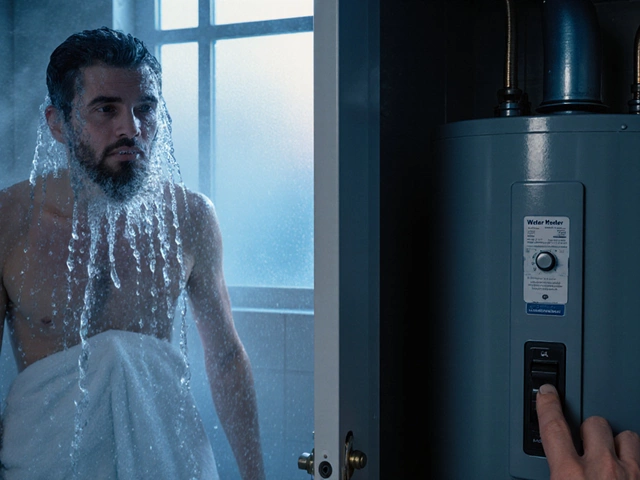
Hot Water Troubleshooting Wizard
Follow the steps below to narrow down why your shower is cold. Answer based on your current situation to find the most likely solution.
Is the water cold ONLY in the shower?
Quick fixes for cold showers
- Check your electrical panel for tripped breakers.
- Inspect the pilot light on gas units.
- Verify that other taps in the house have hot water.
- Look for leaks around the base of the tank.
- Reset the high-limit switch on electric heaters.
Identifying the source of the cold
Before you start taking things apart, you need to figure out if the problem is the heater itself or just the shower. If your kitchen sink is steaming but your shower is freezing, you aren't dealing with a heater failure; you have a localized plumbing issue. This is often caused by a faulty Mixing Valve is a plumbing component that blends hot and cold water to reach a desired temperature. If the internal cartridge wears out or gets clogged with mineral deposits, it can block the hot water flow entirely.
If every tap in your house is cold, the problem lies with your Water Heater is an appliance designed to heat and store water for domestic use. Depending on your fuel source-gas or electricity-the troubleshooting steps differ wildly. Gas units usually suffer from ignition issues, while electric units often deal with burned-out elements or tripped circuits.
Troubleshooting electric water heaters
Electric heaters rely on Heating Elements is electric resistors that transfer heat directly into the water tank. Most tanks have two: an upper and a lower element. If the upper one burns out, you'll have no hot water at all. If the lower one goes, you'll get a few minutes of warmth before the water turns cold.
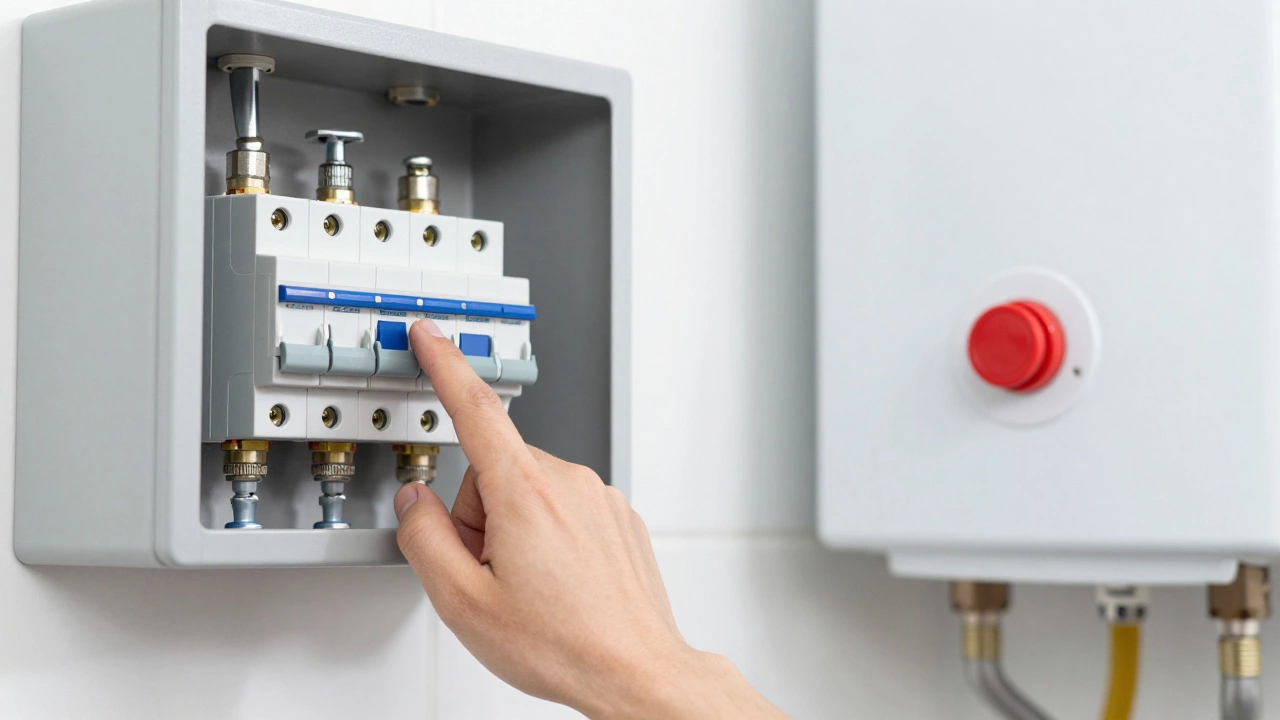
First, head to your electrical board. Look for a circuit breaker that has flipped to the 'off' position. Flip it back, but if it trips again immediately, stop. You likely have a short circuit that requires a professional. Next, check the reset button. Most electric heaters have a red button on the upper thermostat. If the water got too hot, this safety switch trips to prevent the tank from bursting. Pressing it can bring your shower back to life instantly.
| Symptom | Likely Cause | Difficulty to Fix |
|---|---|---|
| Completely cold water | Tripped breaker or upper element failure | Medium |
| Water runs hot then cold quickly | Lower heating element burned out | Medium |
| Water is too hot / steaming | Failed thermostat | High |
Fixing gas water heater issues
Gas heaters are all about the flame. If the Pilot Light is a small, constantly burning gas flame used to ignite the larger burner has gone out, the heater won't kick in. This can happen due to a draft or a minor pressure drop in your gas line. Check the bottom of the heater for a small viewing window. If you don't see a blue flame, follow the manufacturer's instructions to relight it.
If you have a newer model, you probably have a Thermocouple is a sensor that detects the presence of a pilot flame and allows gas to flow to the burner. If this part is bent or charred, it will tell the system the flame is out even when it isn't, shutting off the gas for safety. Replacing a thermocouple is a relatively simple task that involves unscrewing the old probe and popping in a new one.
Dealing with tankless water heaters
A Tankless Water Heater is an on-demand heating system that warms water as it flows through the unit doesn't store water, so it can't "run out." However, it can struggle to ignite if the flow rate is too low or if the heat exchanger is scaled up. If you've noticed a drop in water pressure along with the cold temperature, your unit likely needs descaling.
Mineral buildup from hard water acts like an insulator, preventing the heat from reaching the water. You can perform a flush by pumping a food-grade descaling solution through the unit. If you ignore this, the unit will work harder and harder until the heat exchanger eventually cracks from the stress.
When it's a plumbing problem, not a heater problem
If the heater is working but the shower is cold, check your Shower Valve is the control mechanism that regulates water flow and temperature in a shower. In many modern homes, a "pressure-balancing valve" is used to prevent you from getting scalded when someone flushes a toilet. If the internal diaphragm in this valve fails, it can get stuck in the "cold" position.
Another common culprit is the showerhead. If it's heavily clogged with lime and calcium, the reduced flow might not trigger a tankless heater to ignite. Try removing the showerhead and running the water directly from the pipe. If the water comes out hot, just soak your showerhead in white vinegar for a few hours to clear the blockage.
Preventing future cold showers
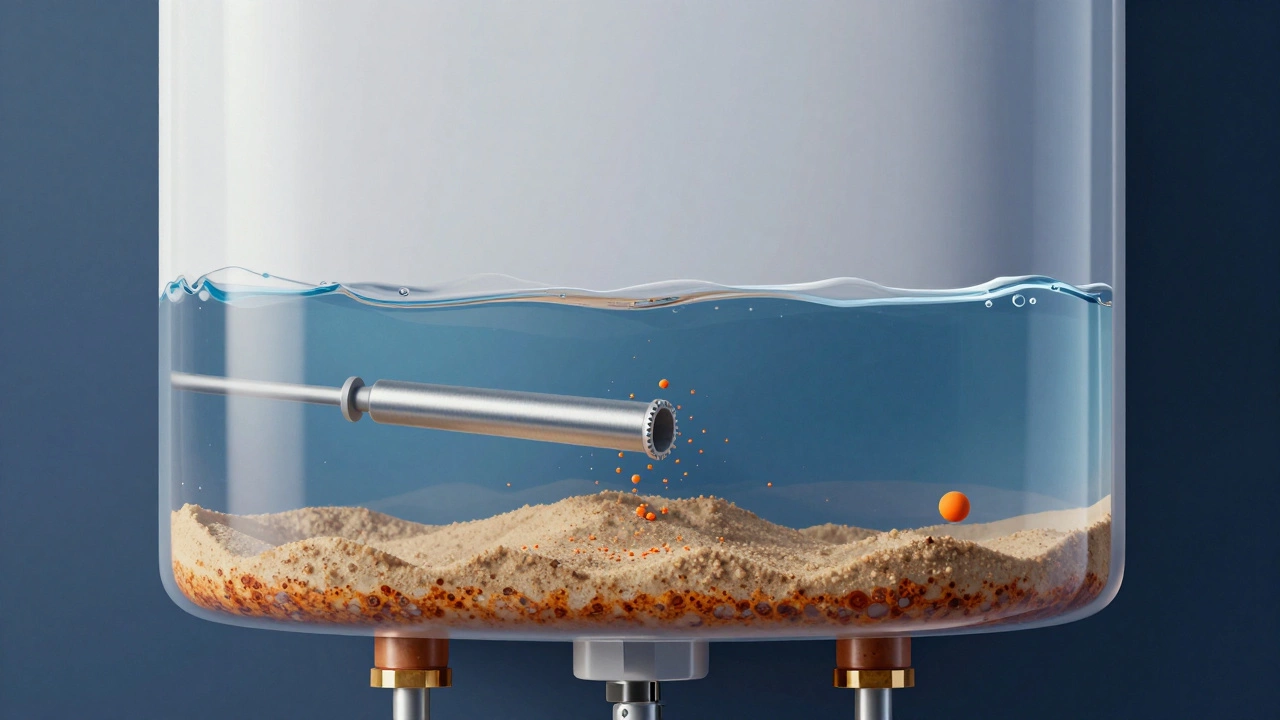
The best way to avoid this headache is a bit of annual maintenance. For tank systems, draining a few gallons from the bottom valve once a year removes sediment. Sediment acts as a blanket at the bottom of the tank, forcing the heating elements to work overtime and eventually burn out.
Check your anode rod every three years. The Anode Rod is a sacrificial magnesium or aluminum rod that attracts corrosion to protect the tank's steel walls. When it's completely dissolved, the tank itself starts to rust. Once a tank leaks, there is no "fix"-you'll be shopping for a new heater.
Why is the water hot in the sink but cold in the shower?
This almost always points to a problem with the shower mixing valve or the shower cartridge. Since other taps are hot, your water heater is functioning correctly. The valve in your shower is likely stuck or clogged, preventing hot water from entering the stream.
Can I reset my own electric water heater?
Yes, provided you turn off the power at the breaker first. Most electric heaters have a high-limit reset button located on the upper thermostat. Push it in; if it clicks, the system was tripped and should now restart.
How do I know if my heating element is burnt out?
If you have lukewarm water that turns cold very quickly, your lower element is likely dead. If you have no hot water at all, it's likely the upper element. A professional can confirm this using a multimeter to check for continuity.
Is it safe to relight a gas pilot light myself?
Generally yes, as long as you follow the manufacturer's instructions exactly and ensure there are no gas leaks (no "rotten egg" smell). If you smell gas, do not light anything; leave the house and call the gas company immediately.
How often should I flush my water heater?
Once a year is the gold standard. This removes the mineral buildup and sediment that can cause popping noises and reduce heating efficiency.
Next steps for different scenarios
If you're a renter: Stop here. Most lease agreements prohibit tenants from modifying the water heater. Document the issue and contact your landlord. Touching the electrical or gas components could make you liable for damages.
If you're a homeowner on a budget: Start with the easiest fixes. Check the breaker, press the reset button, and clean the showerhead. These cost nothing and solve about 30% of "no hot water" cases.
If you're dealing with a leak: If you see water pooling at the base of your tank, it's likely a rusted-through shell. Don't waste money on patches; they rarely work. Start looking for a replacement unit and turn off the water supply to the heater to prevent floor damage.