

Refrigerator Repair vs. Replace Calculator
Your Current Situation
Ready to Calculate?
Enter your details on the left to see if it makes financial sense to fix your current fridge or invest in a new one.
Energy Efficiency Factor:
*Estimates based on average NZ electricity prices (~$0.28/kWh) and typical efficiency gains of modern Energy Rating 4+ star models compared to pre-2015 units.
It’s 3 AM. You wake up thirsty, reach into the kitchen, and realize your milk is warm. Your refrigerator is a vital household appliance that keeps food safe by maintaining low temperatures has given up the ghost. Now you face a stressful choice: call a technician to fix it, or drive to an appliance store to buy a new one?
This isn't just about convenience; it's about money and food safety. In Auckland, where energy prices fluctuate and quality parts can be pricey, making the wrong call could cost you hundreds of dollars in wasted electricity or spoiled groceries. We’re going to break down the real costs of fixing versus replacing your fridge in 2026, so you can make a decision that saves your wallet.
The 50% Rule: A Quick Way to Decide
Before we get into the nitty-gritty of compressor failures and thermostat glitches, there is a simple rule of thumb used by most appliance technicians. It’s called the 50% rule. If the cost of the repair is more than 50% of the price of a comparable new refrigerator, you should generally replace the unit.
Why does this rule work? Because refrigerators are complex systems. If one major component fails, others might be wearing out soon too. Spending half the price of a new machine on an old one often means you’ll be throwing good money after bad within a year or two. However, age plays a huge role here. A ten-year-old fridge might have years left if the fix is cheap, but a twenty-year-old model is likely on borrowed time regardless of the repair cost.
How Much Does Fridge Repair Actually Cost?
In New Zealand, appliance repair costs vary based on the brand, the specific part needed, and labor rates. As of 2026, here is what you can expect to pay for common repairs:
- Diagnostic Fee: Most technicians charge between $80 and $120 just to come out and diagnose the problem. This fee is often waived if you proceed with the repair.
- Thermostat Replacement: If your fridge isn’t cooling because the brain controlling the temperature is broken, expect to pay around $150 to $250 including labor.
- Door Seals (Gaskets): Worn seals let cold air escape. Replacing them usually costs between $100 and $180.
- Evaporator Fan Motor: A noisy fridge that isn’t cooling well might need a new fan motor. Parts and labor typically run $200 to $350.
- Compressor Failure: This is the big one. The compressor is the heart of the fridge. Replacing it can cost $400 to $700+, depending on the model and accessibility.
If your repair quote comes in under $150, it’s almost always worth fixing, provided the fridge is less than 10-12 years old. But if you’re looking at a compressor job or a control board issue running over $300, start looking at new models.
| Issue | Average Repair Cost (NZD) | Likelihood of Recurrence |
|---|---|---|
| Door Seal Replacement | $100 - $180 | Low |
| Thermostat Fix | $150 - $250 | Medium |
| Fan Motor Replacement | $200 - $350 | Low |
| Control Board Repair | $300 - $500 | High |
| Compressor Replacement | $400 - $700+ | High |
The Hidden Cost of Keeping an Old Fridge
You might think that repairing your old fridge is cheaper because you avoid the upfront cost of a new appliance. But there’s a hidden expense: energy efficiency. Refrigerators manufactured before 2015 are significantly less efficient than modern units.
A standard top-freezer fridge from 2010 might use 400-500 kWh per year. A new Energy Rating 4-star or higher model uses closer to 250-300 kWh. With average electricity prices in Auckland hovering around 25-30 cents per kWh, that difference adds up to roughly $40-$60 extra per year in electricity bills. Over five years, that’s $200-$300 wasted purely on power.
Newer fridges also tend to cool more evenly and maintain temperatures better, which means less food spoilage. Have you ever thrown away vegetables that went slimy because the fridge wasn’t cold enough? That’s another hidden cost of sticking with an aging appliance.
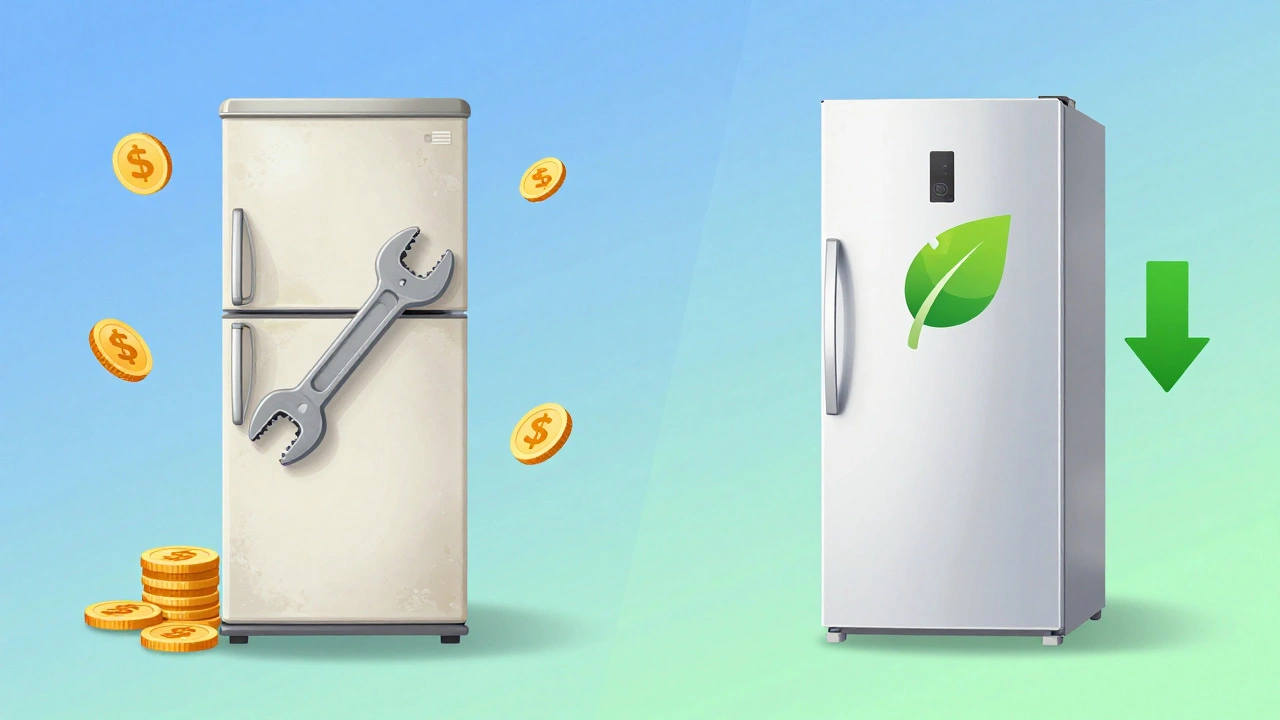
When You Should Definitely Replace Your Fridge
There are clear signs that repair isn’t the right path. Consider replacing your refrigerator if:
- It’s older than 10-12 years: The average lifespan of a fridge is about 10-15 years. If you’re past that mark, other components are likely failing soon.
- The compressor is failing: As mentioned, compressor repairs are expensive. If the compressor goes, the fridge is essentially dead.
- You’ve had multiple repairs recently: If you fixed the seal last year and the fan motor six months ago, the next failure will likely be the final straw.
- Your style needs have changed: Maybe you’ve moved to a bigger house, started cooking more, or want a French door model for easier access. Upgrading improves your daily life, not just your bank account.
- It’s leaking water inside or outside: While sometimes fixable with a cleared drain line, persistent leaks can indicate insulation issues or structural problems that aren’t worth repairing.
Buying New: What to Look For in 2026
If you decide to replace your fridge, don’t just grab the cheapest option. Modern refrigerators offer features that improve both convenience and efficiency. Here’s what to prioritize:
- Energy Rating: Look for appliances with a high star rating. In New Zealand, the energy label is crucial. Higher stars mean lower running costs.
- Type: Top-mount freezers are the most reliable and affordable. Bottom-mount and French door models are stylish but often have more complex mechanics and higher repair costs.
- Smart Features: Some 2026 models include Wi-Fi connectivity to alert you if the door is left open or if the temperature rises. These can prevent food waste and save energy.
- Brand Reliability: Brands like Samsung, LG, Bosch, and Fisher & Paykel dominate the NZ market. Check local reviews for service availability in Auckland. A great fridge is useless if you can’t find a technician who knows how to fix it.
Prices for new refrigerators in 2026 range widely. A basic top-freezer model starts around $600-$900 NZD. Mid-range bottom-mount or side-by-side models run $1,200-$2,000. High-end smart fridges with ice makers and large capacities can exceed $3,000.
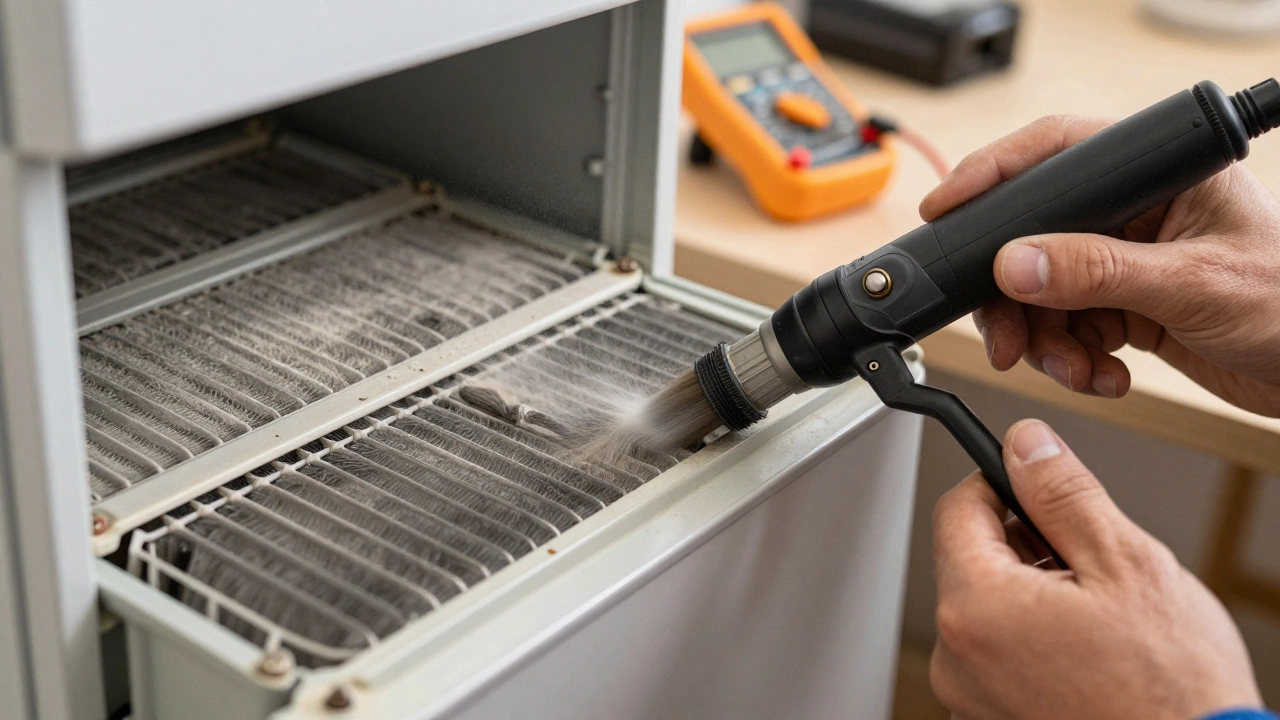
DIY Fixes: When You Can Save Money Yourself
Not every fridge problem requires a professional. Some minor issues can be resolved with minimal effort and cost, potentially extending the life of your appliance without breaking the bank.
- Clean the Condenser Coils: Located at the back or bottom of the fridge, these coils get dusty over time. Dirty coils make the compressor work harder, increasing energy bills and wear. Vacuuming them once a year is free and effective.
- Check Door Seals: Close the door on a dollar bill. If you can pull it out easily, your seal is weak. You can often clean the seal or replace it yourself for under $50.
- Clear the Drain Hole: If you see water pooling at the bottom of the fridge, the defrost drain might be clogged with ice or debris. Using a pipe cleaner or warm water can often clear this blockage.
If these simple steps don’t resolve the issue, it’s time to call a pro. Attempting to fix electrical or gas-related components without expertise can be dangerous and void warranties.
Environmental Impact: Repair vs. Replace
We can’t ignore the environmental angle. Manufacturing a new refrigerator consumes resources and energy. Throwing away a working (or repairable) fridge contributes to e-waste. However, keeping an inefficient fridge running burns fossil fuels (via electricity generation) continuously.
In New Zealand, many councils offer recycling programs for old appliances. Ensure your old fridge is disposed of properly so refrigerants (like Freon) are safely recovered rather than released into the atmosphere. If your fridge is less than 10 years old and the repair is minor, repairing is generally the greener choice. If it’s older and inefficient, replacing it with a high-efficiency model reduces your carbon footprint over time.
Making the Final Decision
So, is it cheaper to repair or replace? There’s no single answer, but the math usually points one way. If your fridge is young and the fix is simple, repair it. If it’s old, inefficient, or needs a major component like a compressor, replace it. Factor in the energy savings of a new model and the peace of mind that comes with a warranty. Don’t let sentimentality keep you paying for a broken machine. Your wallet-and your milk-will thank you.
Is it worth repairing a 15-year-old refrigerator?
Generally, no. A 15-year-old fridge is near the end of its expected lifespan. Even if you fix one issue, another component is likely to fail soon. Additionally, older models are far less energy-efficient, meaning you'll pay more in electricity bills. Unless the repair is very minor (under $100), replacing it is usually the smarter financial and environmental choice.
How much does it cost to replace a refrigerator compressor in Auckland?
As of 2026, replacing a refrigerator compressor in Auckland typically costs between $400 and $700 NZD, including parts and labor. This high cost is due to the complexity of the job, which involves evacuating and recharging the refrigerant system. Given this price, it's often more economical to buy a new fridge unless your current unit is high-end and less than 10 years old.
Can I fix my fridge myself to save money?
Yes, for minor issues. Cleaning condenser coils, checking door seals, and clearing clogged drain lines are DIY-friendly tasks that can resolve common problems like poor cooling or water leaks. However, anything involving electrical components, refrigerants, or the compressor should be left to licensed professionals due to safety risks and technical complexity.
What is the average lifespan of a refrigerator?
The average lifespan of a refrigerator is between 10 and 15 years. Factors like usage frequency, maintenance (such as cleaning coils), and build quality affect this timeline. Top-mount freezer models tend to last longer than French door or side-by-side models due to simpler mechanical designs.
Are new refrigerators really more energy-efficient?
Yes, significantly. Modern refrigerators manufactured after 2015 are designed to meet stricter energy efficiency standards. A new Energy Rating 4-star or higher model can use 30-50% less electricity than a fridge from 10+ years ago. This translates to lower annual electricity bills and a reduced carbon footprint.