Oven Problem Diagnostic Tool
Find Your Oven Problem
Answer a few questions about your oven's behavior to identify the most likely cause. This tool is based on real-world oven repair data from Auckland homes.
Does your oven turn on but not heat up?
If your oven won’t heat up, takes forever to cook food, or shuts off randomly, you’re not alone. These aren’t rare glitches-they’re the same problems that show up in nearly every oven repair job across Auckland homes. Most people assume their oven is broken beyond repair, but 80% of the time, it’s just one simple part failing. You don’t need to replace the whole appliance. You just need to know what’s actually wrong.
The Heating Element Is the Most Common Culprit
The heating element is the metal coil inside your oven that glows red when it’s working. It’s the heart of the oven. If it’s broken, your oven won’t get hot-even if the fan runs, the light turns on, and the display works fine.
Look closely at the element. If you see black spots, cracks, or sections that aren’t glowing when the oven is on, it’s dead. Even if it looks fine, you can test it with a multimeter. A good element should read between 20 and 120 ohms. Anything outside that range means it’s failed.
Heating elements wear out because they’re turned on and off hundreds of times a year. Heat expands and contracts the metal until it cracks. In homes with frequent baking, like weekend pastry lovers or families who roast dinners every Sunday, this happens faster. Replacing the element costs between $80 and $150, depending on your oven model, and takes under an hour for a technician.
Thermostat Failure Causes Uneven or Wrong Temperatures
Your oven might think it’s at 180°C when it’s really only at 130°C. That’s a thermostat problem. You’ll notice food taking twice as long to cook, or it’s burnt on the outside but raw inside. This isn’t just about patience-it’s about food safety.
Thermostats don’t usually break all at once. They drift. Over time, the sensor gets out of sync. In older ovens, the bimetallic strip inside the thermostat loses its calibration. In newer digital models, the temperature sensor probe can corrode or get damaged from oven cleaner.
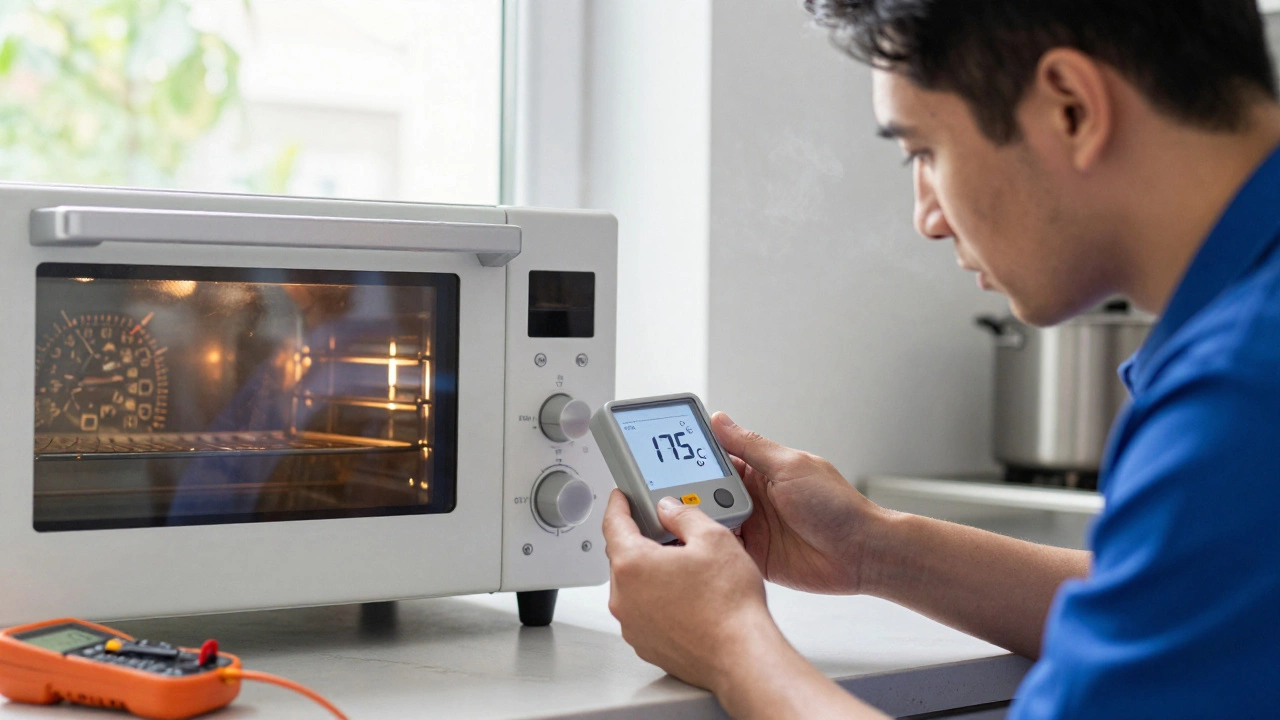
Here’s a quick test: hang an oven thermometer on the middle rack and set the oven to 175°C. Wait 20 minutes. If the thermometer reads more than 15°C off, your thermostat is faulty. Replacing the sensor costs $60-$120. You can do it yourself if you’re comfortable removing the back panel, but most people call a pro because getting the wiring wrong can fry the control board.
Door Seal Problems Waste Heat and Increase Bills
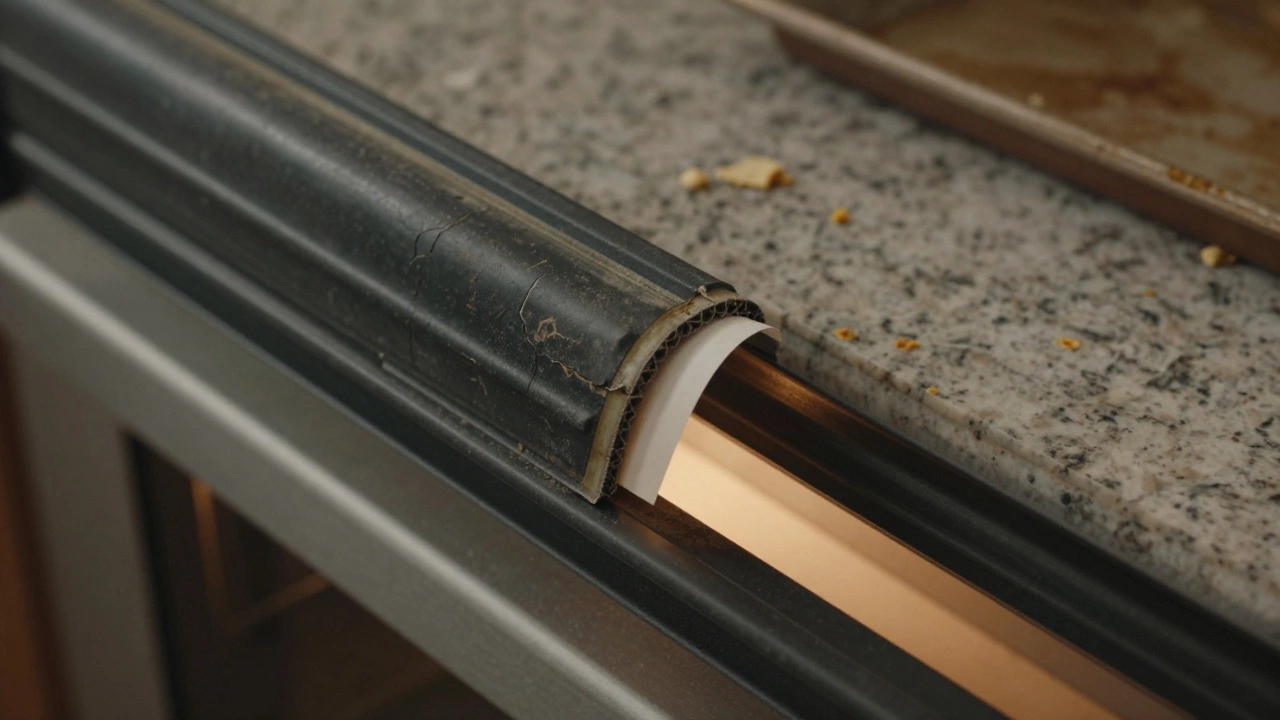
A damaged oven door seal might not stop your oven from working-but it makes it work way too hard. The rubber gasket around the door keeps heat inside. When it cracks, shrinks, or falls out, heat escapes. That means the oven has to run longer to reach the right temperature, and your electricity bill climbs.
Check the seal by closing the door on a piece of paper. Try to pull it out. If it slides out easily, the seal is weak. You might also notice heat coming out the sides of the door, or the oven feels hotter than usual on the outside.
Replacing the seal is cheap-under $40-and easy. You don’t need tools. Just peel off the old one and snap the new one in. But if you ignore it, you’re paying extra every time you bake. In a typical Auckland home, a bad seal can add $15-$25 a month to your power bill during winter.
Igniter Issues in Gas Ovens
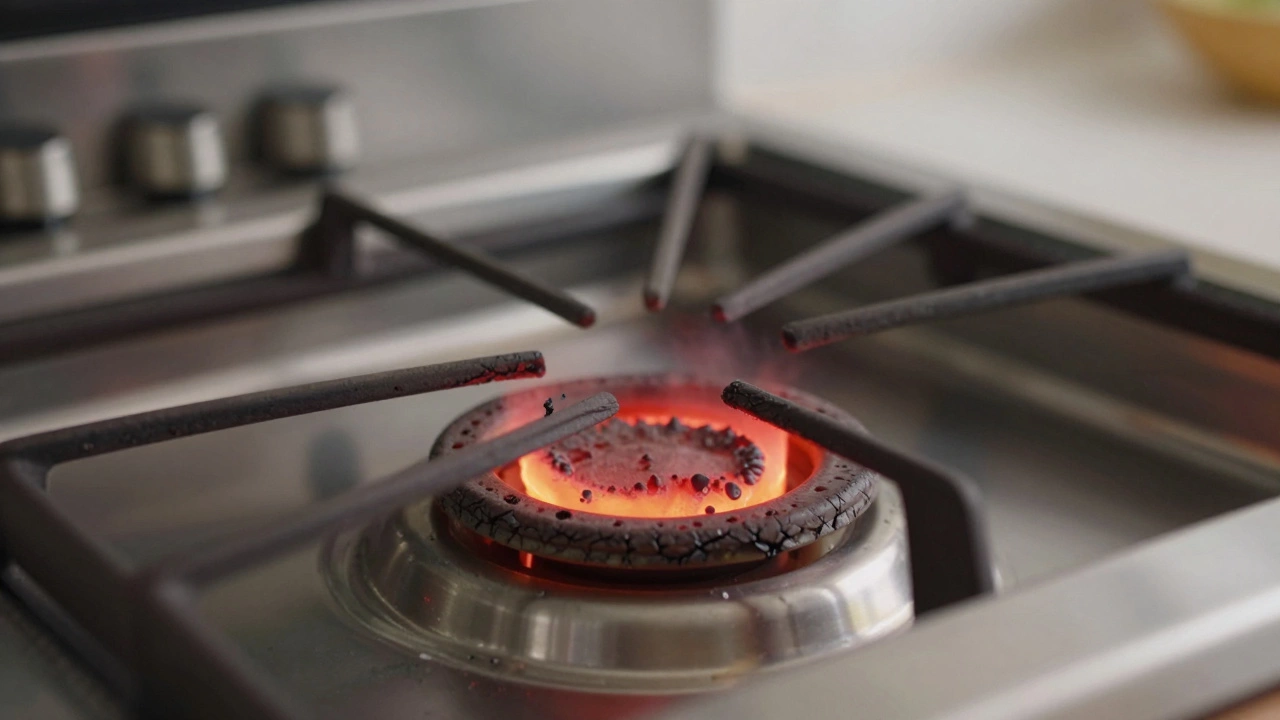
If you have a gas oven and it doesn’t light, the problem isn’t the gas line-it’s the igniter. The igniter is a small ceramic piece that glows red-hot to ignite the gas. Over time, it gets weak. You might hear the gas hiss, but no flame appears. Or the flame flickers and goes out after a few seconds.
A working igniter glows bright orange within 30 seconds. If it takes longer than a minute, or glows dimly, it’s failing. The gas valve won’t open unless the igniter reaches the right temperature. That’s a safety feature. But when the igniter wears out, it can’t trigger the valve.
Replacing the igniter costs $90-$160. It’s not a DIY job unless you’re trained. Gas lines are dangerous if you mess up. If your oven doesn’t light and you smell gas, turn it off, open windows, and call a professional immediately.
Control Board Glitches Are Increasingly Common
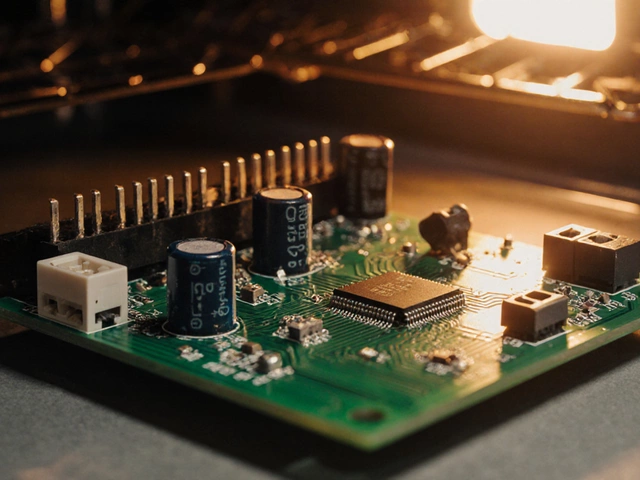
Modern ovens have digital control boards that manage everything-temperature, timers, lights, even the fan. These boards are sensitive to power surges, moisture, and age. A faulty board might make your oven display random error codes, turn off mid-cycle, or not respond to button presses.
Common error codes like E1, F3, or Err mean the control board isn’t talking to another part. But before you replace the board, check the simpler stuff first. A bad thermostat, broken element, or loose wire can trigger the same error. A technician will test each component before assuming the board is dead.
Control boards cost $200-$400 to replace. That’s expensive, but it’s still cheaper than buying a new oven. If your oven is under 10 years old, replacing the board is usually worth it. If it’s older, weigh the cost against a new appliance.
Why Some Problems Are Misdiagnosed
People often blame the oven when the real issue is elsewhere. For example:
- “My oven isn’t heating” → Could be a tripped circuit breaker or blown fuse in your home’s panel.
- “It smells like burning plastic” → Might be a new oven’s protective coating burning off during first use. Not a fault.
- “The oven turns off after 10 minutes” → Could be overheating from a blocked vent or dirty fan. Clean the vents first.
Don’t jump to conclusions. Start with the basics: check the power, clean the vents, inspect the door seal, and verify the heating element glows. If none of that fixes it, then it’s time to call someone who knows what to look for.
How to Avoid These Problems
You can’t stop wear and tear, but you can slow it down:
- Clean your oven regularly-use baking soda and water, not harsh chemicals that eat away at sensors.
- Don’t slam the door. That stresses the seal and hinges.
- Use oven-safe cookware. Spills that bake onto the element can cause hot spots and early failure.
- Install a surge protector for your oven if you live in an area with unstable power.
- Get your oven checked once a year if you use it daily. A quick inspection catches small issues before they become big repairs.
Most ovens last 12-15 years. With proper care, yours can hit 18. But if you ignore the warning signs, you’ll end up paying more in wasted energy and ruined meals than you would have spent on a simple repair.
Why does my oven take so long to preheat?
If your oven takes longer than 15-20 minutes to reach 180°C, the heating element may be weak, the thermostat is inaccurate, or the door seal is damaged. Heat escaping means the oven has to work harder. Test each part-start with the seal and element.
Can I replace the heating element myself?
Yes, if you’re comfortable with basic tools. Turn off the power, remove the back panel, disconnect the wires, and swap the old element for the new one. Match the model number exactly. If you’re unsure about wiring, call a technician. One wrong connection can damage the control board.
Is it worth repairing an old oven?
If your oven is under 10 years old and the repair cost is less than half the price of a new one, yes. For ovens older than 15 years, replacement is usually better. New models are more energy-efficient, have better safety features, and often come with warranties.
What does it mean if my oven displays an error code?
Error codes vary by brand. Common ones like F1, E2, or Err usually point to a sensor, control board, or heating issue. Don’t guess-look up your oven’s manual online using the model number. Many manufacturers list what each code means. If you can’t find it, a technician can diagnose it with a diagnostic tool.
Why does my oven smell like burning when I turn it on?
A new oven or one that hasn’t been used in months might have dust or factory residue burning off. That’s normal and should fade after one or two uses. If the smell is metallic, plastic, or continues after a few cycles, it could be a failing wire, melted insulation, or a damaged element. Turn it off and get it checked.
What to Do Next
If your oven isn’t working right, don’t wait until it stops completely. A small issue today can turn into a big expense tomorrow. Start with the simplest fixes: check the power, clean the door seal, and look at the heating element. If that doesn’t help, write down the exact symptoms-when it happens, what you hear, what the display says-and call a local oven repair service. Most offer same-day diagnostics. You’ll save money, time, and frustration.