Fridge Door Seal Checker
Follow the paper test method from the article:
- Close door on a piece of printer paper
- Try to pull paper out - if it slides easily, seal is weak
- Repeat at top, middle, and bottom of doors
Results
Recommended Actions
If your fridge is running but not cooling, you’re not alone. In Auckland, where summer temps regularly hit 28°C and kitchens are packed with groceries, refrigerators work harder than ever. But here’s the truth: the most common repair on a refrigerator isn’t a fancy circuit board or a broken ice maker. It’s the door seal - also called the gasket.
Why the Door Seal Fails First
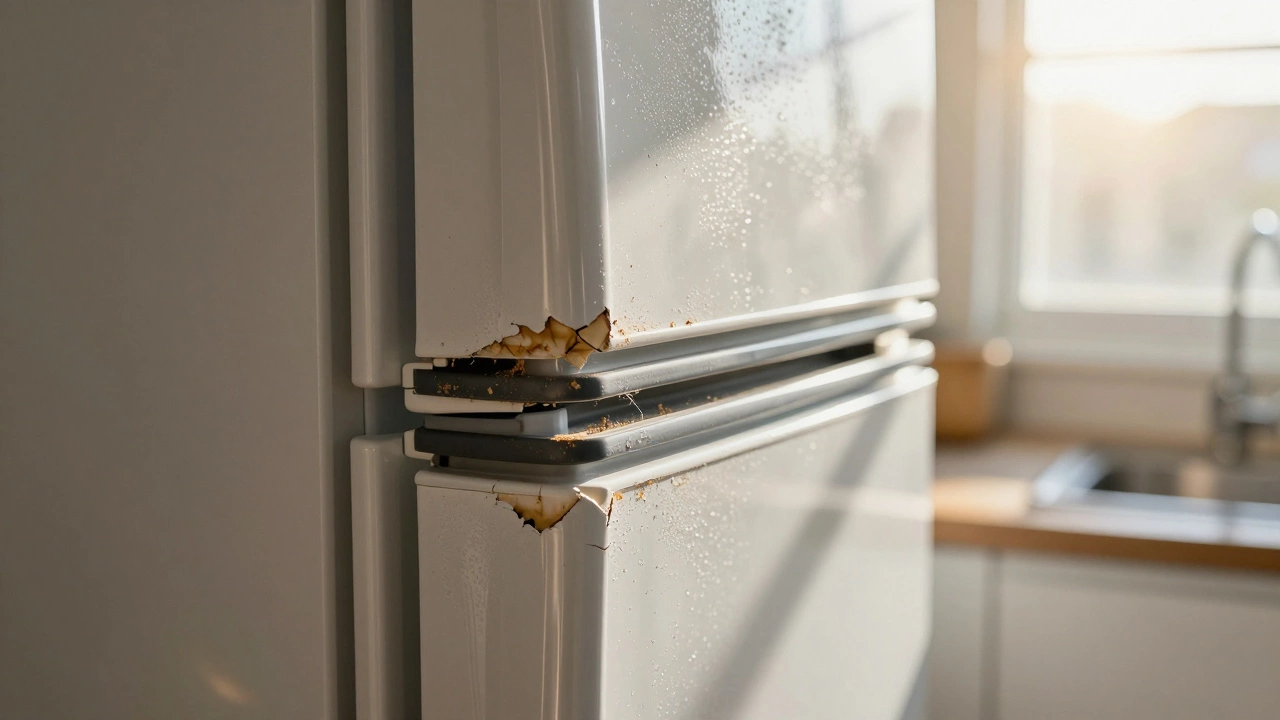
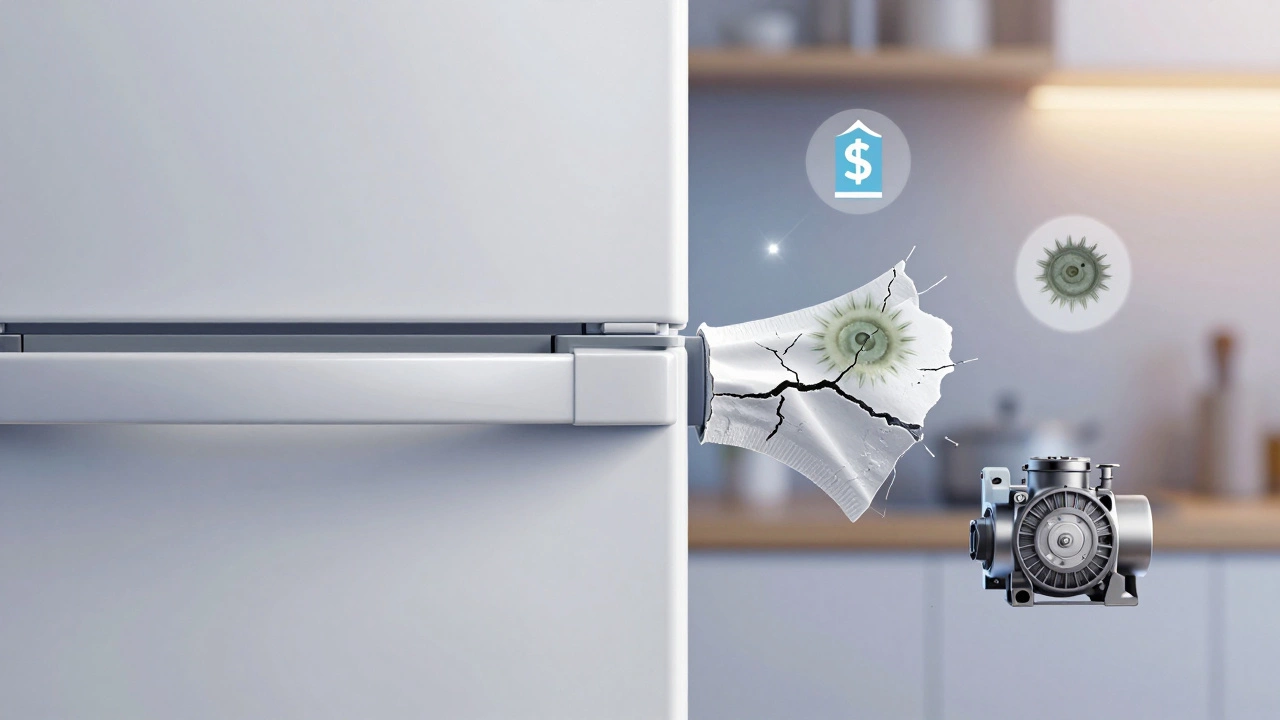
The door seal is the rubber strip around the fridge and freezer doors. It’s not flashy. It doesn’t have moving parts. But it does one critical thing: keeps cold air in and warm air out. When it cracks, hardens, or pulls away from the frame, your fridge starts working overtime. You won’t notice it right away. But over time, your energy bill creeps up, your food spoils faster, and you hear the compressor kicking on every 10 minutes.
I’ve seen this a hundred times. A customer calls because their fridge is "too warm." They check the thermostat, clean the coils, even reset the unit. Nothing helps. Then I lift the door - and there it is: the seal is cracked near the hinge, peeling like old tape. Cold air is leaking out. Warm, humid Auckland air is sneaking in. The compressor is running 18 hours a day just to keep up.
Door seals don’t last forever. They’re made of flexible PVC or silicone, and over 8-12 years, they dry out from heat, sunlight, and frequent use. In homes with kids, pets, or messy fridge openings, the seal gets tugged, torn, or smeared with food residue. Even a small gap - say, 2mm wide - can increase energy use by 30%.
How to Test Your Door Seal
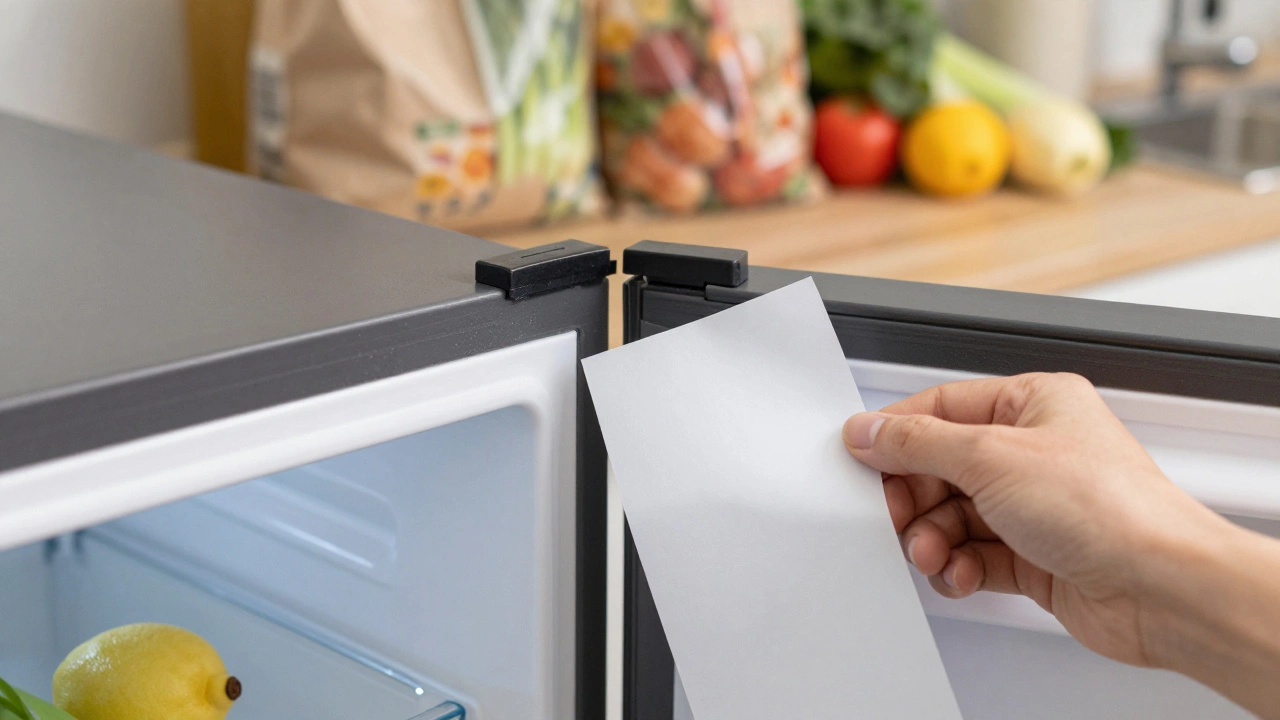
You don’t need a tool to check this. Just do the paper test:
- Close the door on a piece of printer paper halfway down the seal.
- Try to pull it out. If it slides out easily, the seal is weak.
- Repeat at the top, middle, and bottom of both the fridge and freezer doors.
If the paper slips out at any point, the seal is failing. You’ll also notice condensation on the outside of the door, frost building up inside the fridge, or a musty smell - all signs that moist air is getting in.
Some people try gluing or taping the seal. Don’t. It doesn’t work. The seal needs to form a full, even contact all the way around. A patch job just delays the inevitable. Replacement is cheap and easy.
Replacing the Seal: What You Need to Know
Replacements cost between $35 and $85 depending on your model. Most fridge brands - Samsung, LG, Whirlpool, Fisher & Paykel - sell OEM seals online. You’ll need the model number (usually on the inside wall or door frame). No technician required. Here’s how:
- Unplug the fridge.
- Remove the old seal by gently prying it out from the groove. Some have clips; others just snap in.
- Soak the new seal in warm water for 10 minutes. This makes it flexible.
- Start at one corner and press the new seal into the groove, working your way around.
- Use a flat tool like a plastic spatula to tuck it in tightly.
- Plug the fridge back in and wait 24 hours before loading it up.
It takes under an hour. I’ve done it myself on three fridges in the last month. No tools, no mess, no call-out fee.
Other Common Fridge Repairs - and Why They’re Not #1
People think the compressor is the big problem. It’s not. Compressor failures do happen, but they’re rare - maybe 5% of all fridge repairs. When they do fail, the fridge goes completely warm. No noise. No cooling. It’s a total loss. Replacing it costs $800+, and most people just buy a new fridge.
Thermostats go bad too. But they usually cause minor temperature swings, not total failure. You’ll notice your freezer is too cold or the fridge is just a little warm. It’s fixable, but it’s not the #1 issue.
Evaporator fan motors? Yes, they fail. Especially in frost-free models. If you hear a loud buzzing or no air blowing in the freezer, that’s the fan. But again, it’s less common than the seal. And it’s usually paired with ice buildup - something you can see and diagnose yourself.
Even condenser coils - the dusty coils on the back or bottom - get clogged. Cleaning them helps efficiency, but it’s maintenance, not a repair. You do it every 6 months. It doesn’t break the fridge. It just makes it work harder.
None of these are as frequent - or as preventable - as a worn door seal.
What Happens If You Ignore a Bad Seal?
It’s not just about energy bills. A leaking seal lets moisture in. That moisture freezes on the evaporator coils. Over time, ice builds up, blocking airflow. Now your fridge can’t cool properly. Then the compressor overheats. Then it starts cycling on and off too fast. Then it burns out.
One bad seal can kill your compressor in 18 months. That’s not a coincidence. That’s physics. And it’s completely avoidable.
I’ve seen fridges that were 15 years old, still running fine, because the owner replaced the seal at year 8. I’ve seen others that died at year 10 because they ignored the peeling rubber.
How to Make Your Seal Last Longer
Here’s what actually works:
- Clean the seal every 3 months with warm water and mild soap. Wipe it dry.
- Don’t slam the door. Close it gently - especially if it’s loaded with groceries.
- Keep the area around the fridge cool. Don’t put it next to the oven or in direct sunlight.
- Check for gaps twice a year. Use the paper test.
- Replace the seal before it cracks. Don’t wait for frost to appear.
That’s it. No magic. Just attention.
When to Call a Pro
If the seal looks fine but your fridge still isn’t cooling, then it’s time to dig deeper. The compressor, thermostat, or refrigerant line could be the issue. But those are expensive fixes. If your fridge is over 10 years old, it’s usually cheaper to replace it than repair it.
But if the seal is the problem? Fix it. It’s the single most cost-effective repair you can make. And it’s the reason 7 out of 10 fridge repairs in Auckland are the same thing.
Is a bad fridge seal dangerous?
Not directly, but it can make food spoil faster. Warm air brings in moisture and bacteria. If your fridge stays above 4°C for more than a few hours, perishables like dairy, meat, and leftovers can go bad without you noticing. That’s a food safety risk.
Can I use duct tape to fix a torn seal?
No. Duct tape won’t create an airtight seal. It gets sticky, attracts dust, and peels off in the cold. It also traps moisture, which leads to mold. Replace the seal - it’s cheaper than replacing spoiled food.
Why does my fridge door stick?
If the door sticks, the seal is working too well - which usually means the fridge is under pressure. This happens if the door was closed while the inside was still warm. Let the fridge cool for 30 minutes, then try again. If it sticks constantly, the seal might be warped or misaligned.
How do I know if I need a new fridge instead of a repair?
If your fridge is over 12 years old and needs a compressor, thermostat, or refrigerant recharge, it’s time to replace it. New models use 40-50% less energy. A $1,200 fridge pays for itself in energy savings within 3-4 years. Also, modern fridges have better seals, better temperature control, and smart alerts.
Do all fridges have the same type of door seal?
No. Seals vary by brand, model, and even door style. French door fridges have two seals. Bottom-freezer models have a different seal shape than top-freezer ones. Always match the part number. A universal seal might fit, but it won’t seal properly. OEM parts are worth the extra cost.