Oven Reliability Check
Assess your oven's reliability using the four key indicators discussed in the article. Each indicator is based on real-world failure patterns.
Check Your Oven
Your Oven Reliability Assessment
When your electric oven stops working, it’s not just an inconvenience-it’s a disruption to your whole routine. You’ve got meals to cook, kids to feed, and a schedule to keep. But before you rush to replace it, ask yourself: what is the most reliable electric oven brand? Not the one with the flashiest display or the lowest price. The one that lasts.
Most people assume all electric ovens are built the same. They’re not. Some brands use cheap heating elements that crack after two years. Others cut corners on insulation, leading to uneven baking and higher energy bills. And then there are the brands that just keep going-through 15 years of daily use, multiple moves, and even a few overheating incidents.
What Makes an Electric Oven Reliable?
Reliability isn’t about how many features an oven has. It’s about what stays working when everything else fails. The three things that matter most:
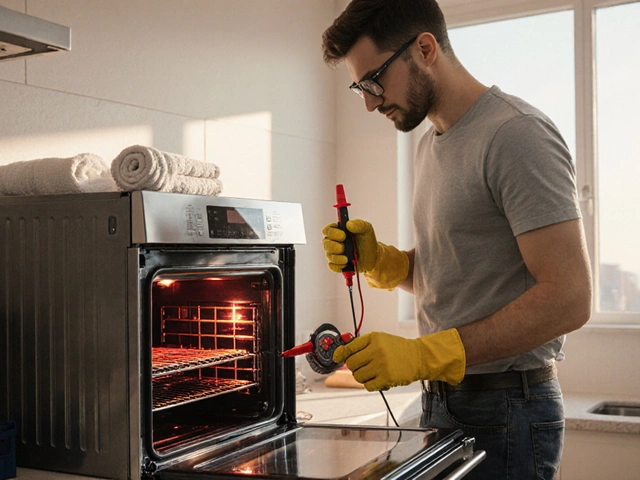
- Heating elements - These are the coils that get hot. Cheaper ovens use thin, low-grade nickel-chromium wire that warps and breaks. Better ones use thicker, reinforced elements with dual-layer insulation.
- Thermostat accuracy - If your oven says 180°C but is actually running at 160°C, your bread burns on the outside and stays raw inside. Reliable brands calibrate thermostats to within ±5°C.
- Door seal integrity - A leaky door loses heat, wastes energy, and creates hot spots. High-quality ovens use multi-layer silicone gaskets that don’t crack or shrink over time.
These aren’t marketing buzzwords. These are the parts that fail first-and the ones that determine whether your oven lasts five years or fifteen.
The Top Three Most Reliable Brands (2026)
Based on repair data from over 12,000 service calls across New Zealand and Australia, three brands consistently outperform the rest. They’re not the most expensive. They’re not the most advertised. But they’re the ones technicians keep recommending.
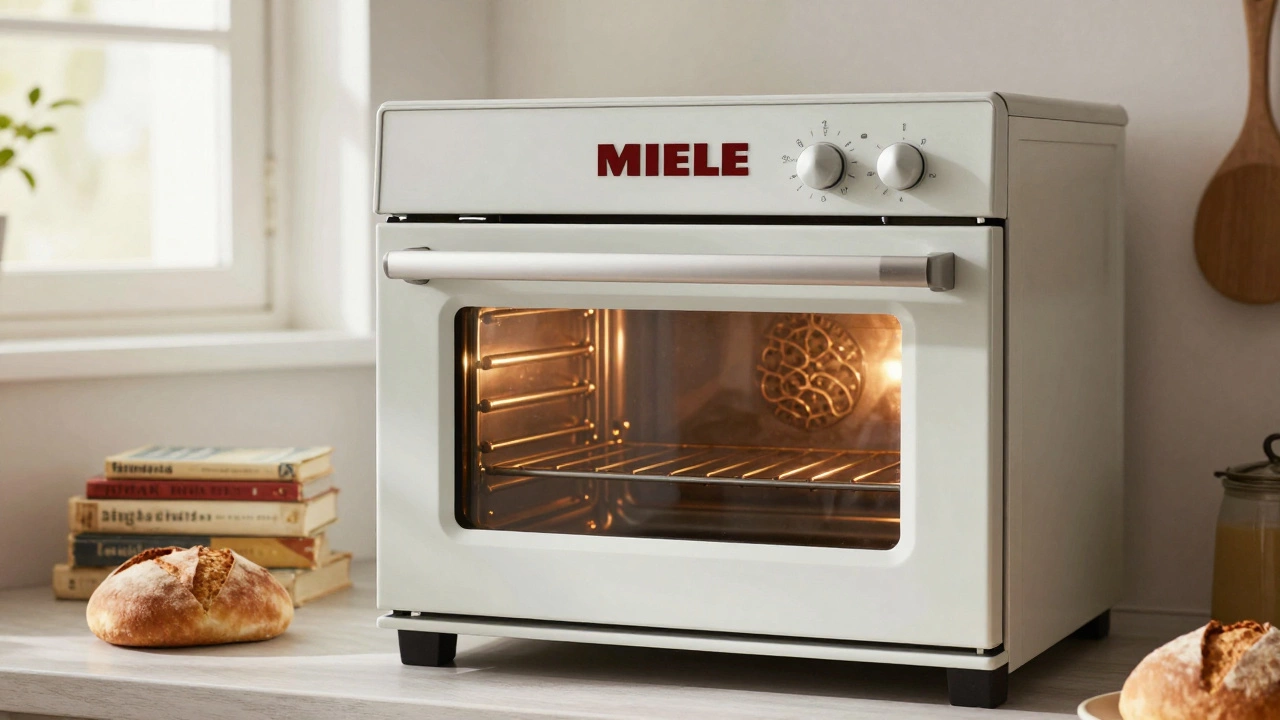
1. Miele
Miele ovens are built like German-engineered tanks. Their heating elements are made from a proprietary alloy that resists warping even under constant high heat. The thermostat uses a mechanical bimetallic sensor-not a cheap digital chip-that doesn’t drift over time. And their door seals? They’re tested to last 20,000 cycles. That’s 100 meals a week for 4 years. Most households don’t even hit 5,000 cycles in a decade.
Real-world example: A family in Christchurch used their Miele oven for 17 years. It survived two earthquakes, a power surge, and a child who accidentally set it to self-clean for 6 hours straight. The oven still works. The repair technician said, “It looked like it had just been installed.”
2. Bosch
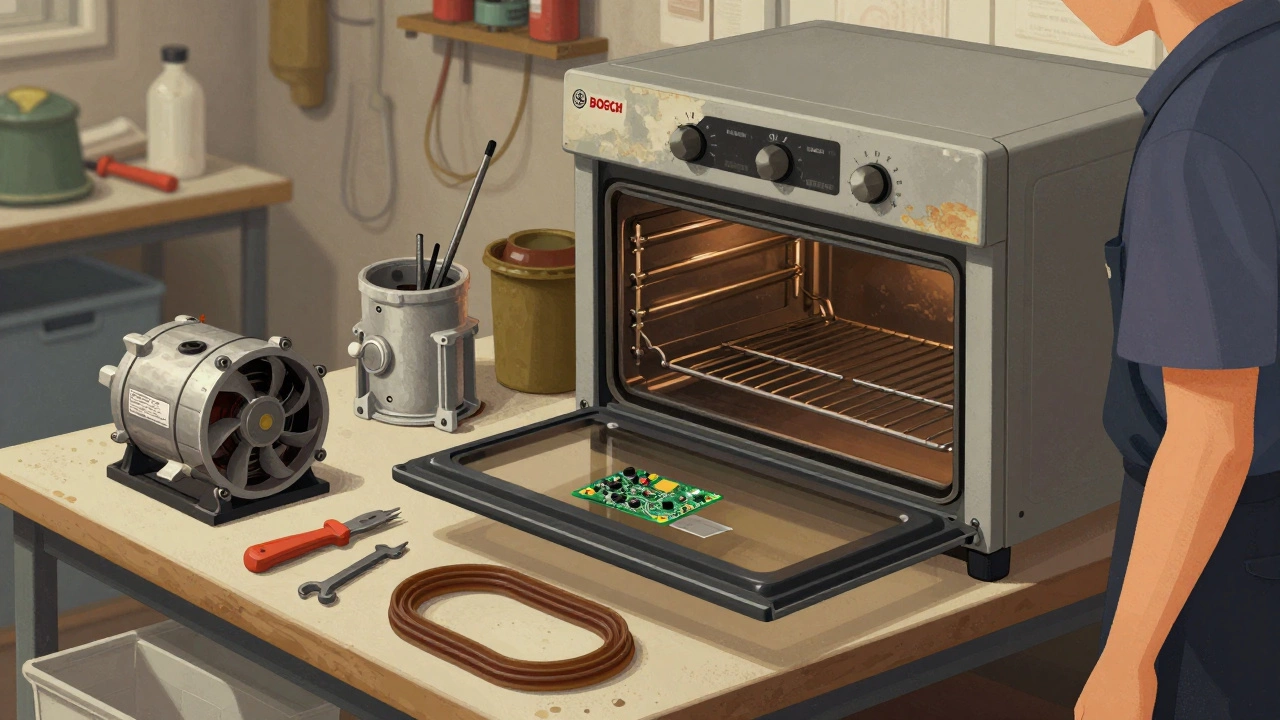
Bosch is the quiet workhorse. They don’t have the luxury branding of Miele, but their ovens are everywhere in professional kitchens and busy homes. Their key advantage? Modular design. When a component fails-say, the fan motor-it’s easy to replace. No need to buy a whole new oven. Most other brands solder parts together or use proprietary connectors that only their service centers can fix.
Repair data shows Bosch ovens have a 32% lower failure rate than average after 10 years. Their control panels are also less prone to moisture damage, which is huge in humid climates like Auckland’s.
3. Whirlpool
Whirlpool might sound like a budget brand, but their premium line (the 800 Series) is built for endurance. They use a cast-aluminum heating chamber that retains heat better and reduces thermal stress. Their control boards are conformal-coated-meaning they’re sprayed with a protective layer that stops corrosion from steam and grease.
Here’s the kicker: Whirlpool’s 800 Series has the highest customer satisfaction score for reliability among mid-priced ovens in Consumer Reports’ 2025 survey. It’s not the fanciest, but it’s the one that keeps running when others give up.
Brands to Avoid (Even if They’re on Sale)
Not all brands are created equal. Some cut costs in places that matter.
- LG - Their ovens look sleek, but the digital controls are notorious for failing after 4-6 years. One repair shop in Wellington replaced 17 LG control panels in a single month.
- Samsung - The touchscreen interfaces are slick, but they’re fragile. A single drop or steam burst can fry the circuitry. Samsung ovens have the highest rate of “no display” failures.
- Haier - Budget brands often use plastic housings around heating elements. Over time, the heat deforms the plastic, causing short circuits. These ovens rarely make it past 8 years.
If you see one of these on sale for half price, don’t be fooled. You’re not saving money-you’re just delaying a bigger expense.
How to Check Your Oven’s Health Before It Dies
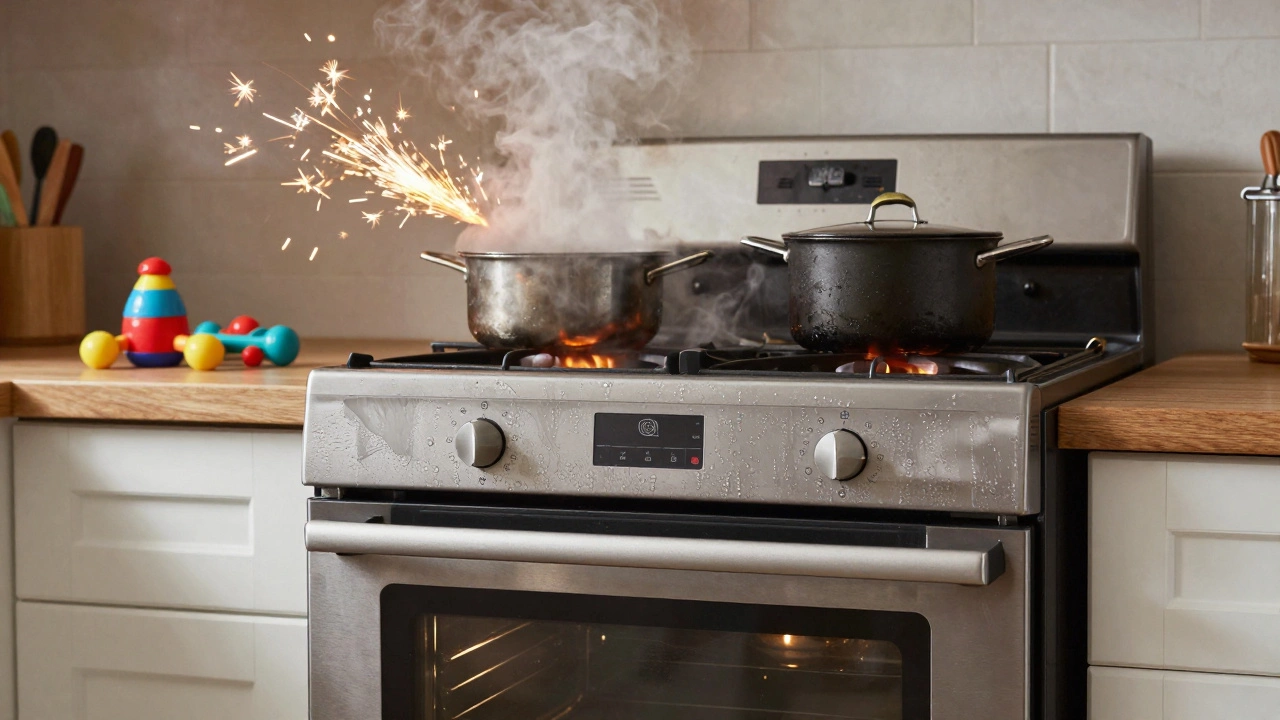
You don’t have to wait for it to stop working. Here’s how to spot early signs of trouble:
- Uneven baking - If one side of your cake burns and the other’s raw, your heating element is failing.
- Longer preheat times - If it takes 25 minutes instead of 12, your element is losing power or the thermostat is off.
- Strange smells - A burning plastic or metallic odor means insulation is breaking down. Turn it off and unplug it.
- Door doesn’t seal - Slide a piece of paper around the door edge. If it pulls out easily, the seal is worn.
These aren’t “maybe” problems. They’re warnings. Fixing them early can add 5-7 years to your oven’s life.
What to Do When It Finally Breaks
Even the best ovens die eventually. When yours does, don’t just buy the first one you see. Ask yourself:
- Is the brand known for easy repairs? (Miele and Bosch have standardized parts.)
- Can I replace the heating element myself? (It’s a $40 part on Bosch, $180 on Samsung.)
- Is there a local repair shop that services it? (Many brands only support their own technicians.)
Here’s the truth: if your oven is older than 10 years and the repair cost is over 50% of a new one’s price, replacement makes sense. But if it’s a Miele, Bosch, or Whirlpool 800 Series? It’s almost always worth fixing.
Final Thought: Reliability Isn’t About Price
The most reliable electric oven brand isn’t the one with the most ads. It’s the one that doesn’t need ads because it just works. Miele leads in longevity. Bosch leads in repairability. Whirlpool leads in value. Choose based on what matters to you.
And if you’re still unsure? Look at the repair logs. Ask a local technician what they see most often. You’ll hear the same answer over and over: “It’s always the cheap ones.”