Fridge Cooling Troubleshooter
Check your symptoms to identify why your fridge isn't cooling but the light is on
What do you observe?
Likely Cause
No symptoms selected yet
If your fridge light turns on when you open the door but the inside isn’t cold, you’re not alone. This is one of the most common fridge problems we see in Auckland homes, especially during summer. The light working means power is getting to the appliance - but something’s broken between the power source and the cooling system. It’s not a power outage. It’s not a tripped circuit. It’s something inside.
The Compressor Isn’t Running
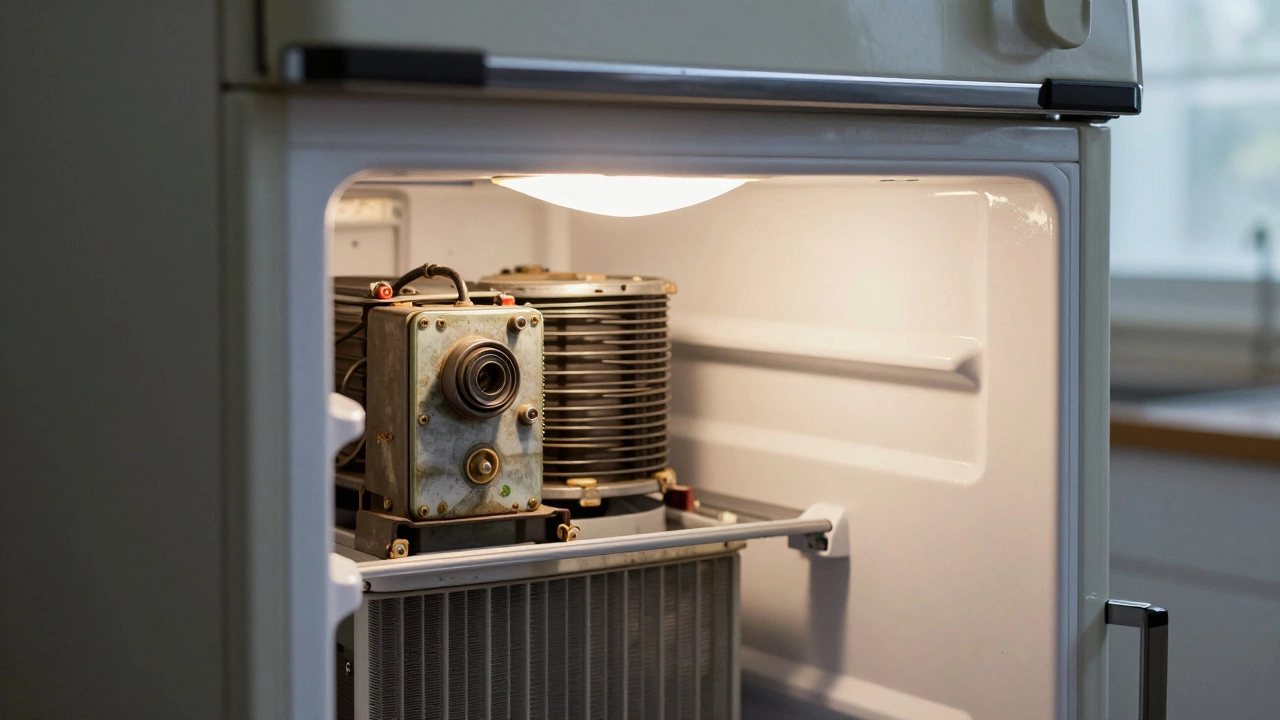
The compressor is the heart of your fridge. It pumps refrigerant through the coils to pull heat out. If it’s not running, nothing cools - even if the light shines bright. First, listen closely when you close the door. You should hear a low hum or click. If it’s completely silent, the compressor might be dead or not getting the signal to start.
Older fridges (over 10 years) often fail here. The start relay, a small component attached to the compressor, can burn out. It’s a cheap fix - around $30 to replace - but hard to spot without pulling the fridge out and removing the back panel. If you hear a clicking noise but no hum, that’s the relay trying and failing to kick the compressor on.
Condenser Coils Are Clogged
Every fridge has coils, usually at the back or bottom, that release heat. If they’re covered in dust, pet hair, or kitchen grease, the fridge can’t cool properly. It’s like trying to breathe through a clogged nose - the system overheats and shuts down to protect itself.
In Auckland homes, this is especially common if you have pets or cook often. Vacuum the coils every three months. Use a brush attachment to get into tight spots. If you’ve never cleaned them, expect a thick layer of grime. A dirty coil can make your fridge work 40% harder, which kills the compressor faster.
The Evaporator Fan Is Broken
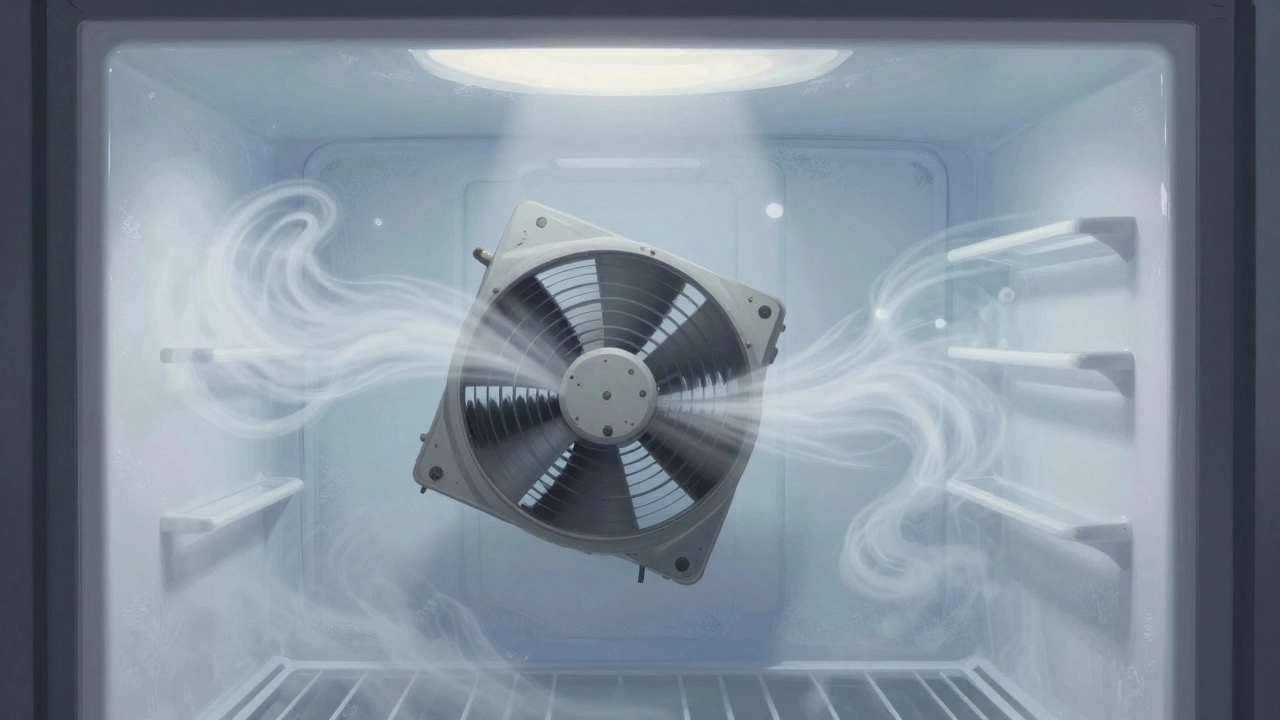
Inside the freezer compartment, there’s a small fan that blows cold air into the fridge section. If it stops, the freezer might still be cold, but the fridge stays warm. Open the freezer and listen. If you don’t hear the fan running (or it’s making a grinding noise), the motor is likely dead.
Some fridges have a door switch that turns the fan off when the door opens. If that switch is stuck, the fan won’t turn on even when the door is closed. Try gently pressing the switch with a pencil while the door is shut. If the fan starts, the switch is faulty. Replacement costs under $50 and takes 20 minutes.
Thermostat or Control Board Failure
Your fridge’s thermostat tells the compressor when to turn on. If it’s broken, it might think the fridge is already cold - even when it’s not. Digital models have control boards that can glitch. You might see error codes like “E1” or “F1” on the display. If your fridge has no display, and the temperature dial feels loose or doesn’t click, the thermostat is probably faulty.
Testing a thermostat requires a multimeter. If you’re not comfortable with that, don’t guess. A bad thermostat won’t fix itself. Replacing it is simple, but misdiagnosing it can cost you money. Many people replace the compressor thinking it’s dead, only to find out the thermostat was the issue all along.
Refrigerant Leak
This is the most serious issue - and the most expensive. Refrigerant is a sealed fluid that circulates through the system. If there’s a leak, the fridge loses its ability to cool. Signs include: no cold air at all, frost buildup on the back wall of the freezer, or a hissing sound when the fridge runs.
Leak repairs aren’t DIY. You need a licensed technician with recovery equipment. In New Zealand, it’s illegal to release refrigerant into the air. If your fridge is over 8 years old and has a leak, ask if recharging is worth it. Often, replacing the unit is cheaper than fixing it - especially with newer models using less energy and better insulation.
Door Seals Are Worn Out
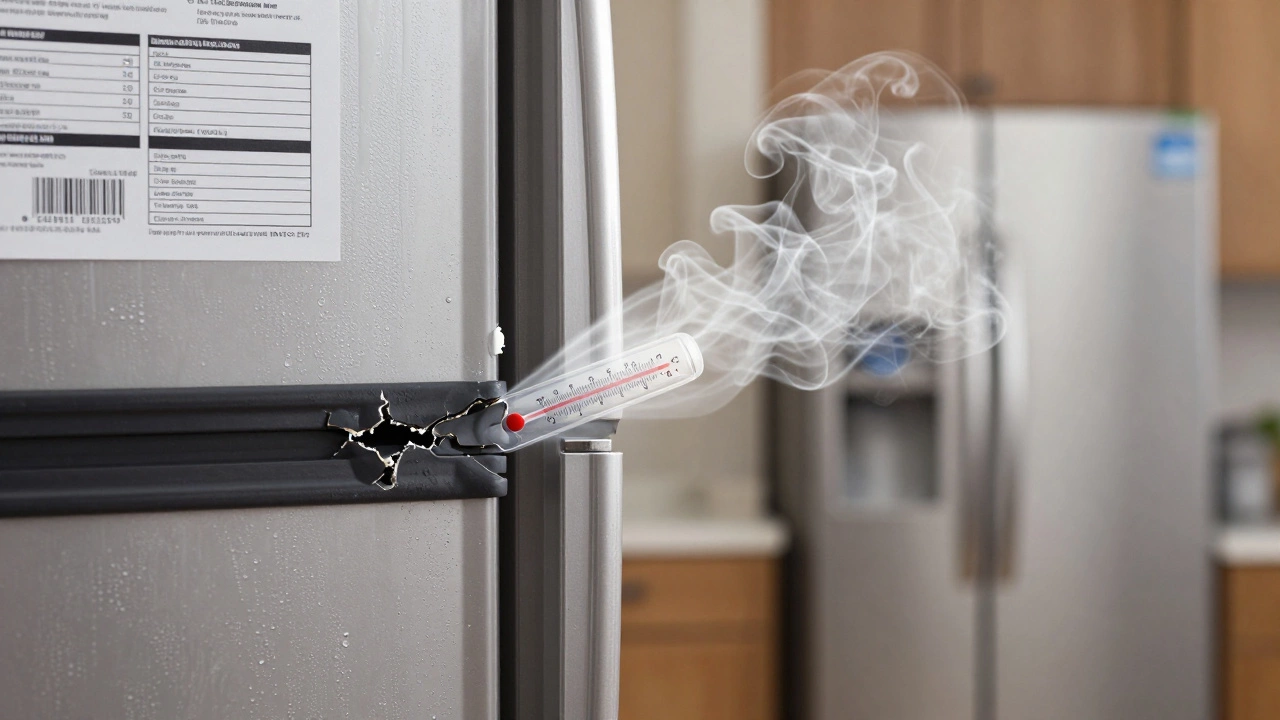
A bad seal doesn’t stop the fridge from cooling - but it makes it work overtime. If cold air leaks out, the compressor runs constantly. You might notice the fridge running non-stop, or condensation forming on the outside. Check the seals by closing a piece of paper in the door. If you can pull it out easily, the seal is weak.
Seals dry out and crack over time, especially near the hinge. A $20 replacement seal can save you hundreds in wasted electricity. Clean them monthly with warm water and vinegar. Don’t use oil or grease - it breaks down the rubber faster.
What to Do Next
Start with the easy fixes: clean the coils, check the door seals, and listen for fan noise. If those don’t help, unplug the fridge for 10 minutes. Sometimes, a power reset clears a glitch in the control board.
If it still doesn’t cool, don’t keep guessing. Call a technician. Most charge $80-$120 for a service call, but many waive it if you go ahead with the repair. Ask if they’ll give you a quote before starting work. Avoid companies that charge upfront.
And if your fridge is older than 12 years, consider replacement. New models use 40-50% less energy. A fridge that costs $1,200 might save you $150 a year in power bills. In Auckland’s hot summers, that adds up fast.
When to Replace Instead of Repair
Here’s a quick rule: if the repair cost is more than half the price of a new fridge, walk away. Also, if you’ve had two major repairs in the last two years, it’s time. Modern fridges have better temperature control, quieter compressors, and smart features like alerts when the door’s left open.
Look for ENERGY STAR-rated models. They’re required to use 15% less power than standard ones. Brands like LG, Samsung, and Fisher & Paykel have reliable units available in New Zealand for under $1,500. You’ll get a 2-year warranty and better customer support than you’d get from a 15-year-old appliance.