
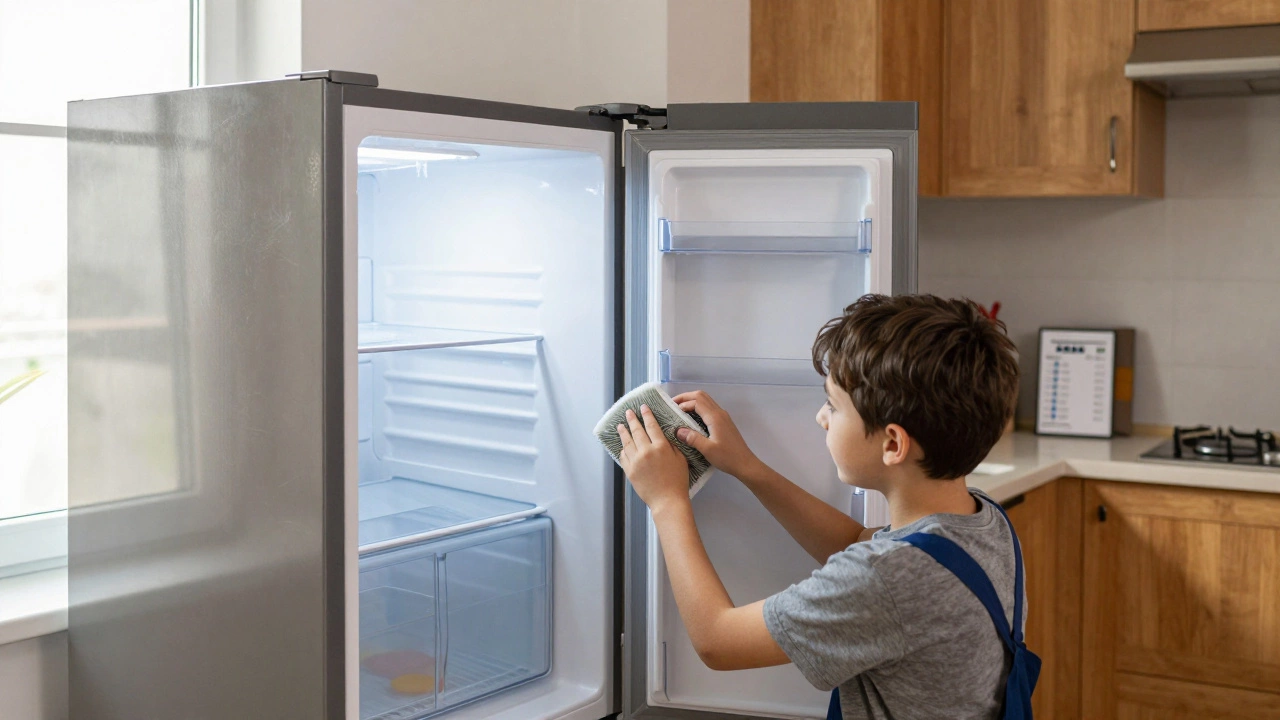
Refrigerator Repair vs Replace Calculator
Input Your Data
You open your fridge and hear a strange hum. The cooling isn’t as strong as it used to be. The door seal looks worn. And you wonder: Is it worth fixing a 7-year-old refrigerator? It’s not broken yet, but it’s not acting like it should. You’ve heard conflicting advice - some say fix it, others say replace it. Let’s cut through the noise with real numbers, real costs, and real experience from working on fridges in Auckland homes.
How long should a fridge actually last?
A typical refrigerator lasts between 10 and 15 years. That’s the standard you’ll find in manufacturer manuals and appliance repair guides. But that’s an average. Some fridges die at 6 years. Others run for 20. What makes the difference? Build quality, how often it’s opened, whether it’s kept clean, and if it’s had regular maintenance. A 7-year-old fridge is still in the middle of its life - not old, not new. It’s not time to panic, but it’s time to pay attention.
Modern fridges are more efficient than older models, but they’re also more complex. A 7-year-old unit likely uses a single compressor, basic temperature sensors, and standard insulation. That means if something breaks, it’s usually fixable - unless it’s the compressor or a major control board failure.
What are the most common problems at this age?
At 7 years, fridges don’t usually die all at once. They start showing signs. Here’s what we see most often in Auckland homes:
- Warm food - The fridge isn’t holding below 4°C. Could be a dirty condenser coil, a failing fan, or a weak door seal.
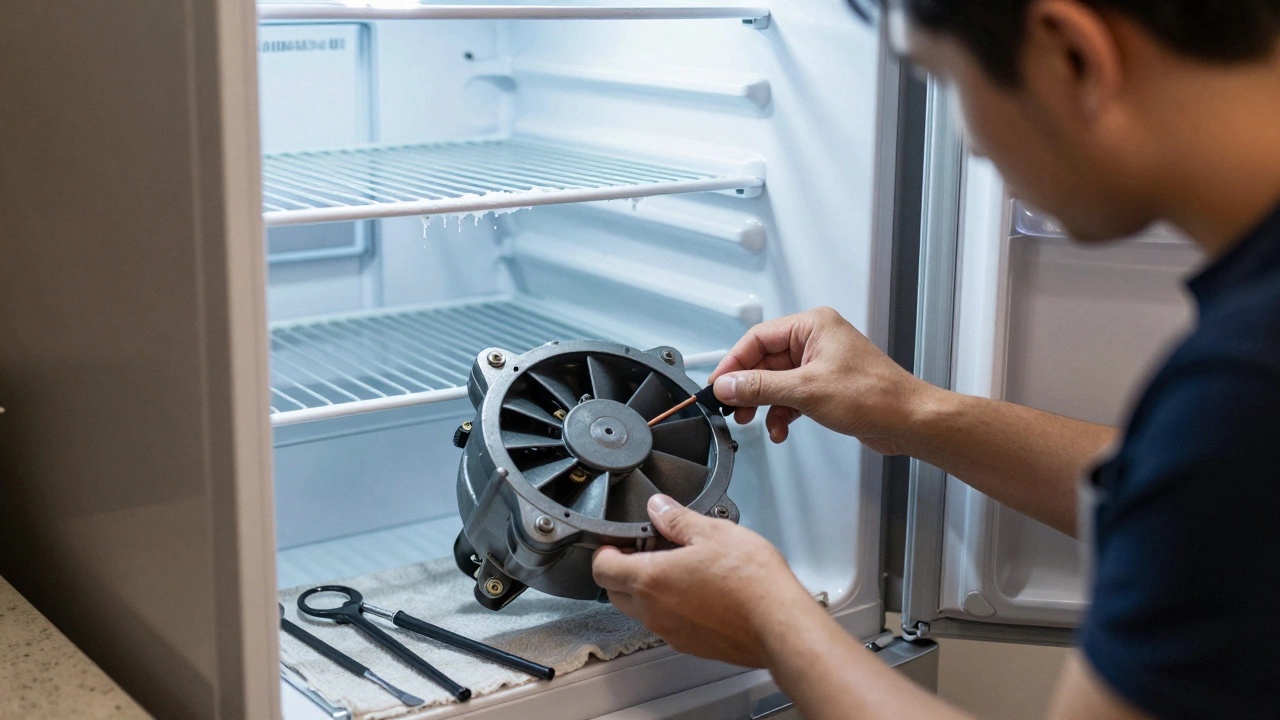
- Loud noises - Rattling, buzzing, or grinding sounds. Often the evaporator fan or condenser fan motor. Easy fix.
- Excessive frost - Ice building up in the freezer. Usually a faulty defrost heater or thermostat. A $70 part and an hour of work.
- Water on the floor - Clogged defrost drain. Happens when crumbs or ice block the tube. Simple to clear.
- High electricity bill - If your fridge is using 20% more power than when it was new, it’s working harder than it should.
Most of these issues cost between $120 and $300 to fix. That’s not cheap, but it’s far less than replacing the whole unit.
Cost to repair vs cost to replace
Let’s do the math. A basic new fridge in New Zealand starts at around $800. Mid-range models with French doors or smart features run $1,500-$2,500. Installation, delivery, and disposal can add another $100-$200. That’s $900-$2,700 total.
Now, repair costs for a 7-year-old fridge:
- Door seal replacement: $80-$150
- Condenser coil cleaning: $60-$100
- Fan motor replacement: $120-$200
- Defrost heater: $90-$140
- Thermostat or control board: $150-$300
- Compressor replacement: $400-$700 (rare, but possible)
If your fridge needs one or two of these fixes, you’re looking at $200-$400. That’s less than half the cost of a new one. And you’re keeping a working appliance out of landfill.
But here’s the catch: if the compressor is failing, you’re at a crossroads. Replacing it costs almost as much as a new fridge. At that point, it’s usually not worth it - unless the fridge is a high-end model with special features you’d hate to lose.
Energy efficiency: The hidden cost of an old fridge
A fridge from 2019 uses about 400-500 kWh per year. A new Energy Star-rated fridge uses 250-350 kWh. That’s a 30-40% drop in usage. In New Zealand, electricity costs about 30 cents per kWh. So, an old fridge costs you $150-$180 a year. A new one? $75-$105.
That’s $75-$100 in savings every year. If you fix your fridge for $300, you’ll break even on energy savings in 3-4 years. After that, you’re saving money every year you keep it.
But if you’re paying $200+ a year in electricity just for your fridge, and you’ve already spent $300 on repairs, you might be better off upgrading. Especially if you’re on a time-of-use plan or have high rates.
When to walk away
Not every fridge is worth saving. Here’s when to replace it:
- The compressor is failing - repairs cost 70% or more of a new unit’s price.
- It’s a built-in or panel-ready model - replacements are expensive and hard to match.
- It’s leaking refrigerant - that’s not just expensive to fix, it’s environmentally risky.
- You’re planning to move in the next 1-2 years - why invest in an old appliance?
- It’s noisy, inefficient, and constantly breaking - it’s a hassle, not a solution.
Also, if your fridge is over 10 years old and needs multiple repairs, it’s time to consider replacement. But at 7 years? You’re not there yet.

What about environmental impact?
Every fridge that gets thrown away ends up in a landfill. Even if it’s recycled, the energy used to make a new one - mining metals, manufacturing plastic, shipping components - has a huge carbon footprint. Repairing extends the life of what already exists. That’s better for the planet.
In Auckland, we’ve seen a 22% drop in fridge waste since 2022, thanks to more repair services and awareness. Choosing repair isn’t just smart financially - it’s a small act of sustainability.
Real-world example: A fridge we fixed in Mt Roskill
Last year, a client called us because their 7-year-old Samsung fridge wasn’t cooling. The freezer worked, but the fridge compartment was at 12°C. We checked it: the evaporator fan motor had burned out. The part cost $110. Labor: $140. Total: $250.
They were ready to buy a new $1,800 model. We showed them their electricity bill - $187/month for fridge and freezer. After the fix, it dropped to $132. They saved $55 a month. In 5 months, the repair paid for itself. They still use that fridge today. No problems.
Final advice: Do this before you decide
Before you toss it or buy a new one, do this:
- Check the energy rating label. Is it an A+ or better? If it’s a C or lower, efficiency is a real concern.
- Listen for unusual noises. A constant hum? Normal. Grinding? Problem.
- Test the door seal. Put a piece of paper in the door. If it slides out easily, the seal is bad.
- Look for frost buildup in the freezer. Thick ice? Defrost system is failing.
- Call a local repair technician. Most offer free diagnostics. Ask for a quote before you agree to anything.
If the repair cost is under $400 and the fridge is otherwise in good shape, fix it. You’ll save money, reduce waste, and avoid the hassle of moving a new appliance in. At 7 years, your fridge isn’t done - it just needs a little help.