Boiler Replacement Mess Estimator
How messy will your boiler replacement be?
Answer these questions to estimate mess level. Most professional replacements are clean when done properly.
Replacing a boiler doesn’t have to be a nightmare. But if you’ve never done it before, it’s easy to imagine dust clouds, flooded floors, and a week-long mess. The truth? Most professional boiler replacements in Auckland homes are clean, quick, and surprisingly tidy-especially when you hire someone who knows what they’re doing.
How messy is a boiler replacement really?
The mess level depends on three things: the age of your old boiler, the condition of your plumbing, and who’s doing the job. A 20-year-old boiler sitting on a rusted floor with brittle pipes? That’s going to create some chaos. A modern system installed in a well-maintained utility room? Almost no mess at all.
Here’s what actually happens during a typical replacement:
- The engineer covers the floor with heavy-duty drop sheets-usually multiple layers.
- They shut off water, gas, and electricity before touching a single pipe.
- Old pipes are cut with a pipe cutter, not a saw-so no sparks, no debris flying.
- Drain water is collected in buckets or pumped out with a small vacuum system.
- Any dust from drilling wall brackets is caught with a HEPA-filter vacuum.
Most jobs take under six hours. By the time they leave, your floor looks the same as when they arrived. No gray dust on your curtains. No wet patches on your carpet. No lingering smell of rust or oil.
What causes the worst messes?
It’s not the boiler itself-it’s the setup around it. The messiest replacements I’ve seen happened in homes where:
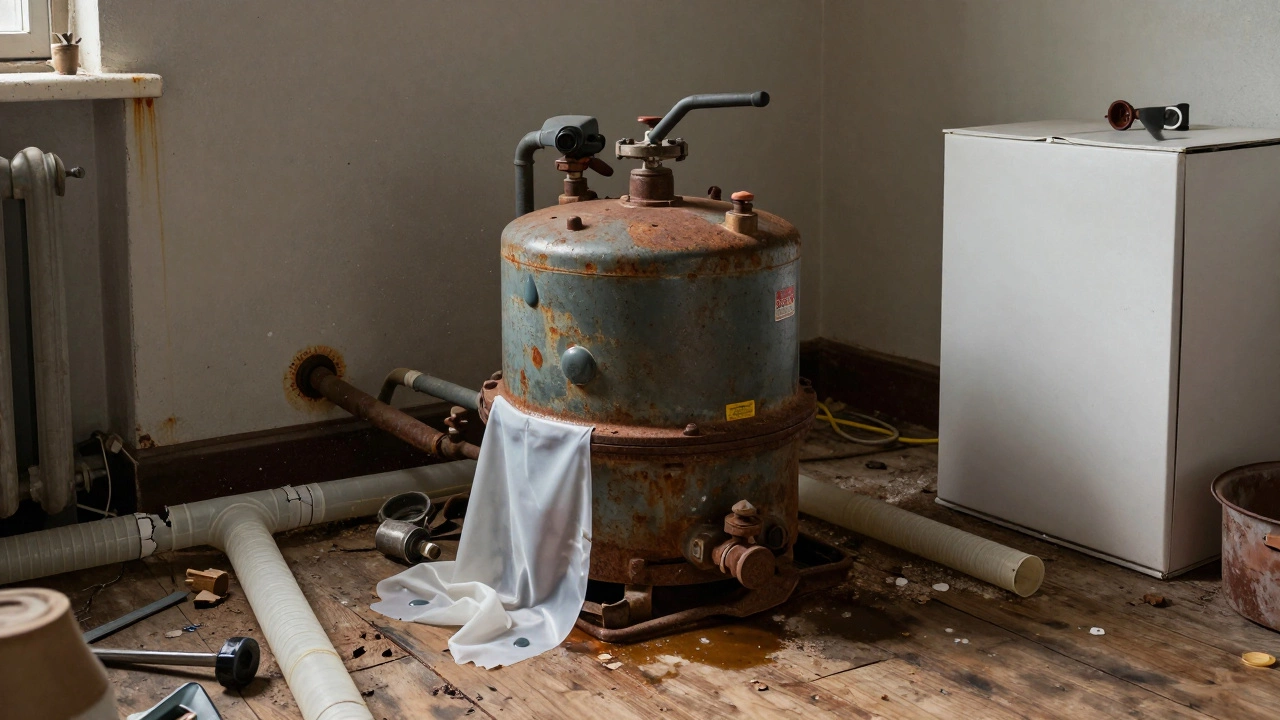
- The old boiler was sitting directly on a wooden floor that had rotted underneath from decades of condensation.
- Previous owners used plastic pipes that cracked when removed.
- The system hadn’t been flushed in 15+ years, so sludge came out when they drained it.
- The installer didn’t use proper isolation valves, so water leaked into the living room.
These aren’t normal. They’re red flags. If your boiler room looks like a storage shed full of forgotten tools and broken boxes, that’s your real problem-not the new boiler.
What you should expect on the day
On replacement day, you’ll get a clear heads-up. Most reputable companies send a technician to your home a week ahead to check access, measure space, and point out potential issues. They’ll tell you if you need to move furniture, turn off the water, or clear a path.
On the day:
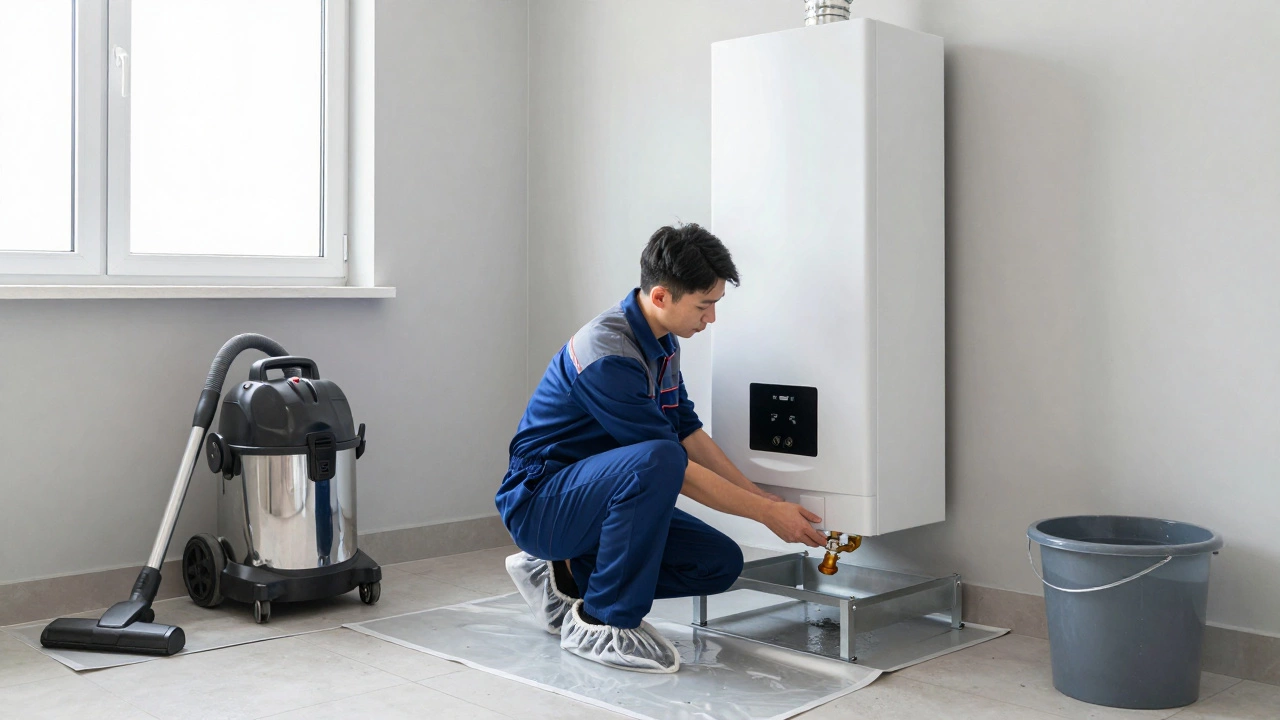
- They arrive with protective gear: shoe covers, drop sheets, and a portable vacuum.
- They isolate the old boiler and drain it slowly into a container-not into your sink.
- They remove the old unit and haul it away in a sealed bin.
- They install the new boiler on a new steel base if the floor is uneven.
- They test pressure, check for leaks, and flush the system with inhibitor fluid.
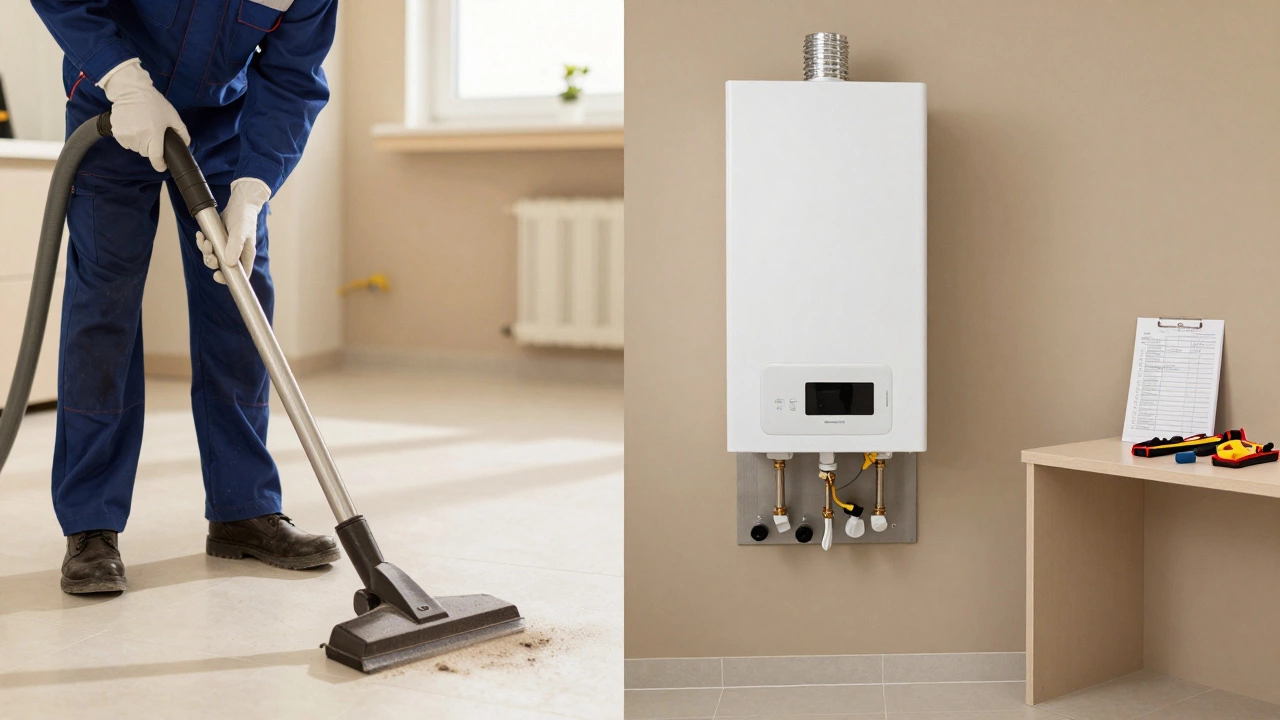
- They clean up every tool, wipe down surfaces, and vacuum the area.
They’ll even leave you a checklist: what to check in the first 24 hours, who to call if you hear a strange noise, and how to reset the boiler if it shuts down.
Why DIY boiler replacement is a bad idea
You might think, “I’m handy. I can do this myself.” But boilers aren’t like changing a lightbulb. In New Zealand, gas work is regulated under the Gas (Safety and Measurement) Regulations 2010. Only a licensed gasfitter can legally connect a boiler to the gas line.
Even if you bypass the law, here’s what you risk:
- Gas leaks that can cause explosions or carbon monoxide poisoning.
- Water leaks that rot floorboards and ruin insulation.
- Improper venting that sends fumes back into your home.
- Voiding the manufacturer’s warranty because it wasn’t installed by a certified technician.
And yes-it will be messier. You won’t have the right tools to drain safely. You won’t know how to flush the system properly. You’ll end up with sludge in your radiators, and then you’ll need to call someone anyway.
How to keep the job clean
If you’re replacing your boiler, here’s how to make sure it stays tidy:
- Clear a 2-meter space around the boiler. Move rugs, furniture, and decorations.
- Ask the installer if they use a boiler isolation kit-it prevents water from spilling into your home during removal.
- Request a pre-installation inspection. If they spot old pipes or rusted brackets, they’ll warn you before starting.
- Ask if they include cleanup in the quote. Most do-but not all.
- Take photos before they start. That way, if something gets damaged, you have proof.
Also, don’t be shy about asking for references. A good company will have photos of past jobs-clean floors, tidy workspaces, happy clients.
What happens to the old boiler?
Most installers take the old unit away for recycling. In New Zealand, boilers are classified as WEEE (Waste Electrical and Electronic Equipment). That means metal, copper, and electronics are separated and sent to certified recyclers.
They won’t leave it in your driveway. They won’t dump it behind your shed. Legitimate companies handle disposal legally and responsibly. You’ll get a disposal certificate if you ask for it.
How long does it take to recover?
After the new boiler is installed, you’ll need to wait a few hours for the system to stabilize. Your radiators might take 2-4 hours to warm up fully. Don’t panic if they’re uneven at first-air gets trapped in the system.
Most installers will bleed the radiators for you. If they don’t, ask. It takes five minutes and makes a huge difference.
By the next morning, your home should be warm, quiet, and clean. No lingering smells. No puddles. No dust. Just a new boiler humming quietly in the corner.
Bottom line: It’s not messy if you do it right
Replacing a boiler isn’t messy because of the boiler. It’s messy because of bad prep, bad tools, or bad installers. Choose a licensed, experienced professional who treats your home like their own. Ask for proof of licensing. Ask about their cleanup process. Ask to see before-and-after photos.
With the right team, your boiler replacement will be one of the least stressful home upgrades you’ve ever done. No chaos. No stress. Just warmth, efficiency, and a clean floor.
Will replacing my boiler ruin my floors?
No-not if the installer uses proper protective sheets and lifts the old boiler carefully. Most modern boilers are mounted on steel bases, not directly on the floor. If your floor is damaged, it’s likely from years of condensation under the old unit, not the replacement. A good technician will check for this before starting and may even install a new base.
Do I need to turn off my water and gas during the replacement?
Yes. The installer will shut off your water supply and gas line before removing the old boiler. You don’t need to do anything unless they ask you to. Some companies will even test your gas line for leaks after installation as part of the service.
Can I stay in my house during the boiler replacement?
Yes. Most replacements take less than a day, and installers work cleanly and quietly. You can stay home, cook dinner, or even watch TV. Just avoid the work area while they’re handling pipes or gas lines. Some people prefer to go out for a few hours-especially if they have young kids or pets-but it’s not required.
How do I know if my installer is qualified?
Ask to see their Gasfitter License number. In New Zealand, all gas work must be done by a licensed gasfitter registered with the Gas Industry Company (GIC). You can verify their license online through the GIC register. Also, check if they’re members of the Master Plumbers Association. Reputable companies display their credentials on their website or van.
Is there a best time of year to replace a boiler?
Late spring or early autumn is ideal. It’s not too cold to be without heat, and not too busy for installers. Summer is slow, so you might get better pricing. Winter is peak season-expect delays and higher prices. If your boiler is failing now, don’t wait. A good installer can still complete the job safely, even in freezing weather.
What to do next
If your boiler is over 10 years old, showing signs of rust, making strange noises, or costing more to repair than to replace-don’t wait. Get a free quote from a licensed installer. Ask them to walk you through the process, show you their cleanup method, and explain how they’ll protect your home.
Replacing your boiler isn’t just about warmth. It’s about safety, efficiency, and peace of mind. And when done right, it’s one of the cleanest home upgrades you can make.