Freezer Health Checker
Check Your Freezer's Health
Identify common signs of freezer failure to determine if your appliance needs service.
Your Freezer Assessment
Your freezer is one of those appliances you hardly think about-until the food starts thawing. If you open the door and see a puddle of slush where your ice cream used to be, or if you notice frost has vanished from the walls, something’s wrong. Freezers don’t always scream for help. Sometimes they just… stop. And by the time you notice, your meat, veggies, and frozen meals are on the edge of spoiling. So how do you know for sure if your freezer is broken? Here are the seven most reliable signs that it’s time to call for help.
Your food is thawing or soft
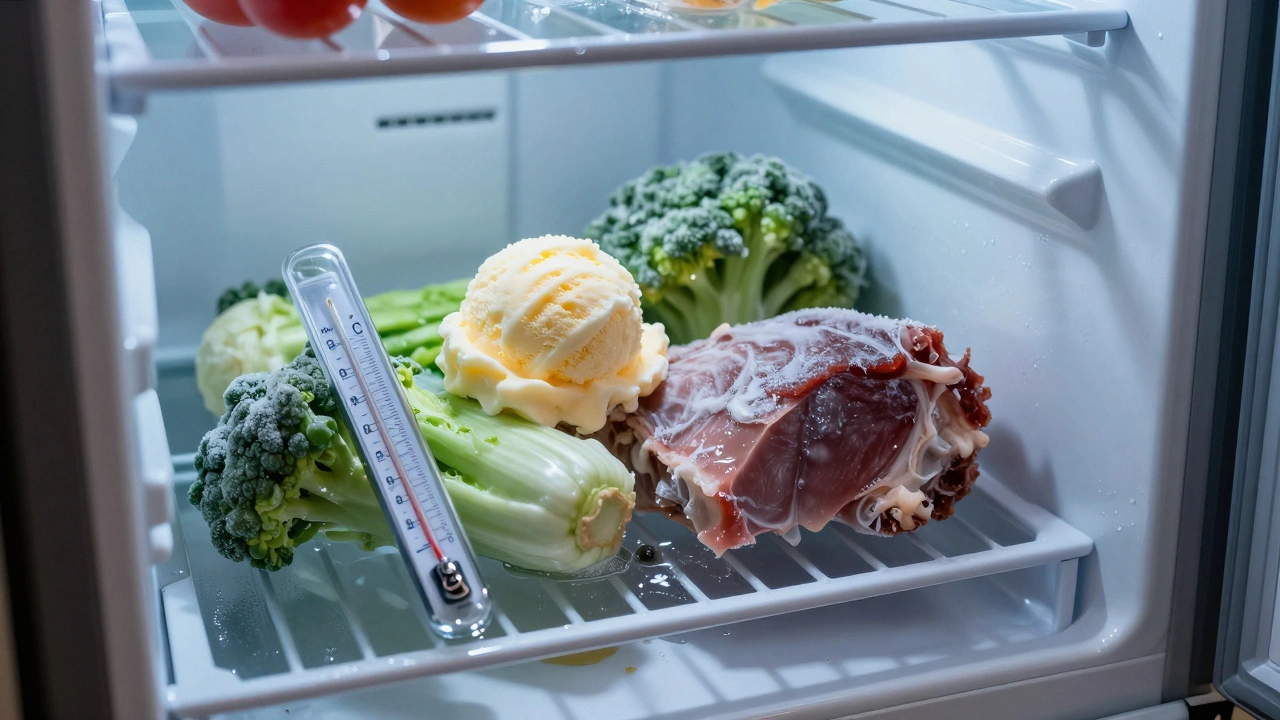
This is the most obvious clue. If your frozen meat feels squishy, your ice cream is runny, or your frozen vegetables are clumped together like a block of mud instead of loose pieces, your freezer isn’t holding temperature. A working freezer should stay at or below -18°C. Anything above -12°C starts to risk food safety. Don’t rely on how cold the air feels when you open the door-check the actual condition of your food. If it’s been more than 24 hours and things are softening, that’s not normal.
The temperature inside isn’t cold enough
Most freezers have a built-in thermometer, but if yours doesn’t, grab a standalone appliance thermometer. Place it between two frozen items overnight and check it in the morning. If it reads higher than -15°C, your freezer is underperforming. A reading above -10°C means your freezer is failing. This isn’t just about convenience-it’s about food safety. Bacteria can grow rapidly in food that warms above -9°C, even if it hasn’t fully thawed.
You hear strange noises-or no noise at all
A quiet freezer isn’t always a good freezer. If you used to hear a soft hum or occasional click from the compressor and now it’s completely silent, that’s a red flag. Compressors don’t just die quietly-they usually give warning signs first. On the flip side, if you’re hearing loud buzzing, grinding, or rattling sounds that didn’t exist before, something’s stuck or worn out. A failing fan motor, a seized compressor, or a broken condenser can all cause abnormal noise. Either way, silence or chaos isn’t normal.
Frost buildup is gone-or way too much
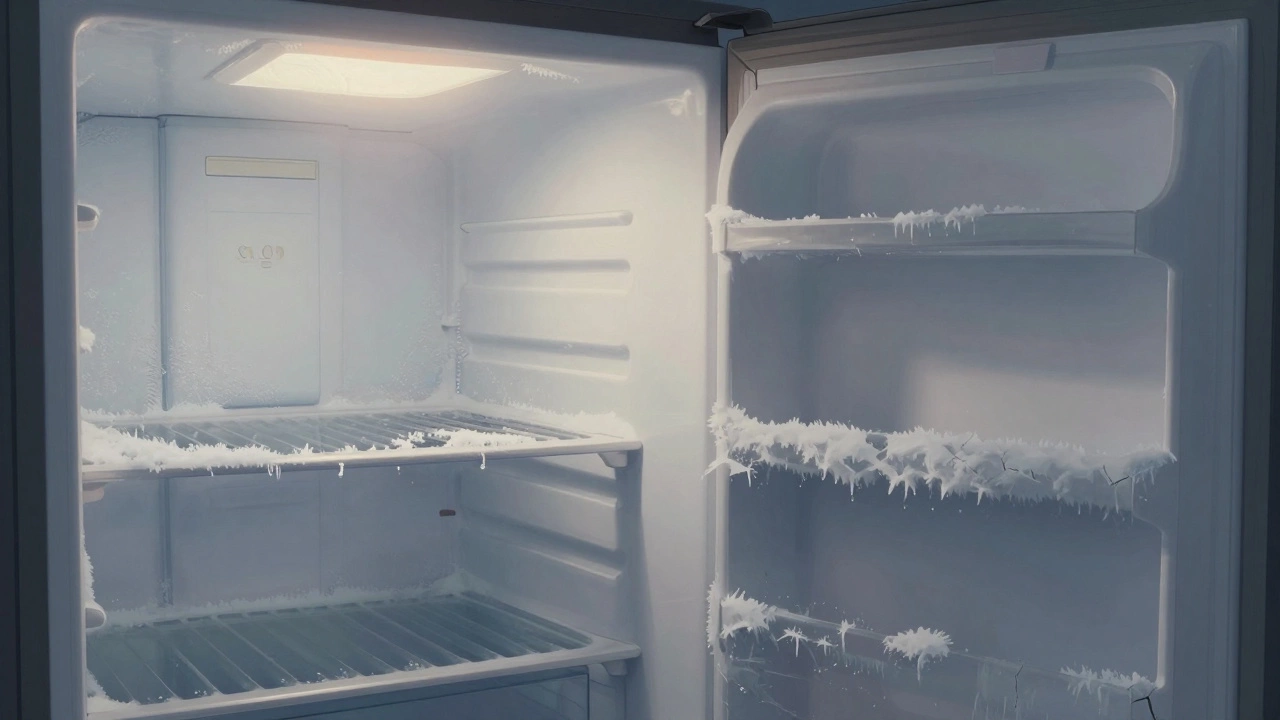
A little frost on the back wall is normal. But if your freezer’s interior is completely bare and dry, that’s odd. Frost forms because moisture in the air freezes on cold surfaces. No frost means the evaporator coil isn’t cold enough to freeze that moisture. On the other hand, if you’ve got thick ice covering the back wall, shelves, or even the door seal, that’s also bad. It usually means the defrost system isn’t working. Ice buildup blocks airflow, which makes the freezer work harder and eventually fail.
The door seal is damaged or warm
Check the rubber gasket around the door. Run your hand along it. If it feels warm, that’s a sign cold air is leaking out. Look for cracks, stiffness, or gaps where you can slip a piece of paper in easily. A good seal should hold a dollar bill tightly-you shouldn’t be able to pull it out without resistance. If air is leaking, your freezer has to run constantly just to stay cold. That wastes energy and wears out the compressor faster. Replacing the door seal is cheap and easy. If you’ve tried that and the problem remains, the issue is deeper.
The freezer runs non-stop
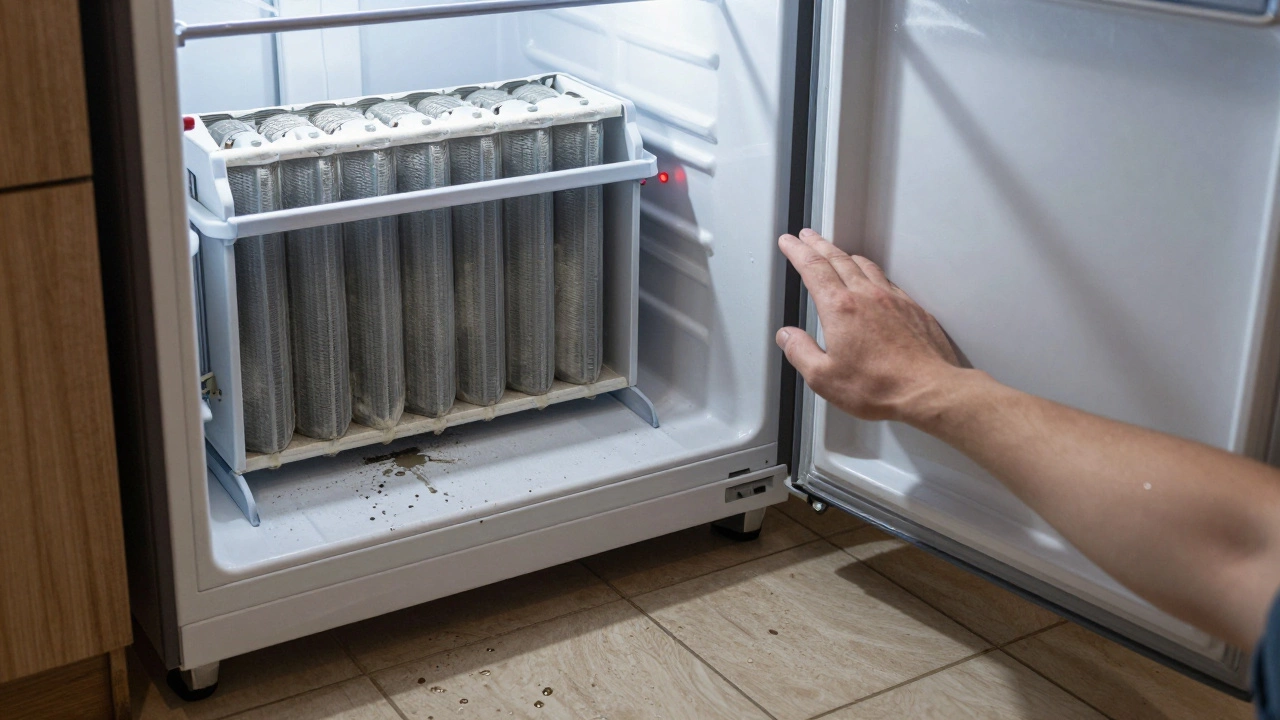
A freezer cycles on and off. That’s normal. But if you’ve noticed it running all day and all night, that’s a problem. It’s trying to compensate for something-either a leak, a dirty condenser, or a failing compressor. Check the coils at the back or bottom. If they’re covered in dust, lint, or pet hair, clean them. A dirty coil can’t release heat, so the freezer keeps running. If cleaning the coils doesn’t help, and the unit still runs constantly, you’re looking at a failing compressor or thermostat.
Condensation or water on the floor
Water pooling under or around your freezer? That’s not normal. It usually means one of three things: the defrost drain is clogged, the drip pan is cracked, or the evaporator coil is leaking. In older models, the defrost system drains melted ice into a pan under the unit, where it evaporates. If that drain gets blocked with ice or food debris, water backs up and leaks out. If you’ve got water on the floor and the freezer is running non-stop, this is almost certainly the cause. Clearing the drain is a simple fix-if you’re comfortable doing it yourself. Otherwise, it’s a job for a technician.
What to do next
If you’ve checked all these signs and two or more apply, your freezer is likely broken. Don’t wait until everything thaws. Frozen food can be safely refrozen if it still has ice crystals and feels cold to the touch-but once it’s fully thawed and warm, it’s unsafe to eat. If you’re unsure, throw it out. Food poisoning isn’t worth the risk.
Before calling a repair service, unplug the unit and clean the coils. Sometimes, a simple cleaning restores function. If that doesn’t help, check your warranty. Most freezers have a 1-year full warranty and 5-10 years on the compressor. If your unit is under 5 years old, it might still be covered. If it’s older, weigh the cost of repair against replacement. A new energy-efficient freezer might save you more on electricity than fixing the old one.
And if you’re in Auckland, remember: winter doesn’t wait. A broken freezer in July can mean lost groceries, spoiled meals, and a whole lot of stress. Don’t ignore the signs. Act early, and you’ll save money, food, and time.
Can I fix my freezer myself?
You can handle a few simple fixes: cleaning the condenser coils, replacing a worn door seal, or unclogging the defrost drain. These are low-cost and safe for most homeowners. But anything involving the compressor, thermostat, or refrigerant lines should be left to a professional. Refrigerant is hazardous, and compressors require special tools and training. Trying to repair them yourself can make things worse-or dangerous.
How long should a freezer last?
A well-maintained freezer typically lasts 10 to 15 years. Units with sealed systems and fewer moving parts, like upright freezers, often outlast chest models. If your freezer is over 12 years old and starting to show signs of failure, replacement is usually more cost-effective than repair. New models are 20-30% more energy efficient, so you’ll save money on power bills over time.
Is it safe to eat food that partially thawed?
Yes-if it still has ice crystals and feels colder than 4°C. The USDA says you can safely refreeze food that has thawed but remains at or below 4°C. But if the food has warmed to room temperature, smells off, or looks discolored, throw it out. Never taste-test questionable food. When in doubt, toss it. Your health isn’t worth the risk.
Why does my freezer frost up so fast?
Fast frost buildup usually means the door isn’t sealing right, or the defrost system is broken. Every time you open the door, moist air gets inside. If the seal is damaged, that moisture freezes on the evaporator coil. Over time, it builds up into thick ice. If the defrost heater or timer is faulty, the ice doesn’t melt during the normal cycle. Cleaning the seal and checking the defrost components can help. If the problem returns quickly, the thermostat or control board may be failing.
Should I unplug my freezer if it’s broken?
Yes-if you’re not planning to use it soon. Unplugging stops it from drawing power while it’s not working properly. It also prevents potential electrical issues from worsening. If you’re waiting for a repair technician, unplug it and leave the door slightly ajar to prevent mold and odors. If you’re replacing it, unplug it, empty it, and clean it out before disposal.