
Freezer Repair vs Replacement Calculator
Compare Repair vs Replacement Costs
Based on your freezer's age, energy costs, and repair estimates
Your freezer’s been running like a champ for years-until one morning, you open the door and find your ice cream soft, your meat thawing, and a weird warmth in the back. You check the temperature setting. It’s still at −18°C. So why isn’t it freezing anymore?
Freezers don’t just break randomly. Something’s off, and it’s usually one of five things you can check yourself before calling in a technician. Most of these issues are simple, cheap, and fixable without tools. Others? They mean it’s time to replace the unit.
Your freezer isn’t cold because the air can’t circulate
The most common reason freezers stop freezing? Blocked airflow. Modern freezers rely on cold air moving from the back to the front. If your freezer is packed full-like, too full-air can’t flow. You might not even realize it until the back wall starts frosting over, and the front shelves feel like a fridge, not a freezer.
Try this: Pull out everything. Give the walls a quick wipe. Make sure nothing’s touching the back panel. Leave a 5cm gap between items and the wall. Put things back, but don’t cram. Freezers need breathing room. In Auckland’s humid climate, this simple fix fixes 40% of complaints we see.
Frost buildup is smothering the evaporator coil
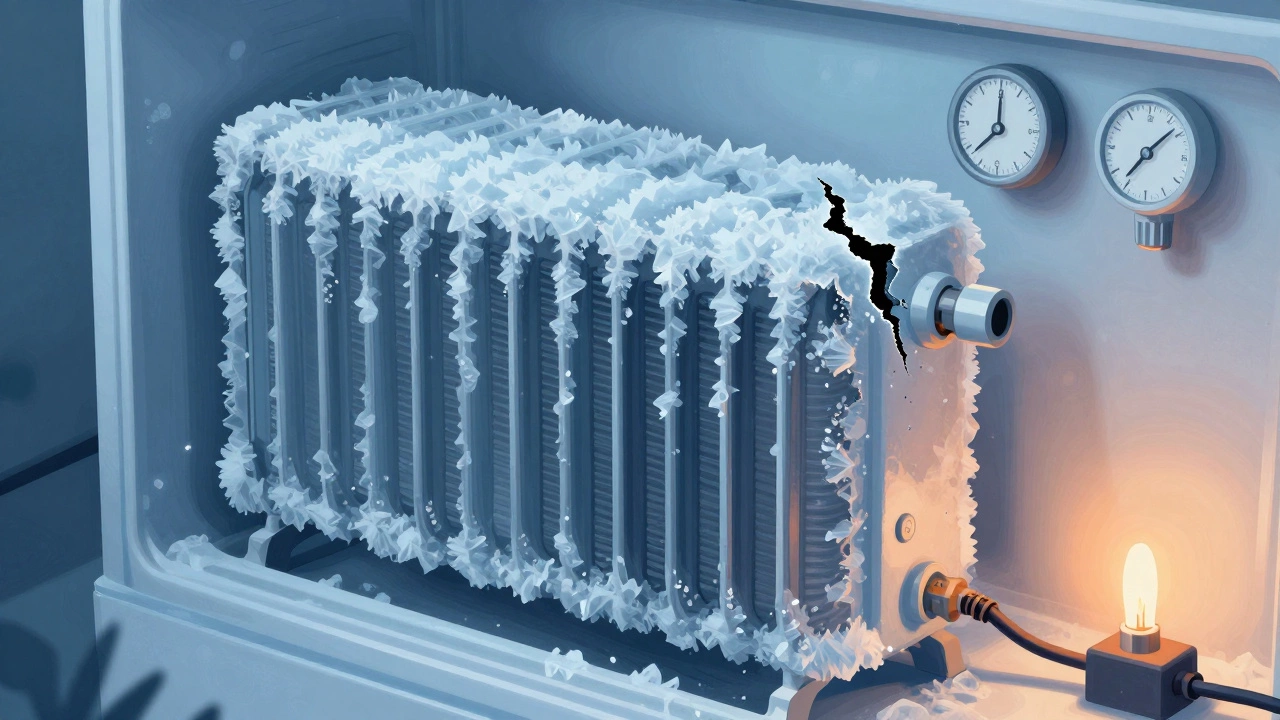
That thick layer of ice on the back wall? It’s not normal. A little frost? Fine. A solid sheet? That’s a problem. When frost builds up more than 5mm thick, it acts like insulation. The cold air can’t reach your food. The compressor keeps running, but nothing gets colder.
This usually means the defrost system is broken. Every freezer has a timer, a heater, and a thermostat that melt frost every 6-12 hours. If any of those three parts fail, ice builds up. You can test this: unplug the freezer. Leave the door open for 24 hours. Let all the ice melt. Plug it back in. If it cools normally after, your defrost system is the culprit.
Replacing the defrost heater or thermostat costs $80-$150. If you’re handy, you can do it yourself with a multimeter and a YouTube tutorial. If not, a technician will charge $120-$200 to fix it.
The door seal is leaking cold air
Think of your freezer like a thermos. The seal is the lid. If it’s cracked, warped, or sticky, cold air escapes. Warm, moist air rushes in. That’s why you see ice forming on the inside, or condensation on the outside.
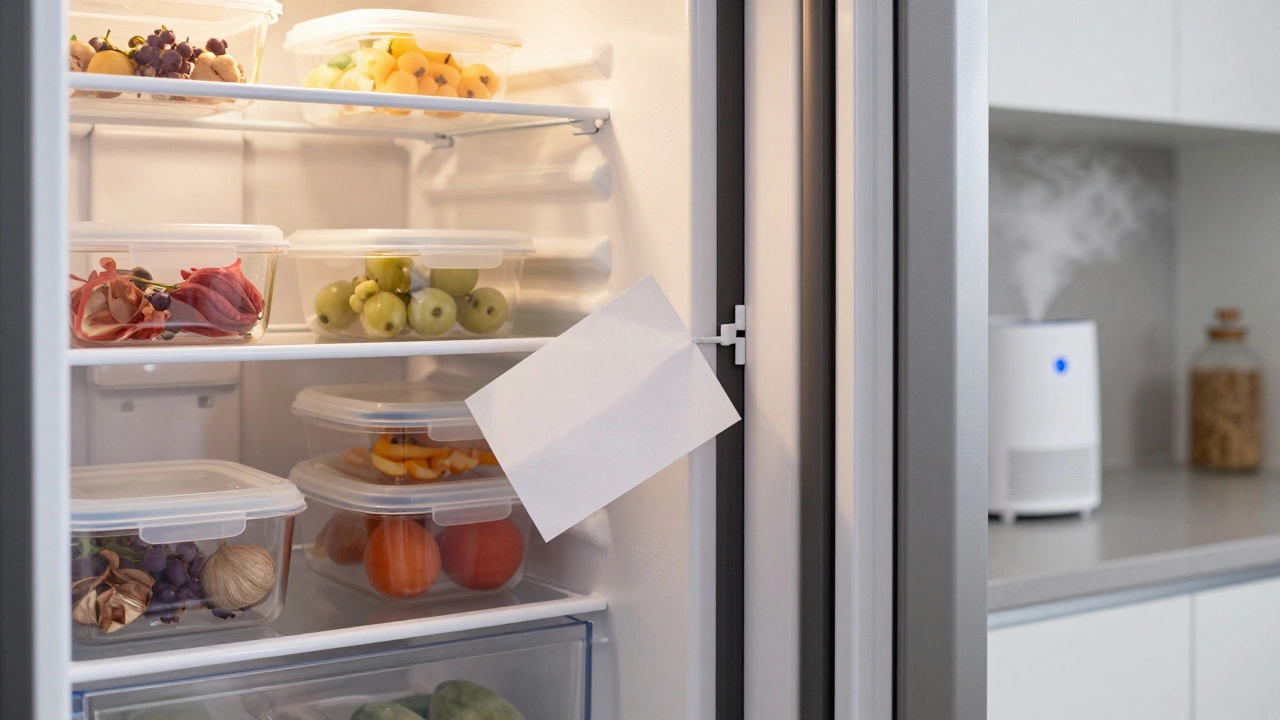
Test your seal: Close the door on a piece of paper. Try to pull it out. If it slides out easily, the seal is weak. Do this all the way around the door. If you find one spot where the paper slips, that’s your leak.
Most seals can be replaced in under an hour. The part costs $30-$70. Just make sure you get the right model. Look up your freezer’s serial number online. You’ll find the exact replacement seal. Don’t try to glue or tape it. It won’t hold.
The thermostat is stuck or broken
Your freezer’s thermostat is the brain. It tells the compressor when to turn on and off. If it’s faulty, the compressor might never kick in-or it might run nonstop.
Here’s how to check: Turn the temperature dial to the coldest setting. Wait 10 minutes. Put your hand on the compressor (it’s usually at the back or bottom). If it’s warm or humming, it’s running. If it’s completely silent, the thermostat isn’t signaling it to start.
Most thermostats cost $40-$90. Replacing it takes about 30 minutes. You’ll need a screwdriver and a wiring diagram. If you’re not comfortable with wires, skip this step. A technician can swap it in 20 minutes.
The compressor is failing-or already dead
This is the worst-case scenario. If your freezer is over 10 years old, and you’ve ruled out airflow, frost, seals, and thermostat, the compressor might be done.
Signs it’s failing: The unit runs constantly but never gets cold. You hear clicking but no humming. Or worse-nothing at all. Some compressors make a loud buzzing before they die. Others just stop.
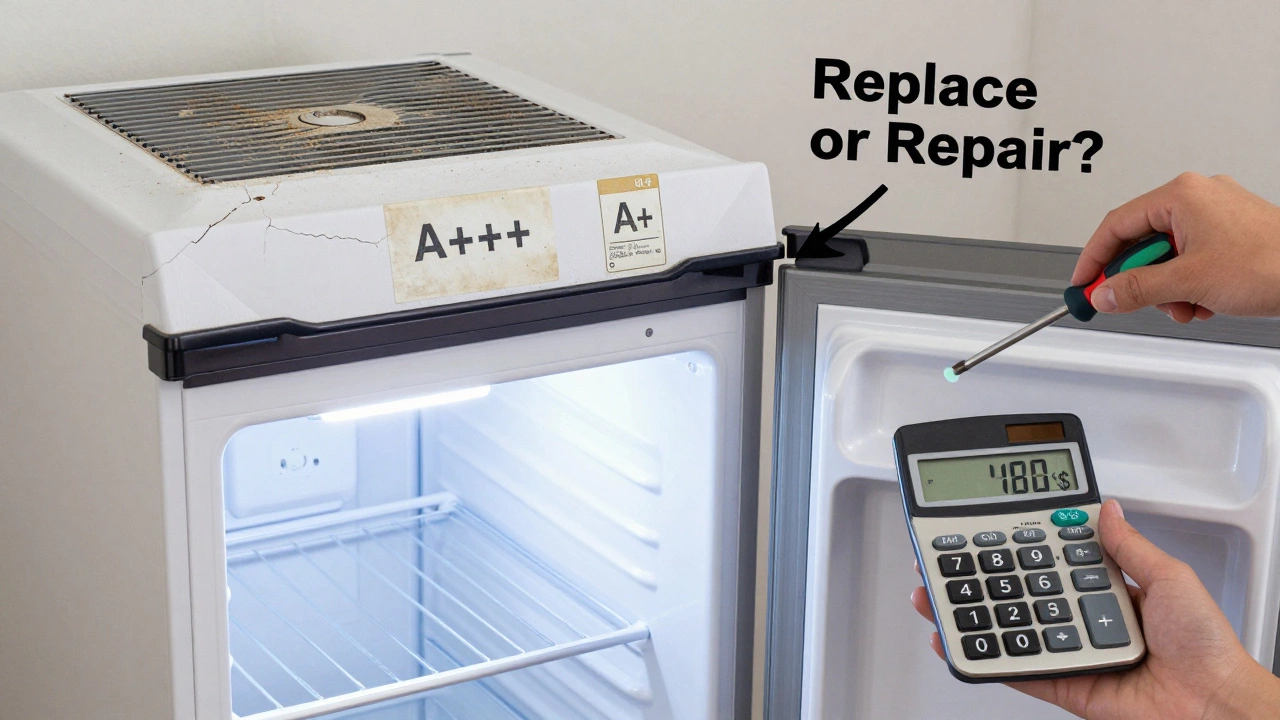
Replacing a compressor costs $300-$600. That’s often more than half the price of a new freezer. If your unit is older than 8 years, it’s almost never worth repairing. New freezers today use 50% less energy, have better temperature control, and come with a 5-year warranty.
Check the energy label. If it’s an old A+ or B-rated model, you’re paying $120-$180 a year just to keep it running. A new A+++ freezer costs $50-$70 a year to run. The math doesn’t lie.
What to do next: A step-by-step checklist
- Unplug the freezer and let it defrost completely (24 hours).
- Clear everything out. Clean the walls and coils. Leave space around items.
- Check the door seal with the paper test. Replace if loose.
- Turn the temperature dial to max. Listen for the compressor. Is it humming?
- If it’s humming but not cold, frost buildup or blocked airflow is likely.
- If it’s silent, the thermostat or compressor is the issue.
- If the unit is over 8 years old and the compressor is dead? Buy new.
When to call a professional
You don’t need to call someone for every issue. But if you’ve done the checklist and the freezer still won’t freeze, it’s time. A qualified technician can test the compressor’s amperage, check the refrigerant levels, and diagnose the defrost circuit.
Don’t try to recharge refrigerant yourself. That’s illegal in New Zealand unless you’re certified. And adding more gas to a leaking system? It’s a waste of money. The leak will come back.
Most repair services charge $80-$120 for a diagnostic call. If they say it’s the compressor, ask for a written quote. Then compare it to the cost of a new freezer. You’ll be surprised how often replacement wins.
Preventing this from happening again
Freezers last 12-15 years if you treat them right. Here’s how:
- Keep the coils clean. Vacuum them every 6 months.
- Don’t overload. Leave space for air to move.
- Check the door seal twice a year. Wipe it with warm water and vinegar.
- Set the temperature to −18°C. Don’t crank it lower. It doesn’t freeze faster-it just wastes power.
- Unplug it for 10 minutes once a year. It resets the electronics.
And if you’re replacing it? Go for a frost-free model. No more manual defrosting. Better temperature stability. Less energy use. You’ll thank yourself in 10 years.
Why is my freezer cold but not freezing?
If your freezer is cold but not freezing, the air isn’t circulating properly. This usually happens when the unit is overpacked, the door seal is leaking, or frost has built up on the evaporator coils. Check for ice buildup on the back wall-if it’s thicker than 5mm, defrost the unit. Also test the door seal with a piece of paper. If the paper slides out easily, replace the seal.
Can a freezer stop working if it’s not plugged in properly?
Yes. A loose plug, a tripped GFCI outlet, or a faulty power cord can cut power to the compressor. First, check if the freezer is plugged in securely. Then test the outlet with another appliance. If the outlet doesn’t work, check your circuit breaker. If the freezer still doesn’t turn on after confirming power, the issue is internal-likely the thermostat or compressor.
How long should a freezer last before needing replacement?
Most freezers last 10 to 15 years. If yours is over 8 years old and you’re facing compressor failure, it’s usually cheaper to replace it than repair it. New models use half the energy, maintain temperature better, and come with longer warranties. If repair costs more than 50% of a new unit’s price, replacement is the smarter choice.
Is it safe to leave a freezer unplugged for weeks?
Yes, but only if you clean it first. Unplug it, remove all food, and wipe the interior with a vinegar-water solution. Leave the door slightly open to prevent mold and odors. Never leave a dirty freezer unplugged-it traps moisture and creates mildew. If you plan to store it for more than a month, cover it with a breathable cloth to keep dust out.
Why does my freezer run all the time but never get cold?
If your freezer runs nonstop but stays warm, the refrigerant is likely leaking, the compressor is weak, or the condenser coils are clogged with dust. In older units, refrigerant leaks are common. A technician can check pressure levels, but if the system is over 10 years old, replacement is usually more cost-effective than recharging. Also, vacuum the coils at the back or bottom-if they’re dusty, airflow is restricted and the compressor overworks.