Electric Oven Circuit Calculator
How Safe Is Your Oven Installation?
This calculator helps you determine if your home's electrical circuit can safely handle a new electric oven based on power requirements and wiring specifications.
Important Safety Notes
According to AS/NZS 3000 wiring rules, electric ovens must be connected to a dedicated 32-amp circuit with a 6mm² cable and isolator switch. This calculator helps identify potential hazards, but should not replace professional electrical assessment.
- Modern ovens typically require 7-10 kW of power
- Older homes may have 15-20 amp circuits that can't handle modern ovens
- Using extension cords or regular outlets can cause fires
- Only licensed electricians should perform oven installations
Most people think installing a new electric oven is as simple as unplugging the old one and plugging in the new one. It’s not. If you’ve ever bought a new oven and assumed it would just work the moment you rolled it into place, you’re in for a surprise-maybe even a dangerous one.
Electric ovens don’t plug into regular outlets
Your kitchen has standard 10-amp power outlets for things like toasters, kettles, and coffee machines. Those outlets use 240 volts, but they’re wired for low current. An electric oven? It needs a dedicated 32-amp circuit. That’s more than three times the power of a regular outlet. Trying to plug a full-size electric oven into a standard socket won’t just trip the breaker-it can melt wiring, start a fire, or damage your home’s electrical system.
In New Zealand, the AS/NZS 3000 wiring rules require electric ovens to be connected to a dedicated circuit with a 32-amp isolator switch. This isn’t a suggestion. It’s law. Most modern ovens come with a hardwired connection, not a plug. Even if your oven has a plug, it’s not the same as a standard power plug. It’s a heavy-duty, high-current plug designed for appliance circuits only.
Old wiring won’t cut it
If your house is older than 2005, chances are your kitchen wiring wasn’t built for today’s electric ovens. Back then, many homes had 15-amp circuits for ovens, or even shared circuits with the stove or dishwasher. Modern ovens pull 7 to 10 kilowatts of power when heating up. That’s like running six hairdryers at once. If your circuit can’t handle it, the wires overheat. You won’t see smoke right away. But over time, insulation breaks down. That’s when you get short circuits-or worse.
Even if your oven came with a plug, that doesn’t mean your wall outlet is safe for it. Many people buy a new oven, plug it in, and think they’re done. But if the outlet is the same one used for the old oven, and that old oven was on a 15-amp circuit, you’re still at risk. The plug might fit. That doesn’t mean the circuit can handle the load.
What does a proper electric oven installation look like?
Here’s what actually needs to happen when you install a new electric oven:
- Turn off the main power at the switchboard. Always. No exceptions.
- Check the circuit rating. Look at your switchboard. Is there a dedicated 32-amp circuit labeled for the oven? If not, you need one installed.
- Verify the cable size. The wire running from the switchboard to the oven must be at least 6mm² twin and earth cable. Older homes often have 4mm² or even 2.5mm². That’s not enough.
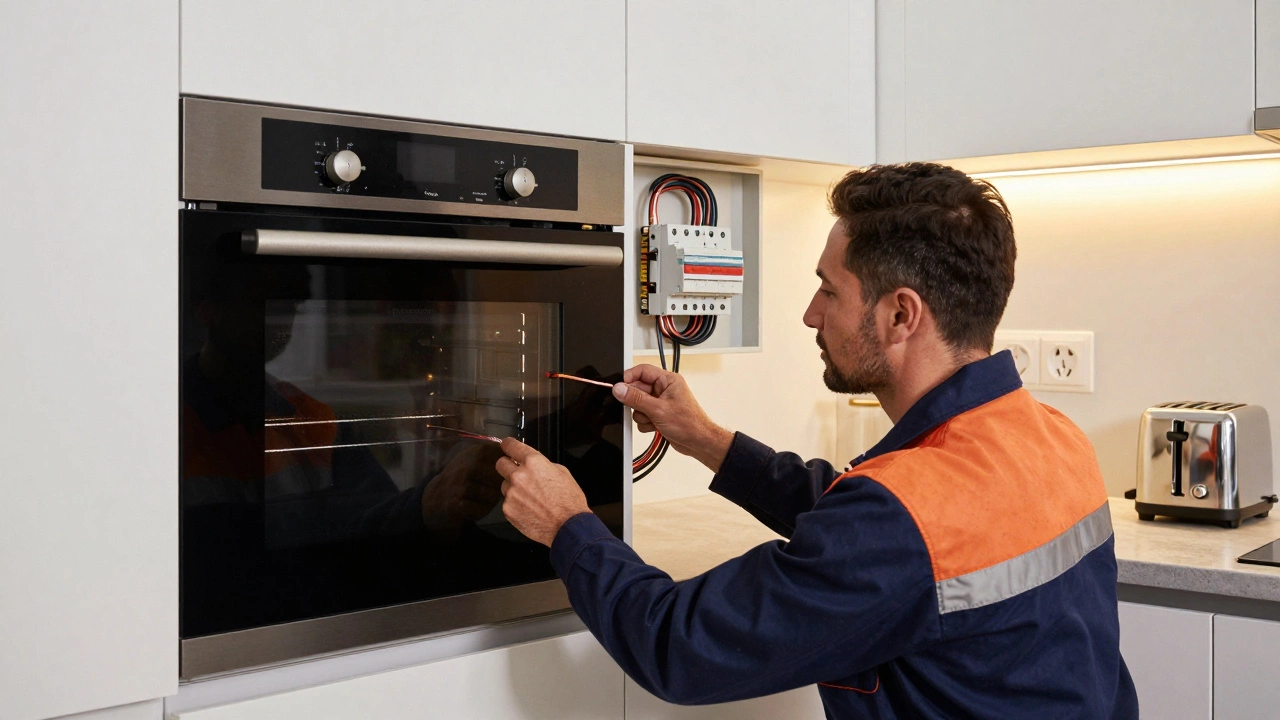
- Install a 32-amp isolator switch. This is a separate switch near the oven, not just the breaker in the switchboard. It lets you cut power quickly if something goes wrong.
- Connect the oven correctly. Most ovens use a 4-wire connection: active, neutral, earth, and an extra active for the oven light or fan. Wiring it wrong can fry the control panel or make the oven unsafe.
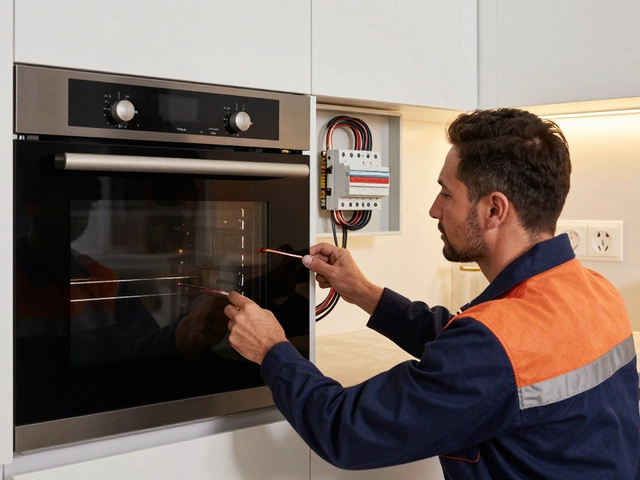
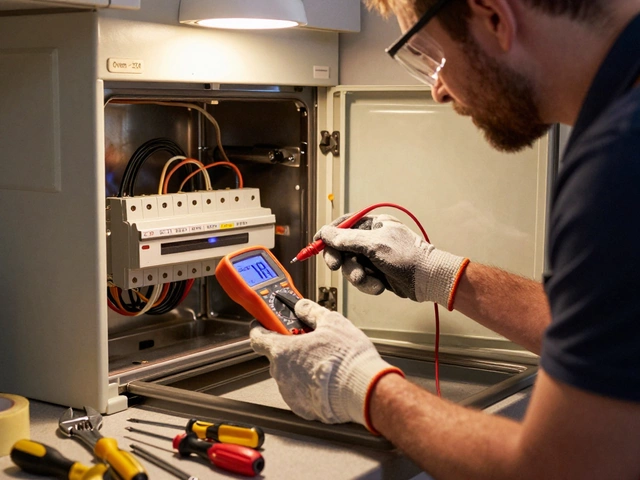
- Test the installation. A licensed electrician will use a multimeter to check voltage, earth continuity, and polarity. No guesswork.
If you’re replacing an old oven with a new one, don’t assume the existing wiring is good enough. Even if the old oven worked fine, today’s models are more powerful. A 2010 oven might have drawn 5.5kW. A 2025 model draws 7.8kW. That extra 2.3kW is enough to overload old wiring.
Why DIY electric oven installs go wrong
People think they can save money by doing it themselves. But here’s what usually happens:
- They plug the oven into a regular outlet because it “fits.” Result: breaker trips every time they use the grill.
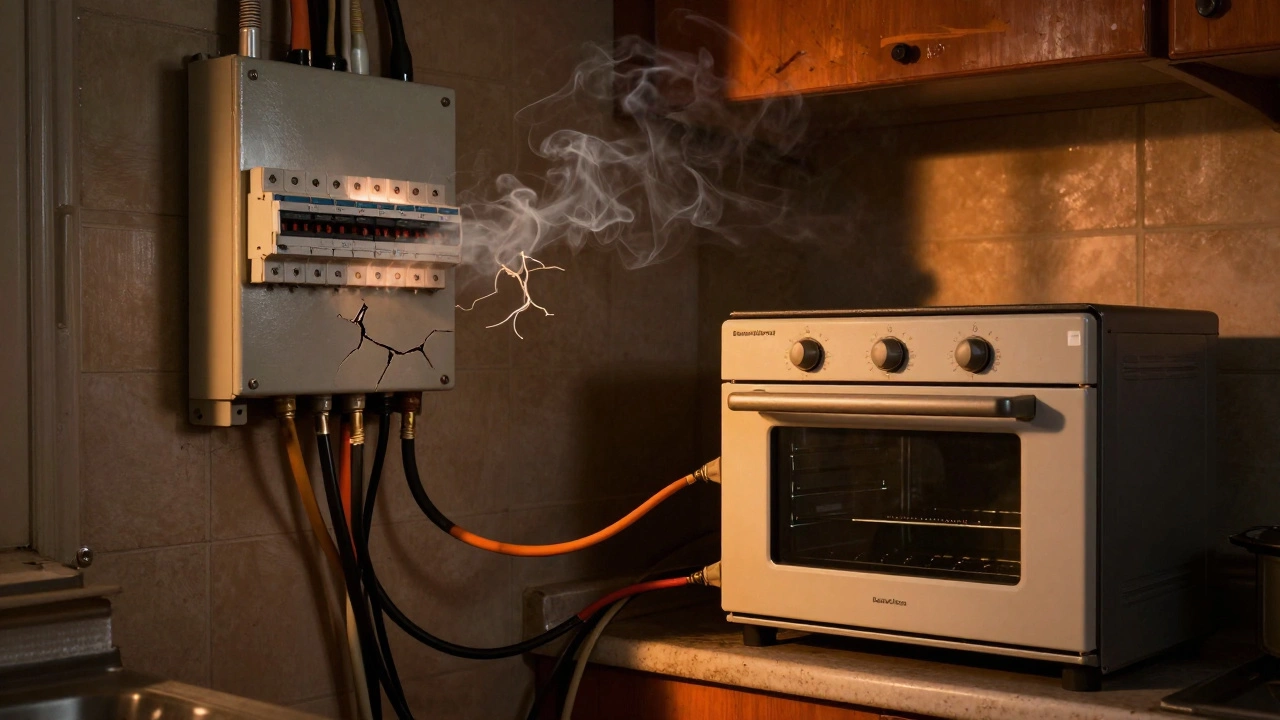
- They use an extension cord. Result: cord melts, outlet sparks, fire risk.
- They reuse old wiring without checking the gauge. Result: hidden damage, no warning until the wall gets hot.
- They ignore the earth wire. Result: electric shock risk if a fault occurs.
In Auckland, we’ve seen three house fires in the last 18 months caused by improper oven installations. All three involved homeowners who thought they could just plug it in. One family lost their kitchen. Another lost their home. None of them had insurance that covered DIY electrical work.
What about plug-in ovens? Are they safe?
Some compact ovens-like built-in wall ovens under 2.5kW or countertop models-do come with standard plugs. But they’re not the same as full-size electric ovens. If your oven is over 3kW, it’s not meant for a regular plug. Check the label on the back of the oven. It will say “Requires dedicated circuit” or “Hardwired only.” If it says “Plug-in,” it’s under 2.4kW and safe for a standard outlet. Anything bigger? Not safe.
Even then, if you’re installing a plug-in oven in a kitchen with multiple high-power appliances (like a kettle, microwave, and toaster all on the same circuit), you’re still risking overload. That’s why electricians recommend a dedicated circuit for any oven, even small ones.
Who should install your electric oven?
Only a licensed electrician. Not a handyman. Not a friend who “knows a bit about wiring.” In New Zealand, electrical work must be done by someone with a current practicing license. That’s not just about legality-it’s about safety and insurance.
If you hire someone unlicensed and something goes wrong, your home insurance won’t cover it. You’ll be on the hook for repairs, replacement, and any damage caused. Plus, if you ever sell your house, a buyer’s inspector will check your electrical records. If they find unlicensed work, you could be forced to pay for a full rewire.
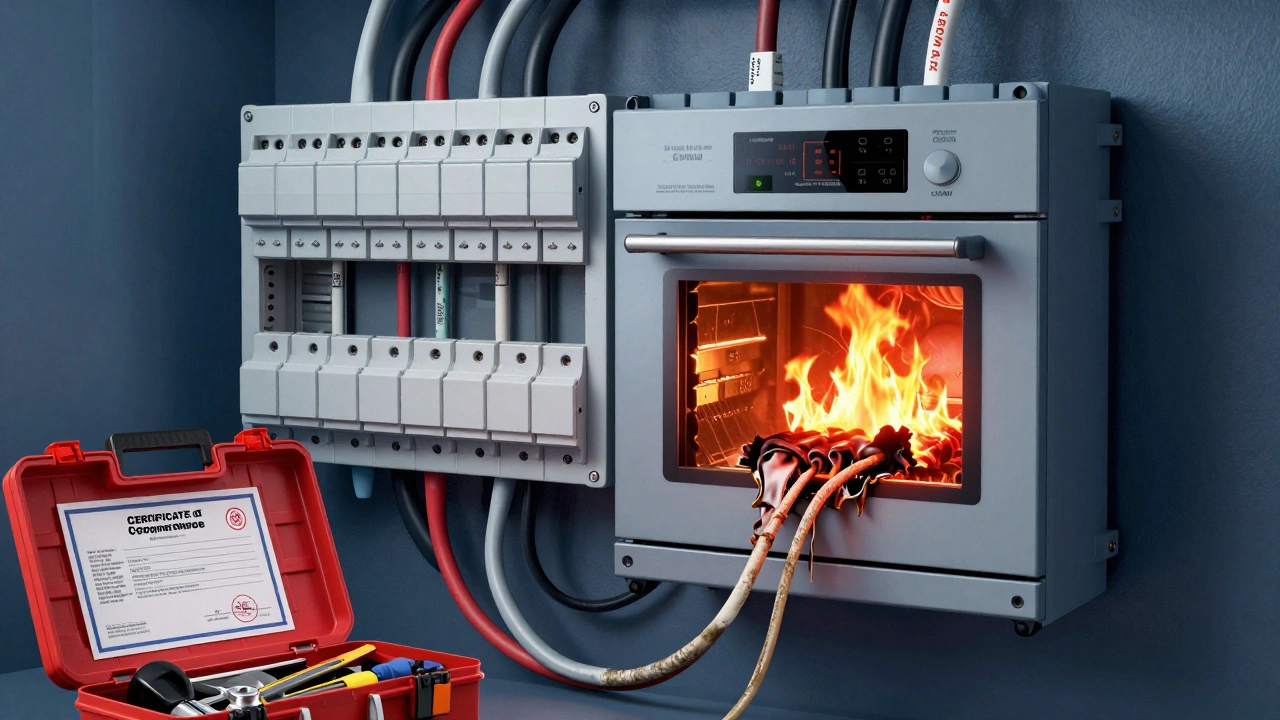
Good electricians will give you a Certificate of Compliance (CoC) after installation. That’s your proof the job was done right. Keep it with your home documents. You’ll thank yourself later.
What if your oven won’t turn on after installation?
If you’ve just installed a new oven and it’s not working, don’t assume it’s broken. Here’s what to check first:
- Is the circuit breaker in the switchboard switched on?
- Is the 32-amp isolator switch near the oven turned on?
- Did you connect the earth wire? No earth = no power in many modern ovens.
- Is the oven’s internal fuse blown? Some models have a small fuse behind the control panel.
- Did you turn on the oven’s power switch? Yes, some ovens have a separate on/off switch on the side or back.
If all that’s correct and it still doesn’t work, call a professional. Don’t keep guessing. Electrical faults can hide in plain sight.
Bottom line: Don’t plug it in. Get it wired right.
Electric ovens aren’t like microwaves. You can’t just move them from the box to the wall and expect them to work. The risk isn’t just inconvenience-it’s fire, shock, and property damage. Even if your old oven worked fine on the same circuit, your new one might not. Power demands change. Wiring ages. Standards update.
Take the time to get it done properly. Hire a licensed electrician. Pay the $250-$500 for a safe installation. It’s cheaper than replacing your kitchen-or your home.