Extractor Fan Service Calculator
Your Fan Details
Maintenance Recommendations
Based on your input, your next service is due:
What to Expect
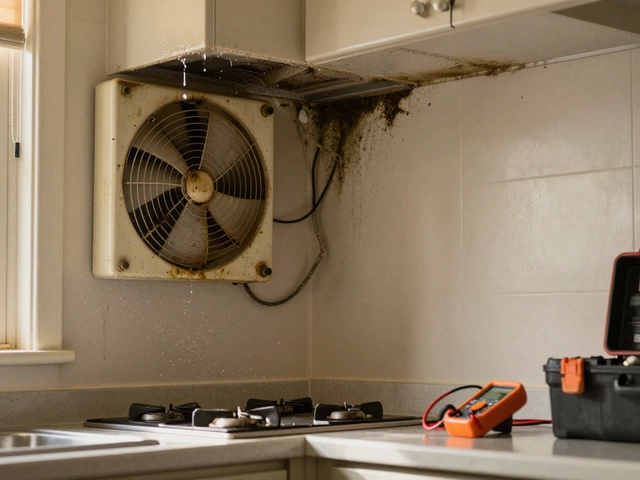
Ever notice how your extractor fan suddenly gets louder, or worse - stops pulling air altogether? It’s not just being stubborn. Most extractor fans, whether in the kitchen or bathroom, need regular servicing to keep working right. And if you ignore it, you’re not just dealing with bad smells or steamy mirrors - you could be inviting mold, moisture damage, or even fire risks into your home.
Why extractor fans fail
Extractor fans don’t break because they’re cheap. They break because they’re working hard, every day. In the kitchen, they’re pulling grease, smoke, and steam. In the bathroom, they’re fighting humidity and soap residue. Over time, grease builds up on the blades. Dust and lint clog the filter. Bearings wear out from constant spinning. Even the motor gets strained if airflow is restricted.Think of it like a car engine without oil changes. The fan still turns, but it’s struggling. You hear the grinding noise. The speed drops. Then one day, it just stops.
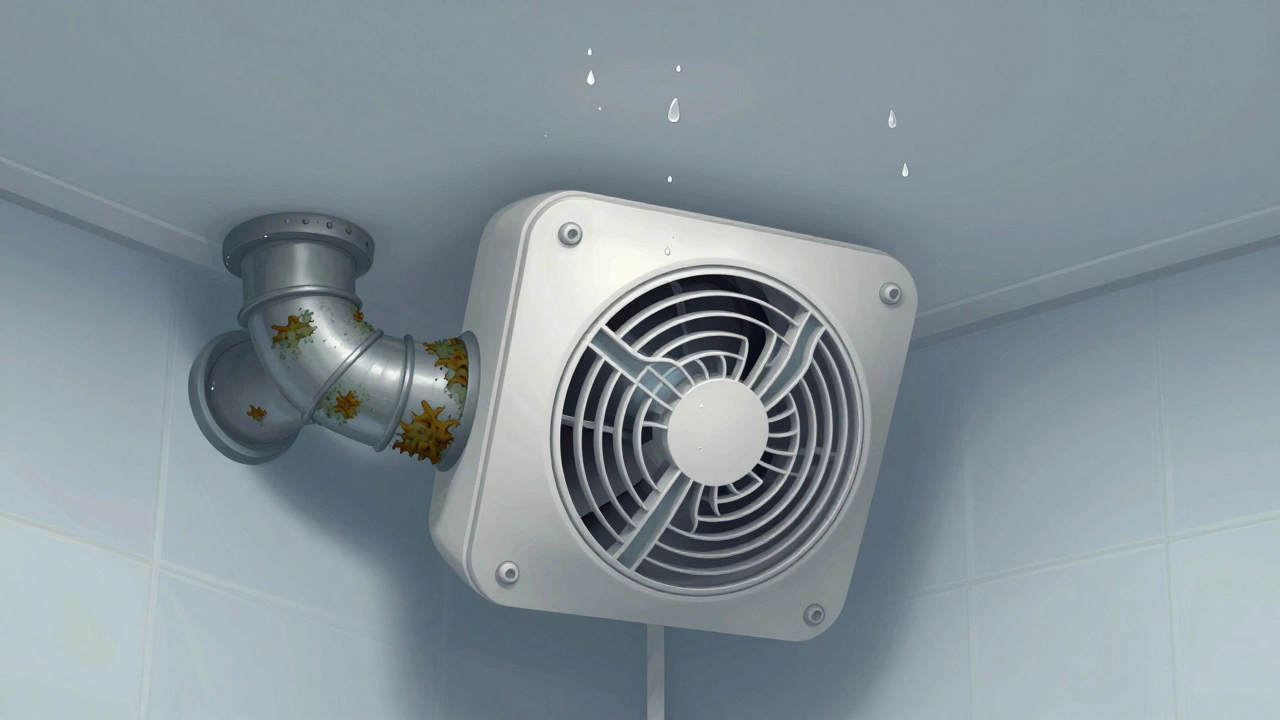
In Auckland’s humid climate, this happens faster than you think. A bathroom extractor fan in a home with daily showers can accumulate thick grease and mold inside the ducting within 18 months if left uncleaned. Kitchen fans? Even sooner - especially if you fry food regularly.
How often should you service an extractor fan?
There’s no single rule, but here’s what works in real homes:- Kitchen extractor fans: Clean the filter every 2 months. Do a full service - including blade cleaning and duct check - at least once a year.
- Bathroom extractor fans: Clean the grille and filter every 3 months. Full service every 12 to 18 months, depending on usage.
- High-use homes (large families, frequent cooking): Consider servicing every 6 to 9 months.
If your fan runs constantly or you’ve noticed a drop in airflow, don’t wait for the yearly schedule. Check it now.
What servicing actually involves
Servicing isn’t just wiping the outside. A proper service includes these steps:- Remove and clean the filter - Most filters are washable. Soak them in warm, soapy water for 20 minutes, scrub gently, then air dry completely before reinserting.
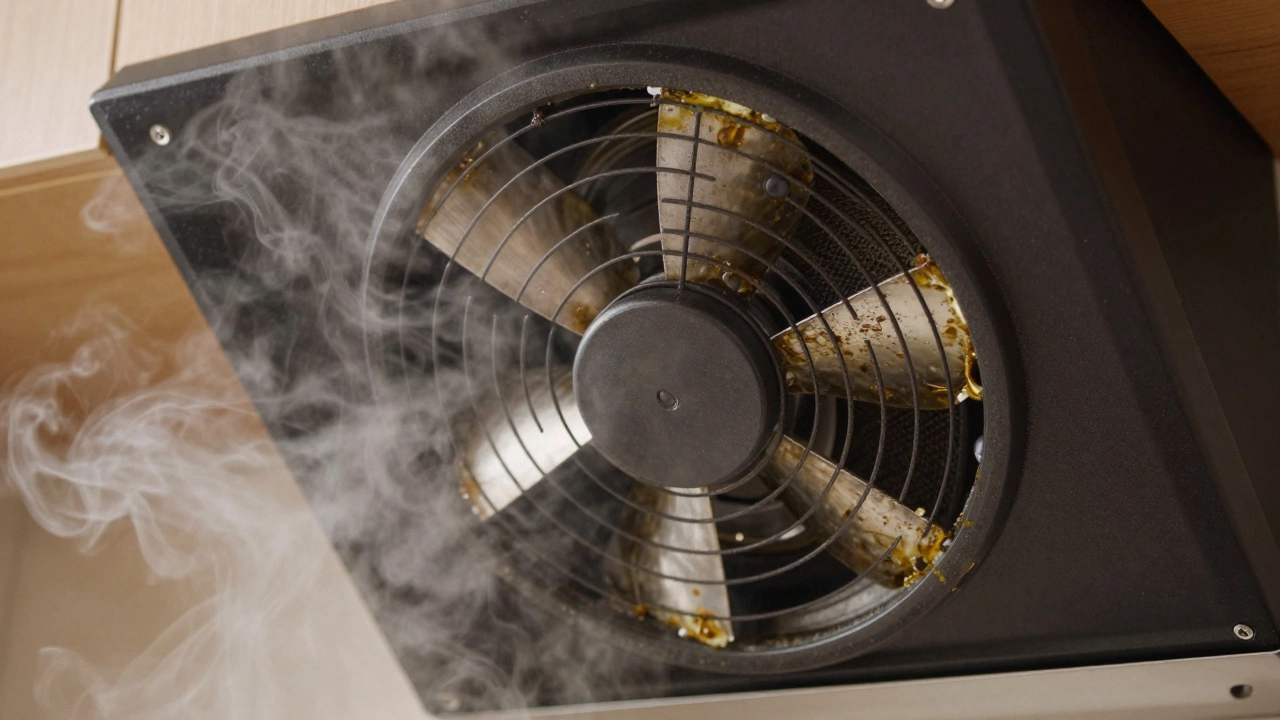
- Clear grease and grime from the blades - Use a soft brush or cloth with degreaser. Don’t use abrasive pads - they scratch the surface and make future buildup worse.
- Inspect the ducting - Pull the fan out slightly (if possible) and look inside the pipe. If you see black, sticky residue or clumps of fur and lint, it needs cleaning. Flexible ducts can collapse or trap moisture - rigid metal ducting is better.
- Check the motor and bearings - Spin the fan by hand. If it feels rough, squeaks, or doesn’t turn smoothly, the motor or bearings are wearing out.
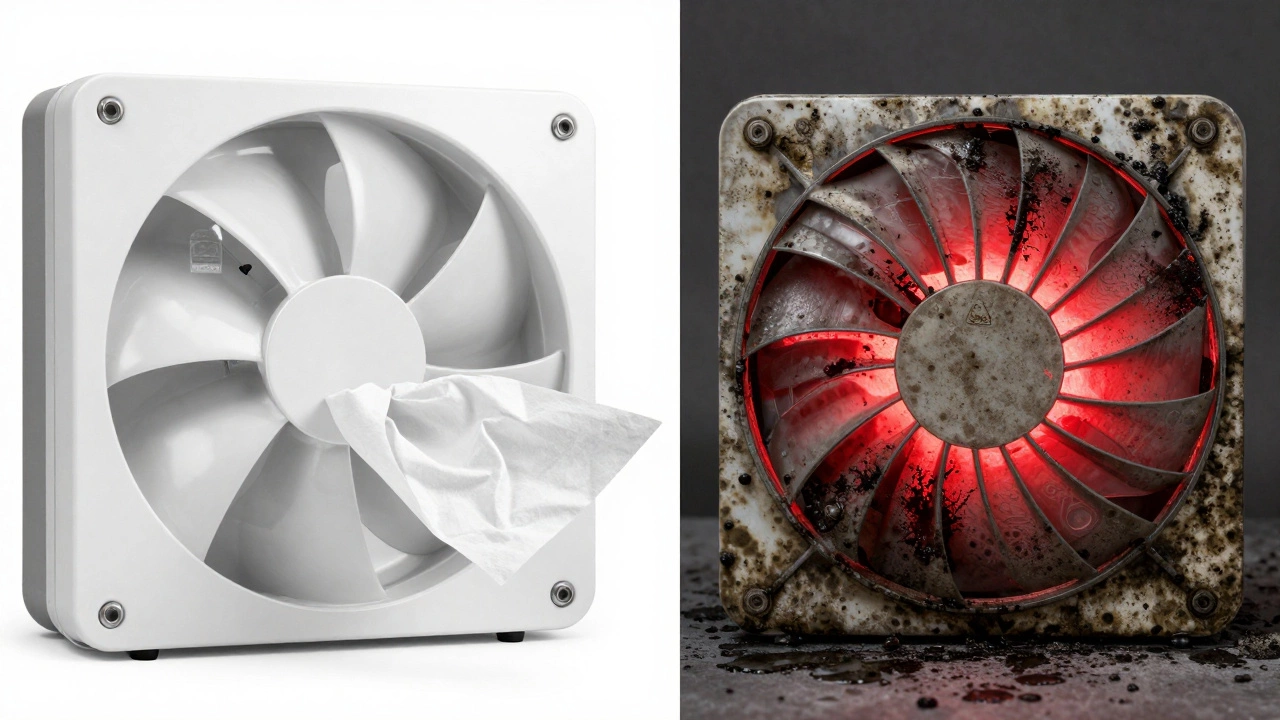
- Test airflow - After reassembly, turn it on. Hold a piece of tissue near the grille. It should pull firmly. If it barely moves, something’s still blocked.
Many people skip steps 3 and 4. That’s why fans seem to “die” suddenly. The filter’s clean, but the duct’s clogged, and the motor’s overheating.
Signs your extractor fan needs servicing now
You don’t need a professional to tell you something’s wrong. Look for these red flags:- Loud noises: Grinding, rattling, or high-pitched whining - not just the usual hum.
- Slow airflow: Steam lingers after a shower. Smells linger after cooking.
- Visible buildup: Black spots on the grille, greasy residue around the edges.
- Moisture on walls or ceilings: Especially in bathrooms. That’s a sign the fan isn’t removing humidity.
- Overheating: The casing feels hot to the touch after running for 10 minutes.
If you see two or more of these, don’t delay. A fan that’s struggling draws more power, wears out faster, and can become a fire hazard.
Can you service it yourself?
Yes - if you’re comfortable with basic tools and safety. Most extractor fans are designed for DIY cleaning. Turn off the power at the circuit breaker before you start. Wear gloves and eye protection when dealing with grease.But here’s the catch: if your fan is over 10 years old, or if you’ve already cleaned it multiple times and it still doesn’t work right, replacement is often cheaper than repair. Older motors aren’t designed for easy servicing. Replacement units today are quieter, more efficient, and use 60% less energy than models from 15 years ago.
What happens if you don’t service it
Ignoring your extractor fan doesn’t just make your home smell bad. Here’s what really happens:- Mold growth: Moisture builds up in walls, under tiles, and behind cabinets. Black mold spores can trigger allergies and asthma.
- Structural damage: Wood rot in ceiling joists, peeling paint, warped cabinetry - all caused by trapped humidity.
- Higher energy bills: A clogged fan works harder, pulling more electricity to move the same amount of air.
- Fire risk: Grease buildup in ducts can ignite if the motor overheats. This isn’t rare - Fire and Emergency New Zealand has documented multiple home fires linked to uncleaned kitchen extractors.
- Warranty void: Most manufacturers require proof of maintenance. If your fan fails and you’ve never cleaned it, you’re out of luck.
It’s not an exaggeration: a neglected extractor fan can cost you thousands in repairs - far more than the $50 it costs to clean it.
When to call a professional
You don’t need a pro for cleaning. But you should call one if:- The fan won’t turn on at all - could be wiring, capacitor, or motor failure.
- You can’t access the ducting - it’s hidden in a false ceiling or tight cavity.
- You smell burning or see smoke - stop using it immediately and turn off the power.
- You’re not comfortable removing the unit or working near electrical components.
A qualified technician can also test the airflow with a digital anemometer, check for duct leaks, and recommend upgrades if your current fan is outdated or undersized for your space.
What to look for in a new extractor fan
If you’re replacing, here’s what matters:- CFM rating: For kitchens, aim for at least 100 CFM. For bathrooms, 50-80 CFM is enough for a standard room.
- Noise level: Look for 1.0 sone or lower - quieter than a whisper.
- Energy efficiency: Choose models with an Energy Star label or A+ rating.
- Easy-clean filters: Some have removable, dishwasher-safe filters.
- Timer or humidity sensor: These auto-run the fan after you leave the room - great for bathrooms.
Brands like Vent-Axia, Extracta, and EnviroVent offer reliable, low-maintenance models available locally in New Zealand.
Quick maintenance checklist
Keep this on your fridge or phone:- Every 2 months: Clean kitchen filter
- Every 3 months: Clean bathroom grille
- Every 6 months: Wipe blades and check for grease buildup
- Every 12 months: Inspect ducting and test airflow
- Every 10-15 years: Consider replacement
That’s it. Five simple steps. Less than 30 minutes a year. And it keeps your home safer, healthier, and more comfortable.
Do extractor fans need servicing every year?
Yes, most extractor fans benefit from a full service once a year. Kitchen fans in busy homes should be serviced every 6 to 9 months. Bathroom fans can go 12 to 18 months if used lightly. But if you notice reduced airflow, strange noises, or visible grime, don’t wait - clean it sooner.
Can a dirty extractor fan cause mold?
Absolutely. If the fan isn’t removing moisture effectively, humidity builds up on walls, ceilings, and behind tiles. This creates the perfect environment for black mold to grow. Mold isn’t just unsightly - it can trigger respiratory problems, especially in children and older adults. Regular cleaning prevents this.
Is it safe to clean an extractor fan myself?
Yes, if you take basic safety steps. Always turn off the power at the circuit breaker before removing the grille or fan unit. Wear gloves and eye protection when dealing with grease. Use mild detergent and soft cloths - avoid harsh chemicals or wire brushes that can damage the blades. If you’re unsure about electrical parts, call a professional.
How do I know if my extractor fan is too old to repair?
If your extractor fan is over 10 years old and you’re constantly cleaning it but still having issues, it’s likely time to replace it. Older models use inefficient motors, have non-removable parts, and aren’t designed for easy maintenance. Newer fans are quieter, use less energy, and have better airflow. Replacing it often costs less than repeated repairs.
What’s the difference between cleaning and servicing?
Cleaning means removing dirt from the filter and grille. Servicing includes cleaning the blades, checking the ducting for blockages, testing the motor, and inspecting wiring and airflow. Servicing is deeper and ensures the fan is working correctly - not just looking clean.
If you’ve been putting off your extractor fan maintenance, today’s the day to start. A quick clean now saves you from expensive repairs, health risks, and a home full of damp, musty air. It’s not glamorous work - but it’s one of the smartest things you can do for your house.