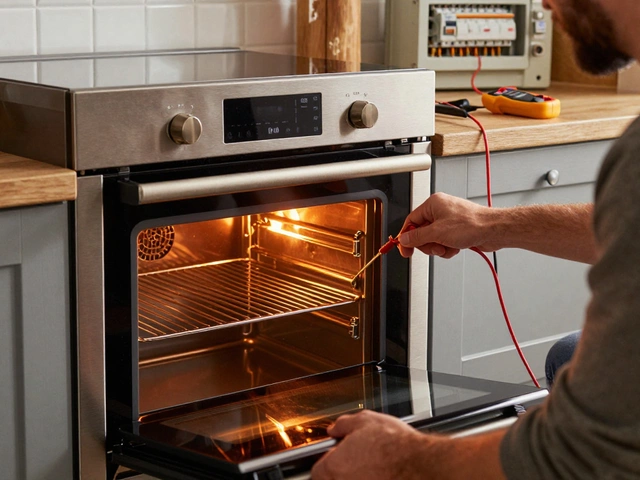

Oven Repair Cost Calculator
Is Repair Worth It?
Calculate if repairing your electric oven is cost-effective based on age, repair type, and cost.
Results
When your electric oven stops heating properly, it’s easy to panic. You’ve got dinner to cook, kids to feed, and a fridge full of ingredients going to waste. The big question? Is it worth repairing an electric oven? Or should you just buy a new one?
The answer isn’t simple. It depends on three things: how old your oven is, what’s broken, and how much it’ll cost to fix. Most people jump straight to replacement because they assume repair = expensive. But that’s not always true. I’ve seen ovens in Auckland homes that are 15 years old and still working fine after a $120 repair. I’ve also seen brand-new ovens trashed because someone didn’t bother checking the simple stuff first.
How old is your oven?
Electric ovens typically last between 10 and 15 years. That’s not a guess - it’s what Consumer NZ found after testing 200+ models over five years. If your oven is under 8 years old, repair is almost always the smarter move. Parts are still available, and the rest of the unit is likely in good shape. But if it’s 12 years or older, you’re playing with fire. Not literally - unless your heating element is sparking - but financially.
Why? Because as ovens age, other parts start failing too. A repaired thermostat might last a year… until the fan motor gives out. Then you’re back to square one. If you’re already spending $200+ on one fix, ask yourself: how much longer will this thing hold up? And how many more repairs will you need before you’re spending more than a new oven costs?
What’s actually broken?
Not all oven problems are equal. Some fixes are cheap and fast. Others mean tearing the whole thing apart.
- Heating element - This is the #1 reason ovens stop working. It’s a simple part. Replacement costs $50-$120, plus labour. Easy fix. Worth it.
- Thermostat - If your oven runs too hot or too cold, the thermostat might be faulty. Replacement is $80-$150. Still worth it unless the oven is over 10 years old.
- Door seal - A torn seal means heat escapes. You’ll notice longer cooking times and higher electricity bills. Replacing the seal costs $30-$60. A no-brainer.
- Control board - This is the brain of the oven. If the display is dead, buttons don’t respond, or error codes keep popping up, this could be the issue. Replacement? $250-$500. At this point, you’re close to half the price of a new oven. Think hard before spending this much.
- Wiring or fuse - Sometimes it’s just a blown fuse or loose wire. A technician can check this in 15 minutes. Labour-only jobs like this cost $80-$120. Always get this checked before assuming the worst.
Here’s the rule: if the repair cost is less than 50% of a new oven’s price, and the oven is under 10 years old, fix it. If it’s over 50%, or the oven is older than 10 years, walk away.
Cost of repair vs cost of replacement
Let’s break down the numbers based on real prices in New Zealand as of early 2026.
| Option | Typical Cost | Time to Complete | Warranty |
|---|---|---|---|
| Heating element repair | $120-$180 | 1 hour | 6-12 months |
| Thermostat repair | $150-$220 | 1.5 hours | 6-12 months |
| Control board replacement | $300-$550 | 2-3 hours | 6 months |
| New budget oven (50L) | $450-$700 | Same day | 12-24 months |
| New mid-range oven (65L) | $800-$1,200 | Same day | 24 months |
| New high-end oven (80L+) | $1,500-$3,000 | 1-3 days | 24-36 months |
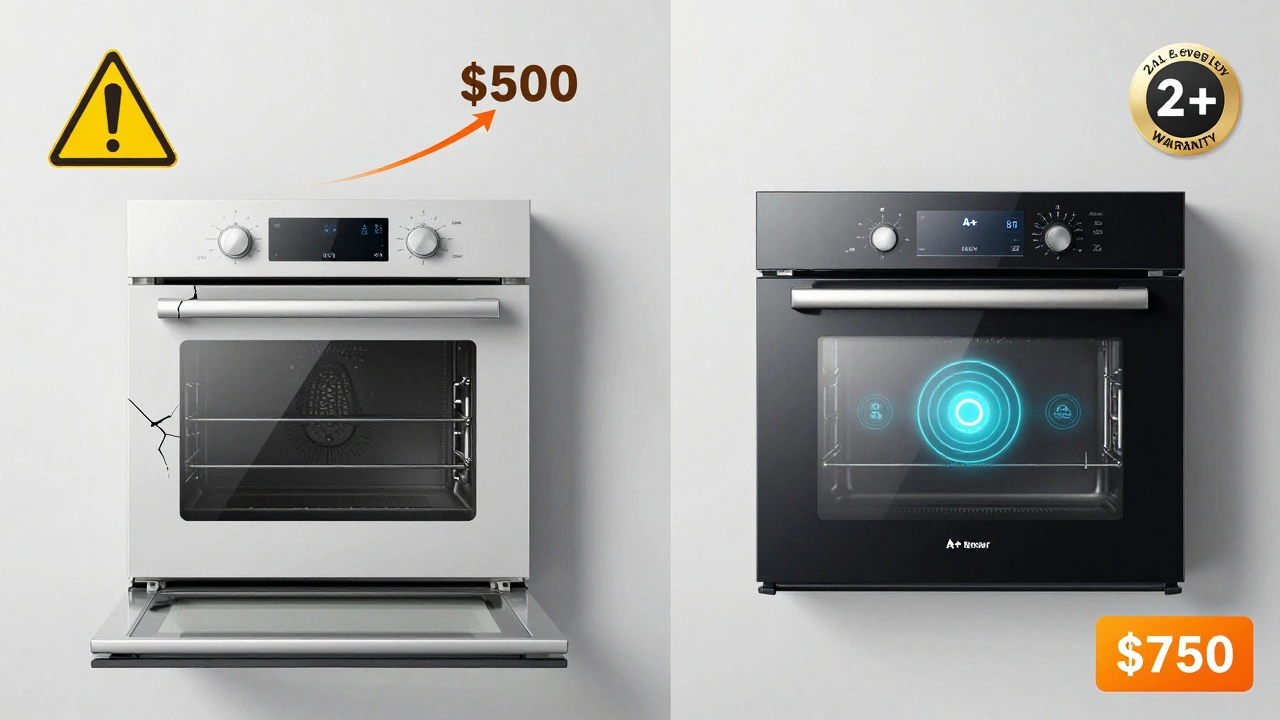
Notice something? A new budget oven starts at $450. That’s less than the cost of replacing a control board. If your oven is older than 8 years and needs a board fix, you’re not saving money - you’re delaying the inevitable.
But here’s the twist: if you’re replacing an oven, don’t just buy the cheapest one. Look for models with energy efficiency ratings of A or higher. Older ovens use 30-40% more power than new ones. Over five years, that adds up to over $300 in extra electricity. That’s like getting a free repair every year.
Hidden costs of repair
People forget the hidden stuff. A repair isn’t just the part and the labour. There’s:
- Diagnostic fees - Some technicians charge $50-$80 just to come out and check what’s wrong. Ask upfront if this is waived if you proceed with the repair.
- Parts ordering - If the part isn’t in stock, you might wait 5-7 days. That’s a week without an oven. Can you manage?
- Future repairs - Older ovens are like old cars. Fix one thing, another breaks soon after. You’re building a pattern of spending.
- Electricity bills - A failing oven works harder. If your oven takes 20 minutes longer to bake a cake than it used to, you’re paying for it.
One client in Ponsonway had her oven repaired twice in 18 months. Each time, the cost was over $200. After the third breakdown, she bought a new oven. Total spent on repairs? $580. New oven? $799. She saved $200 and got a better appliance with a 2-year warranty.
When repair makes sense
Here are the exact situations where fixing your electric oven is the right call:
- Your oven is under 8 years old.
- The problem is the heating element, thermostat, or door seal.
- The repair quote is under $200.
- You love the oven’s layout - the rack positions, the size, the oven light.
- You’re not in a hurry and can wait a few days for the part.
One guy in Tauranga had a 6-year-old oven with a broken element. He got it fixed for $135. Three years later, it still works. He’s saved over $1,000 by not replacing it early.
When replacement is better
Replace your oven if:
- The repair cost is over 50% of a new oven’s price.
- The oven is 10+ years old.
- You’re getting error codes like E1, E3, or F7 - these usually mean control board failure.
- You’ve had two or more repairs in the last two years.
- You’re renovating your kitchen anyway.
- You want smart features - app control, convection, steam cooking.
Smart ovens aren’t just flashy. They’re efficient. They preheat faster, cook more evenly, and shut off automatically. That’s less wasted energy. That’s real savings.
What to do next
Don’t guess. Take action.
- Check the age of your oven. Look for the model number sticker inside the door or on the back.
- Write down the exact problem. Does it not heat? Is it slow? Are there error codes?
- Call one repair technician. Ask: "What’s the diagnostic fee? Is it waived if I fix it? What’s the part cost? How long will it take?"
- Look up a new oven with similar size and features. Check prices at Noel Leeming, Harvey Norman, or The Warehouse.
- Compare the repair quote to 50% of the new oven’s price.
If the repair is cheaper and your oven is young - fix it. If not, start shopping. You’ll thank yourself later.
Final thought
Repairing an electric oven isn’t about saving money - it’s about making smart choices. Sometimes, fixing it saves you cash. Sometimes, replacing it saves you time, stress, and power bills. Don’t let emotion or habit make the decision. Let numbers do it for you.
Is it worth repairing a 12-year-old electric oven?
Generally, no. Ovens this old are nearing the end of their lifespan. Even if a single part like a heating element is replaced, other components - like the fan, thermostat, or control board - are likely to fail soon. Repair costs often reach 60-80% of a new oven’s price at this age. It’s smarter to replace it and get a more efficient, reliable model with a warranty.
How long does an electric oven repair usually take?
Most repairs take 1-3 hours on-site if the part is in stock. If the technician needs to order a part, expect 3-7 days for delivery. Control board replacements or complex wiring issues may take longer. Always ask the technician for a clear timeline before agreeing to the job.
Can I repair my electric oven myself?
Only if you’re experienced with electrical appliances. Replacing a heating element or door seal is doable for some homeowners with basic tools. But working on the control board, wiring, or thermostat carries serious risk - including electric shock or fire. Most manufacturers void the warranty if you open the unit. For safety and reliability, hire a certified technician.
Do new ovens use less electricity?
Yes. Modern ovens are up to 40% more energy-efficient than models from 10 years ago. A 2020s oven with an A+ energy rating uses around 0.8 kWh per hour of baking. Older models often use 1.2 kWh or more. Over five years, that difference adds up to $250-$400 in saved electricity bills - enough to cover most of a new oven’s cost.
What’s the most common reason electric ovens fail?
The heating element is the most common failure point. It’s under constant heat and stress. Over time, it cracks or burns out. Other frequent issues include thermostat failure, worn door seals, and control board malfunctions. Regular cleaning and avoiding slamming the door can extend the life of these parts.