Microwave Repair Cost Calculator
Identify Your Issue
Repair Estimate
Select your issue and microwave age to see a repair recommendation.
If your microwave runs but doesn’t heat food, you’re not alone. It’s one of the most common complaints we see in repair shops. People assume the whole unit is dead-until they realize it’s just one small part failing. Most microwaves last 7 to 10 years, and when they start acting up, it’s rarely the magnetron. More often, it’s something simple-and fixable.
What Actually Breaks in a Microwave?
Microwaves don’t break like TVs or phones. They don’t have screens or processors. Instead, they rely on a handful of mechanical and electrical parts that wear out over time. The most common failures aren’t dramatic. You won’t see smoke or sparks. But you’ll notice your food stays cold, even after two minutes.
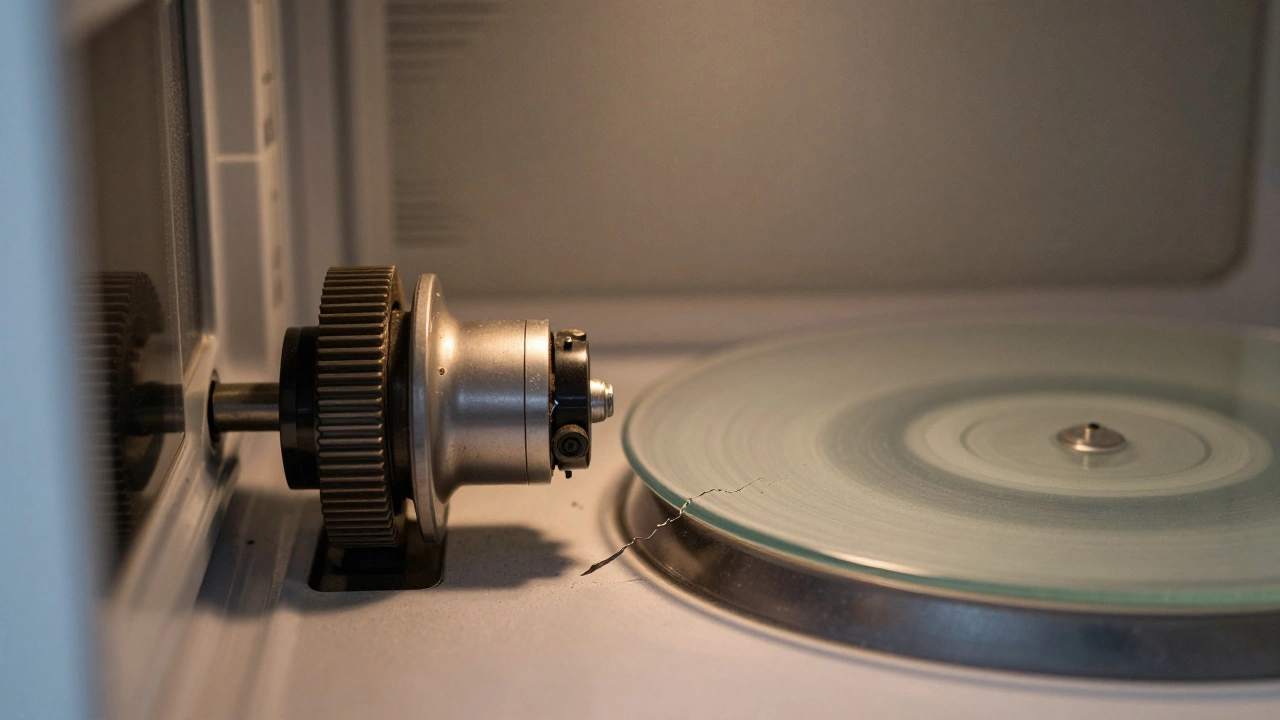
The turntable motor is one of the first things to go. It’s a small, cheap motor that spins the glass plate. After years of heat and moisture, the gears strip or the motor burns out. If the plate doesn’t move, food heats unevenly. People think it’s a setting issue. It’s not. It’s the motor.
Then there’s the door switch. Microwaves have three or four safety switches that cut power the moment the door opens. Over time, these switches get worn from repeated slamming. One fails, and the microwave won’t start at all-even if the light turns on. It’s a classic sign: the display works, the fan runs, but nothing heats. That’s usually the door switch.
Why Isn’t My Microwave Heating?
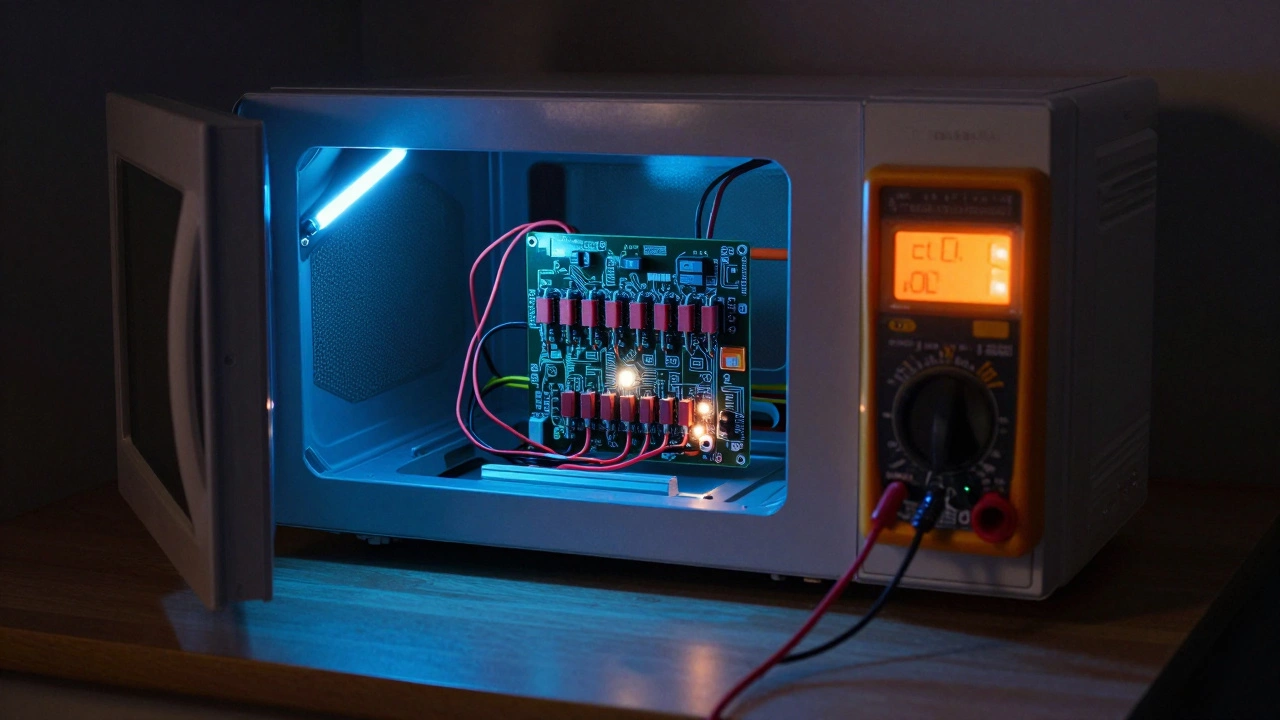
If your microwave powers on but doesn’t heat, the problem is almost always in the high-voltage system. That’s the part that turns electricity into microwaves. It’s made up of three main components: the high-voltage diode, the capacitor, and the magnetron.
The high-voltage diode is the most common failure. It’s a small, inexpensive part that directs current to the magnetron. When it burns out, the magnetron doesn’t get the right power. The microwave runs, the light glows, the turntable spins-but no heat. Replacing the diode costs under $15 and takes about 20 minutes.
The capacitor stores electricity and releases it in bursts. It can hold a charge even after unplugging. That’s why you never open a microwave unless you know what you’re doing. If the capacitor fails, the magnetron doesn’t get enough power. It’s harder to test than the diode, but it’s still replaceable.
The magnetron itself is the heart of the microwave. It generates the microwaves. It’s expensive-often $80 to $150-and if it’s bad, the microwave might not be worth fixing. But here’s the thing: magnetrons rarely fail without warning. If the microwave suddenly stops heating after years of normal use, start with the diode and capacitor first. Replace those before jumping to the magnetron.
What About the Fuse?
Many people think a blown fuse is the problem. And sometimes it is. But the fuse is usually a symptom, not the cause. If the fuse blows, it’s because something else overloaded the circuit-like a shorted diode or a failed capacitor. Replacing the fuse without fixing the real issue means it’ll blow again. Always check the high-voltage components before swapping the fuse.
There are two types of fuses in most microwaves: the main line fuse and the thermal fuse. The main fuse protects against power surges. The thermal fuse cuts power if the microwave overheats. Thermal fuses fail if the ventilation is blocked. Make sure the vents aren’t covered by cabinets or stacked with pots and pans.
When Is It Not Worth Fixing?
Not every microwave is worth repairing. If your unit is over 10 years old, and the cost of parts plus labor is more than half the price of a new one, it’s time to replace it. A basic new microwave costs $80 to $120. A repair might cost $100 to $150. That’s a no-brainer.
But if your microwave is built into the cabinetry, or it’s a high-end model with a built-in hood and lighting, repair makes sense. Those models cost $500 or more to replace. Even a $120 repair is worth it.
Also, if you’ve had the same microwave since 2015 and it’s still working well-don’t replace it just because it’s old. Many microwaves last 12 to 15 years with proper care. The problem isn’t age. It’s how you treat it.
What You Can Do Yourself
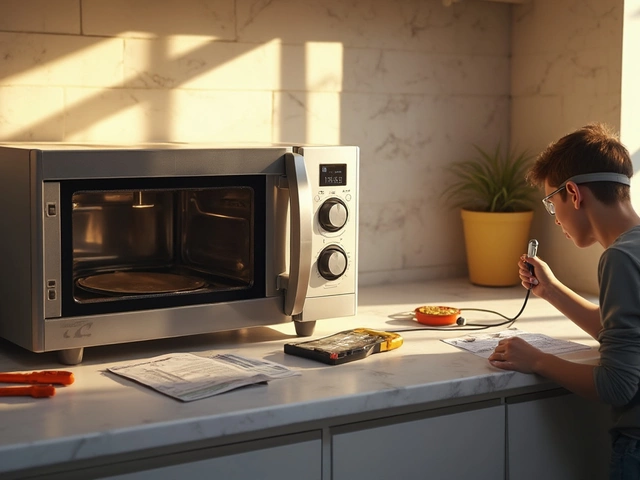
You don’t need to be an electrician to fix the most common microwave issues. Here’s what you can do safely:
- Unplug the microwave and wait 24 hours before opening it. High-voltage capacitors can hold a charge for days.
- Check the turntable motor. If the plate doesn’t spin, remove the glass tray and inspect the motor coupling. If it’s cracked or worn, replace it.
- Test the door switch. Use a multimeter to check continuity. If one switch shows no connection, replace it. They’re usually under $10.
- Inspect the vents. Clean out dust and grease with a damp cloth. Blocked vents cause overheating and trigger thermal fuses.
- Replace the high-voltage diode if the microwave runs but doesn’t heat. It’s a simple swap. YouTube has step-by-step videos for your model.
Don’t touch the capacitor unless you’re trained. It can deliver a lethal shock-even when unplugged. If you’re unsure, call a professional.
What to Avoid
Here are the biggest mistakes people make:
- Running the microwave empty. That can fry the magnetron. Always put something inside-even a glass of water.
- Using metal containers or foil. It causes arcing, which damages the interior and can short the high-voltage system.
- Ignoring odd smells or sounds. A buzzing or burning odor means something’s overheating. Stop using it immediately.
- Using the microwave as a storage box. Don’t pile dishes on top. It blocks vents and causes overheating.
How Long Do These Parts Last?
Here’s a quick guide to typical lifespans:
| Part | Average Lifespan | Common Failure Signs |
|---|---|---|
| Turntable motor | 5-8 years | Plate doesn’t spin |
| Door switch | 7-10 years | Microwave won’t start |
| High-voltage diode | 8-12 years | Runs but doesn’t heat |
| Capacitor | 8-10 years | Weak heating, intermittent operation |
| Magnetron | 10-15 years | No heat after replacing other parts |
| Thermal fuse | Varies | Microwave shuts off during use |
These aren’t hard deadlines. A microwave used daily in a busy kitchen will wear out faster than one used once a week. But if your microwave is hitting the 8-year mark and starts acting up, check these parts first.
Final Thought
Microwaves are simple machines. They don’t need to be replaced every few years. Most failures are cheap and easy to fix. You don’t need to buy a new one just because it’s not heating. Start with the diode, check the door switch, clean the vents. You might save yourself $100-and keep your old microwave running for another five years.
Why does my microwave turn on but not heat food?
The most common reason is a failed high-voltage diode. It’s a small part that directs power to the magnetron. When it burns out, the microwave runs normally-light, fan, turntable-but doesn’t generate heat. Replacing the diode fixes it in most cases. Always check this before replacing the magnetron.
Can a microwave explode if it’s broken?
No, microwaves don’t explode. But they can arc or spark if metal is inside, or if the magnetron is damaged. The real danger is from the high-voltage capacitor, which can hold a deadly charge even after unplugging. Never open the casing unless you know how to discharge it safely.
Is it safe to use a microwave with a broken turntable?
You can use it, but food will heat unevenly. The turntable ensures even exposure to microwaves. Without it, some parts will be cold while others are scalding. It’s not dangerous, but it’s inefficient. Replace the motor or coupling-it’s a simple fix.
How do I know if my microwave’s fuse is blown?
If the microwave doesn’t turn on at all-no light, no sound, no display-it could be a blown fuse. But first, unplug it and check the power outlet. Then, use a multimeter to test the fuse for continuity. If it reads open, replace it. But remember: a blown fuse usually means another part failed first.
Why does my microwave make a loud humming noise?
A loud hum usually means the magnetron is working but under stress-often because the capacitor or diode is failing. It can also happen if the cooling fan is clogged with grease. Clean the vents first. If the noise continues, the high-voltage components may need testing.
Can I replace a microwave part myself?
Yes, if you’re careful. Parts like the turntable motor, door switch, and high-voltage diode are easy to replace with basic tools. But never touch the capacitor or magnetron unless you’ve been trained. Always unplug the microwave and wait 24 hours before opening it. There are plenty of model-specific videos online to guide you.
If your microwave is acting up, don’t rush to replace it. Most of the time, it’s just one small part that’s worn out. Fix it right, and you’ll get another five years out of it.