
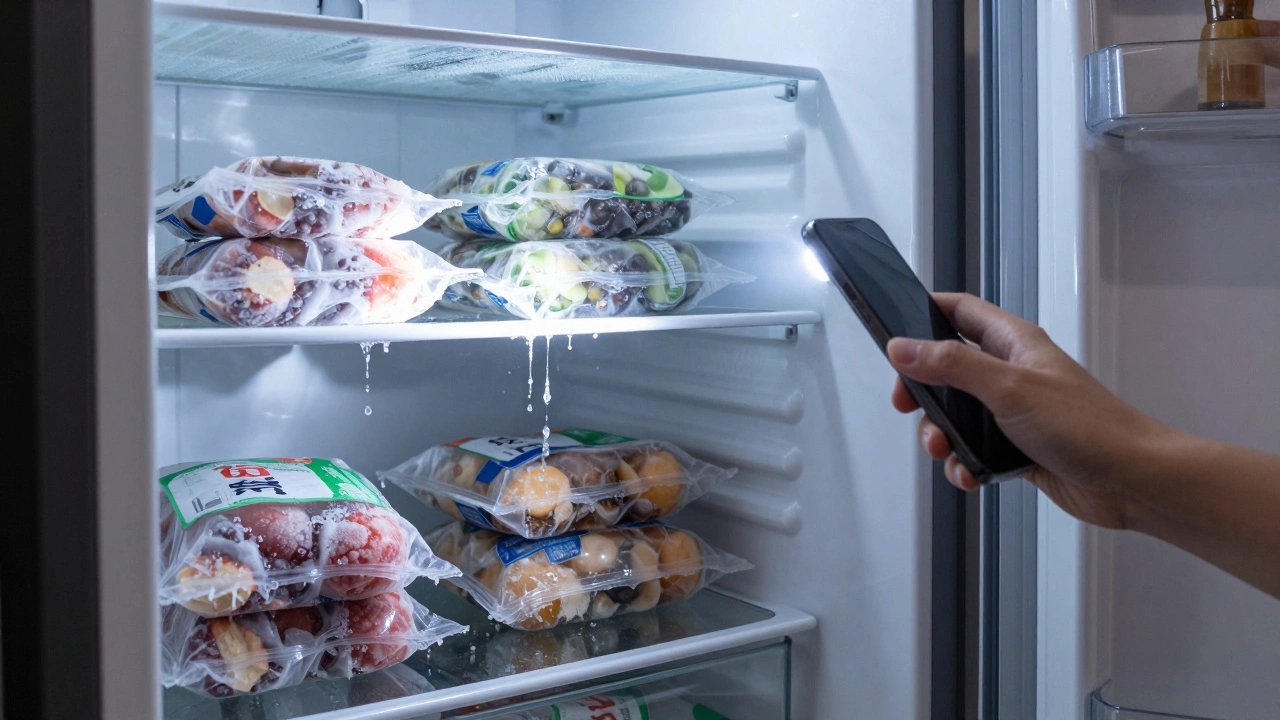
Freezer Diagnostic Tool
Step 1: Is the unit receiving power?
Check if interior lights turn on when you open the door or if the digital display is lit.
Power Troubleshooting
Since there is no power, check the basics first.
- Check the plug: Ensure it isn't loose behind the cabinet.
- Test the outlet: Plug a lamp into the same socket.
- Check breakers: Look for tripped breakers or GFCI switches.
Step 2: What sounds do you hear?
Close the door and listen carefully near the back wall.
Diagnosis: Start Relay Failure
Action: Locate the compressor (usually bottom back) and remove the relay attached to it. Shake it; if it rattles, it's broken. Replace this inexpensive part first.
Diagnosis: Control Board or Compressor
Action: This requires a multimeter to test voltage at the compressor terminals. If you aren't comfortable with electrical testing, call a technician.
Step 3: Is the air inside cold?
Place your hand in the center of the freezer compartment.
Diagnosis: Fan Issue
Action: Listen closely for a faint whirring. If silent, the fan motor may be burnt out or jammed by ice. Defrost the unit manually to see if airflow returns.
Step 4: Check for Ice Buildup
Look deep inside the freezer at the rear wall panels. Do you see thick frost or ice blocks covering the vents?
Diagnosis: Defrost System Failure
Action: Unplug and thaw completely. If it cools afterward, replace the faulty defrost component (usually the heater or thermostat).
Diagnosis: Dirty Coils or Refrigerant Leak
Action: Clean coils thoroughly. If clean and still not cooling after 2 hours, suspect a refrigerant leak or sealed system failure requiring a pro.
There is nothing quite as panic-inducing as opening your freezer door to find a puddle of water and ice cream that has turned into soup. One minute everything was frozen solid; the next, you are standing there wondering what went wrong. It feels like a mystery, but in most cases, the culprit is something simple. Before you call a technician or throw away hundreds of dollars worth of food, it pays to look closer at how these machines actually work.
A freezer is essentially a heat pump. It doesn't create cold; it moves heat out of the box and dumps it outside. When this process breaks down, temperatures rise. The good news? You don't always need a professional to fix it. Many sudden failures are caused by issues you can diagnose with a multimeter, a flashlight, and maybe ten minutes of your time. Let’s walk through the most likely reasons your unit quit on you, starting with the easiest checks and moving toward the more complex mechanical failures.
The Power Supply and Thermostat Settings
It sounds obvious, but we often overlook the basics when stress kicks in. Is the unit actually plugged in? Did a heavy shopping bag bump the cord loose behind the cabinet? Check the outlet by plugging in a lamp or phone charger. If the outlet is dead, check your home’s circuit breaker panel. A tripped breaker or a blown GFCI (Ground Fault Circuit Interrupter) switch nearby can cut power instantly.
If power is flowing, look at the controls. Modern freezers often have digital displays. If the screen is blank, you might have an internal fuse issue or a control board problem. If the display is on, check the temperature setting. Sometimes, especially in older models with dial thermostats, the knob gets bumped accidentally. Ensure it is set to the recommended freezing temperature, usually around -18°C (0°F). Also, check if you accidentally activated "Power Freeze" or "Super Cool" modes that might confuse the logic board, though this rarely causes a total stop.
How do I know if my freezer has power?
Look for interior lights turning on when you open the door. Listen for the hum of the fan or the click of the relay. If the digital display is lit, the unit is receiving electricity. Use a multimeter on the wall outlet to confirm voltage if other appliances aren't working either.
Dirty Condenser Coils: The Silent Killer
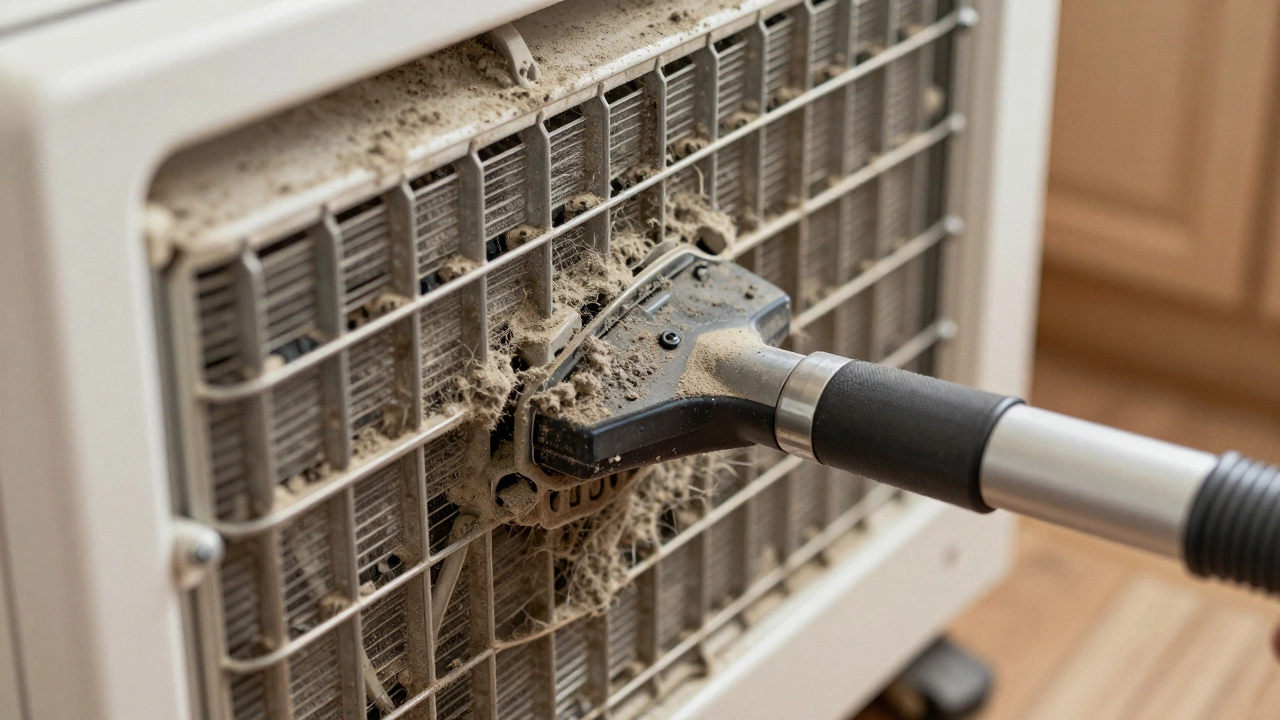
If your freezer runs but isn't getting cold, or if it cycles off frequently because it overheats, dirty condenser coils are the prime suspect. These coils look like a metal radiator and are located either on the back of the unit or along the bottom front grille. Their job is to release the heat absorbed from inside the freezer into the room air.
When dust, pet hair, and lint clog these coils, they can't dissipate heat. The compressor works harder and hotter to compensate. Eventually, the high-pressure switch trips to protect the motor, shutting the system down entirely. This is a very common cause of sudden stops in homes with pets or carpets. Grab a coil brush or a vacuum cleaner with a hose attachment and clean them thoroughly. In many cases, once the coils are clear, the freezer will restart and cool down within an hour.
Condenser Coils are metal tubing networks that release heat from the refrigerant cycle. They require cleaning every six months to maintain efficiency.The Defrost System Failure
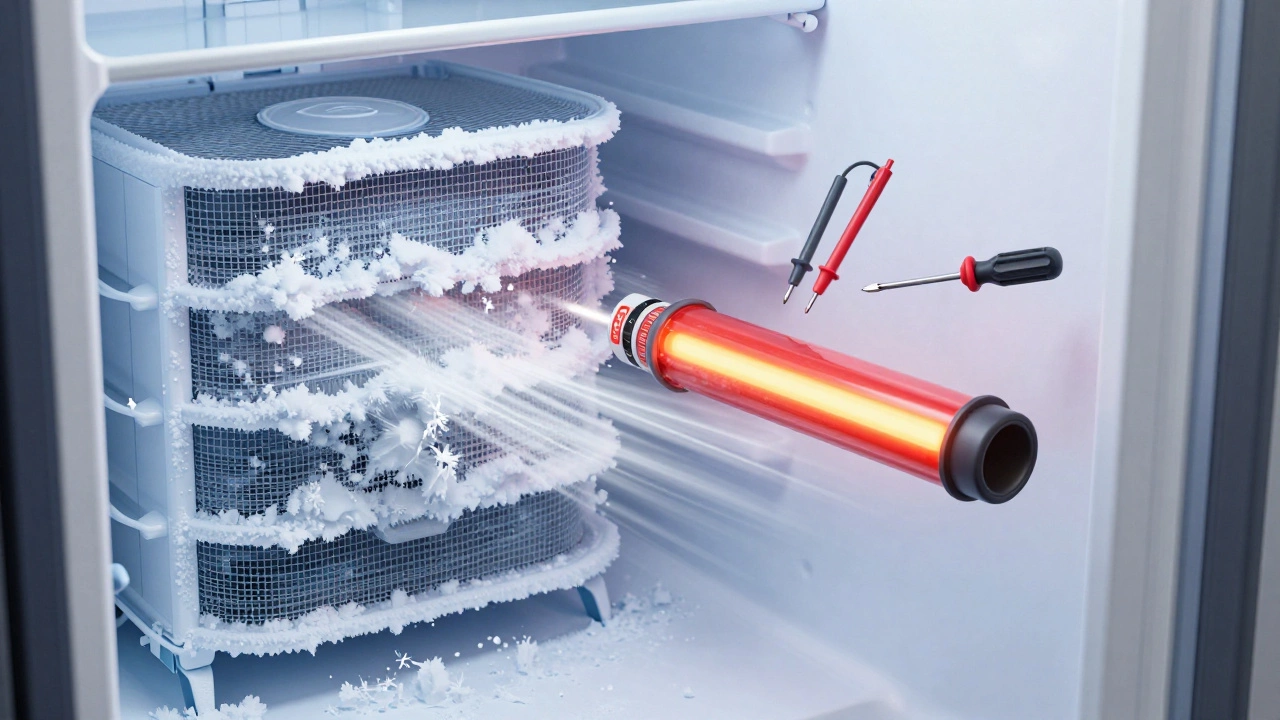
This is arguably the most common reason for a sudden loss of cooling in frost-free freezers. Here is how it works: during normal operation, moisture builds up on the evaporator coils inside the freezer. To prevent ice from blocking airflow, a defrost heater turns on periodically to melt the frost. Water drains away through a tube.
If any part of this defrost system fails, ice builds up until it completely blocks the air vents. No air means no cooling. The freezer warms up, but the compressor might still be running (you'll hear it humming), so you won't realize anything is wrong until the food thaws. The three components to check here are:
- The Defrost Heater: A glowing rod near the coils. If it's broken, no heat is generated to melt the ice.
- The Defrost Thermostat (Bi-metal): This safety device cuts power to the heater once the ice is melted. If it sticks "open," the heater never turns on.
- The Defrost Control Board: The brain that tells the heater when to turn on. If this fails, the cycle never initiates.
To test this, unplug the freezer and let it thaw completely (you can speed this up with a hair dryer). Once the ice is gone, plug it back in. If the freezer starts cooling again, you have confirmed a defrost system failure. You’ll need to replace whichever component tested bad with a multimeter.
Evaporator Fan Motor Issues
In frost-free models, a small fan circulates cold air from the evaporator coils throughout the freezer compartment. If this fan motor burns out or gets jammed by ice, the cold air stays trapped near the coils. The thermostat senses the warm air in the main compartment and keeps the compressor running, but the food doesn't freeze.
You can often detect this by listening. With the door closed, put your ear near the back wall of the freezer. You should hear a faint whirring sound. If you hear nothing, or if you hear a grinding noise, the fan motor is likely dead. Another sign is if the back wall of the freezer feels warm while the compressor is running. Replacing the evaporator fan motor is a relatively inexpensive fix and usually takes less than an hour for a handy homeowner.
Compressor Problems
The compressor is the heart of the refrigerator/freezer system. It pumps the refrigerant gas through the lines. If the compressor dies, the cooling cycle stops completely. There are two main ways a compressor fails:
- Mechanical Seizure: The internal pistons get stuck due to wear or lack of lubrication. You might hear a loud buzzing or clicking sound as the start relay tries and fails to kick the motor into motion.
- Electrical Failure: The windings inside the motor burn out. In this case, the compressor will be silent.
Before condemning the compressor, check the Start Relay is a small electrical switch mounted on top of the compressor that provides the initial jolt to start the motor. This cheap part fails frequently. If the relay is burnt or cracked, replace it first. If the new relay doesn't help and the compressor remains silent or buzzes without starting, the compressor itself is likely dead. At this point, repairing the unit is often not cost-effective compared to buying a new one, unless it is a high-end built-in model.
Clogged Drain Tube
While a clogged drain doesn't always stop the cooling immediately, it can lead to secondary problems that mimic a breakdown. During the defrost cycle, melted ice needs to drain into a pan under the fridge where it evaporates. If the drain tube is blocked by food debris or mold, water backs up into the freezer compartment.
This water can freeze onto the evaporator coils, causing the same blockage issue described in the defrost section. It can also short out electrical components if it pools near the wiring harness. If you see water pooling at the bottom of the freezer or dripping onto the floor, locate the drain hole (usually at the back wall) and clear it with warm water and a pipe cleaner or turkey baster.
Door Seal Leaks
A worn or damaged gasket lets warm, moist air enter the freezer. This forces the compressor to run constantly to maintain temperature. Over time, this leads to excessive frost buildup and eventual system strain. You can test the seal with the dollar bill test: close the door on a dollar bill. If you can pull it out easily without resistance, the seal is weak.
Check for cracks, tears, or gaps in the rubber. Clean the seal with warm soapy water to remove sticky residue that prevents a tight closure. If the seal is brittle or torn, order a replacement gasket. It snaps into place and can save your compressor from premature burnout.
When to Call a Professional
Some issues are beyond DIY repair. If you suspect a refrigerant leak (indicated by hissing sounds, oily residue on lines, or no cooling despite a running compressor), do not attempt to fix it yourself. Handling refrigerants requires EPA certification and specialized tools. Similarly, if the control board is fried due to a power surge, diagnosing the exact fault code often requires manufacturer-specific software.
In Auckland, where humidity can be high, moisture-related issues like defrost failures and drain clogs are particularly common. If you've checked the power, cleaned the coils, and verified the defrost components but the unit still won't cool, it's time to call a qualified appliance repair technician. They can perform pressure tests on the sealed system and diagnose complex electronic faults.
| Symptom | Likely Cause | Action |
|---|---|---|
| No power, no lights | Tripped breaker, unplugged, or dead outlet | Check breaker, plug, and outlet with another device |
| Running but not cold | Dirty coils, bad fan, or defrost failure | Clean coils, listen for fan, check for ice blockage |
| Loud buzzing/clicking | Failed start relay or seized compressor | Replace start relay; if no change, call pro |
| Water pooling inside | Clogged drain tube | Clear drain with warm water and pipe cleaner |
| Excessive frost buildup | Bad door seal or defrost heater failure | Test seal with dollar bill; inspect defrost components |
Frequently Asked Questions
How long does it take for a freezer to cool down after being turned on?
A healthy freezer should reach its set temperature (around -18°C) within 24 hours. If it hasn't cooled significantly after a full day, there is likely an underlying issue with the compressor, refrigerant, or airflow.
Can I use my freezer if the light is on but it's not cold?
No. If the light is on, the unit has power, meaning the cooling failure is mechanical or electrical. Continuing to use it will spoil your food. Unplug it immediately and begin troubleshooting the compressor, fans, or defrost system.
Is it worth repairing an old freezer?
If the repair cost is more than half the price of a new unit, or if the freezer is over 10-15 years old, replacement is usually better. Newer models are significantly more energy-efficient, which saves money on electricity bills over time.
Why does my freezer make a clicking noise before stopping?
This is typically the start relay trying to engage the compressor. If the compressor is hard to start due to age or wear, the relay clicks repeatedly but fails to turn the motor on. Replace the start relay first; if the problem persists, the compressor may be failing.
How often should I clean the condenser coils?
Every six months is ideal. If you have pets or live in a dusty environment, clean them every three months. Dirty coils force the compressor to work harder, increasing energy consumption and wear on the motor.