
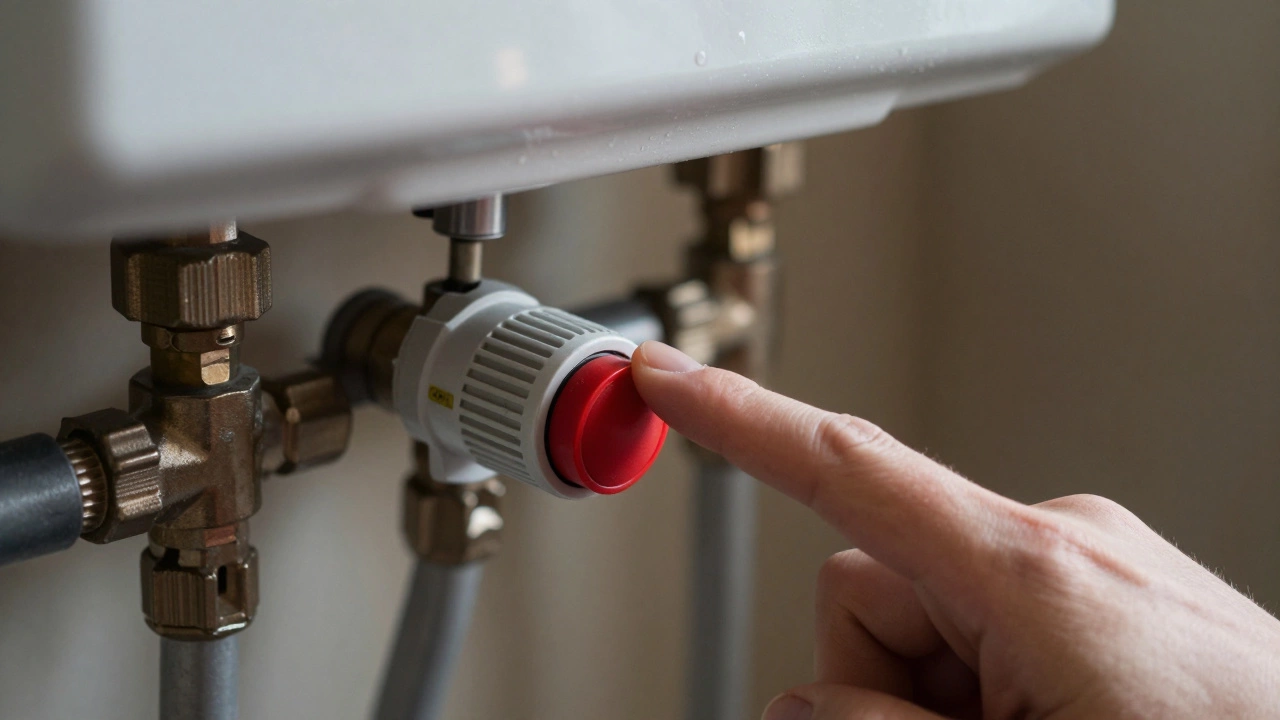
Water Heater Troubleshooting Guide
Answer the following questions to find out why your water is cold and what you should do next.
Diagnosis Result
Recommended Action:
Key Takeaways
- Most reset buttons require a firm press until you hear or feel a "click."
- There is no specific number of seconds to hold the button; the mechanical click is your signal.
- You must turn off the power at the breaker before attempting a reset.
- If the button pops back out immediately or trips again soon, you have a deeper electrical or heating element issue.
The Secret to the Perfect Reset
When people ask how long to push the reset button, they usually expect an answer like "five seconds" or "ten seconds." But the truth is, it's not about the time-it's about the feel. The water heater reset button is actually the actuator for the high limit switch, which is a safety device that cuts power to the heating elements if the water temperature reaches a dangerous level.
To reset it, you simply press the button firmly. You aren't waiting for a timer to go off; you are waiting for a mechanical engagement. You'll know it worked when you hear a distinct "click" sound. If you push it and it feels mushy or doesn't click, it hasn't reset. Once you feel that snap, you can let go. If you keep holding it down after the click, it doesn't help the process-it just puts unnecessary pressure on the switch.
Safety First: Don't Skip the Breaker
I cannot stress this enough: never open the access panel on your water heater while the power is on. You are dealing with 240 volts of electricity, which is more than enough to cause a serious injury. Before you even touch the reset button, go to your home's electrical panel and flip the circuit breaker to the "Off" position.
Once the power is cut, remove the metal access panel on the side of the tank. You'll see a thick layer of insulation. Pull that insulation back carefully to reveal the thermostat. The reset button is usually a small, red button located on the thermostat body. If the button is already popped out, it means the system has tripped. If it's pushed in, the problem might be a burnt-out heating element rather than a tripped safety switch.

Why Did the Button Trip in the First Place?
Resetting the button gets your hot water back, but it doesn't fix why it happened. A safety switch doesn't trip for no reason. It's a reaction to an overheating event. If you just click the button and move on, you're treating the symptom, not the disease. Here are the most common culprits:
- Thermostat Failure: If the temperature control fails, it might tell the heating element to stay on indefinitely. The water boils, the pressure rises, and the high limit switch trips to prevent the tank from exploding.
- Sediment Buildup: Over time, minerals like calcium and magnesium settle at the bottom of the tank. This creates a layer of "crust" over the lower heating element. The element then has to work harder to heat the water, causing it to overheat and trip the switch.
- Electrical Surges: A sudden spike in voltage from the grid can sometimes cause the safety mechanism to trigger.
| Symptom | Reset Result | Probable Cause |
|---|---|---|
| Cold water, button is popped out | Clicks and stays in; water gets hot | One-time overheat or power surge |
| Cold water, button is popped out | Clicks, but pops back out instantly | Short circuit or failed thermostat |
| Cold water, button is already in | No change (already engaged) | Burnt out heating element |
| Lukewarm water, button is in | No change | Heavy sediment buildup (Efficiency loss) |
How to Tell if Your Heating Element is Burnt Out
If you push the reset button and it stays in, but your water is still cold after a few hours, your electric heating element has likely failed. Think of the element like a giant toaster wire; eventually, it just burns through.
To confirm this, a technician (or a handy homeowner with a multimeter) will test for continuity. If the element shows an "open circuit," it's dead. Replacing an element is a common repair and is much cheaper than replacing the whole tank. However, if you replace the element and the reset button trips again a week later, the thermostat is almost certainly the real problem.

Preventing Future Trips: The Maintenance Routine
You shouldn't have to touch that reset button more than once in several years. If you're doing it every few months, your water heater is screaming for help. The best way to keep the system stable is by flushing the tank.
Drain a few gallons of water from the bottom valve once a year. This clears out the sediment that causes elements to overheat. If you live in an area with "hard water" (high mineral content), doing this every six months can double the life of your heating elements. Also, check your temperature setting. Setting your heater to 120°F (about 49°C) is usually plenty for most homes and reduces the stress on the components.
Step-by-Step Reset Checklist
If you're standing in your garage right now trying to figure this out, follow these steps exactly:
- Power Down: Go to your electrical panel and turn off the breaker for the water heater.
- Access: Unscrew the panel on the side of the heater.
- Insulate: Carefully pull back the insulation to find the thermostat.
- The Press: Locate the red button. Press it firmly until you feel and hear a "click."
- Secure: Put the insulation back in place and screw the panel back on.
- Power Up: Flip the breaker back to "On."
- Wait: Give it at least an hour (for a small tank) or three hours (for a large tank) to heat the water before testing the shower.
What if the reset button won't stay pushed in?
If the button pops back out immediately after you press it, the safety switch is detecting a critical fault. This usually means the thermostat is malfunctioning or there is a direct short in the heating element. For your safety, do not force the button to stay in; leave the power off and call a professional technician.
Can I reset the water heater without opening the panel?
No. The high limit reset button is a physical mechanical switch located on the thermostat, which is hidden behind the insulation and the metal access panel. There is no remote or digital reset for these standard electric models.
How do I know if my water heater is electric or gas?
If you see a large electrical conduit (metal pipe) going into the top of the tank and no gas line or pilot light flame at the bottom, you have an electric heater. Gas heaters have a vent pipe coming out of the top and a gas valve at the bottom.
Is it dangerous to reset the button myself?
It is safe as long as you turn off the power at the circuit breaker first. The danger comes from touching live wires inside the panel. Once the power is confirmed off, pressing a button is a simple and low-risk task.
Why is my water only slightly warm after a reset?
Most electric heaters have two elements (upper and lower). If the upper one is working but the lower one is burnt out, you will get some hot water at first, but it will run out quickly. This is a sign that you need to replace a heating element.
What to do if the problem returns
If you find yourself resetting the button once a month, stop. You are risking a more serious failure. A recurring trip indicates that the thermostat is likely stuck "closed," meaning it never tells the elements to stop heating. This can lead to excessive pressure buildup inside the tank. While the T&P valve (Temperature and Pressure relief valve) is designed to prevent the tank from bursting, relying on a safety valve as your primary temperature control is a bad idea. At this point, the cost of a new thermostat is a tiny fraction of the cost of a flooded basement and a new water heater.