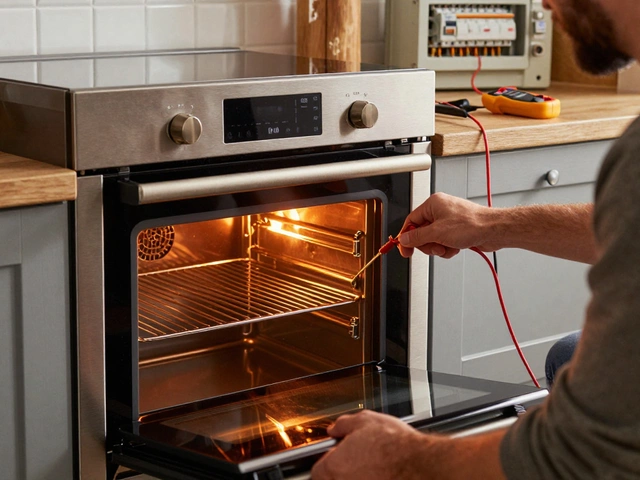
If your electric oven isn’t heating properly, takes forever to preheat, or keeps turning off randomly, you’re not alone. Many homeowners in Auckland assume it’s time to replace the whole unit-but often, the issue is something simple and fixable. You don’t need to be a technician to spot the warning signs. With a few basic checks, you can tell whether it’s a minor glitch or something that needs professional help.
It’s not heating up at all
The most obvious problem? The oven doesn’t get hot. First, check if the clock or display works. If the control panel is dead, the issue might be with the power supply. Make sure the circuit breaker hasn’t tripped. In older homes, especially in Auckland, wiring can be outdated, and ovens often sit on their own dedicated circuit. If the breaker is fine, unplug the oven (or turn off the isolator switch) and wait five minutes before turning it back on. Sometimes, a simple reset fixes a glitch.
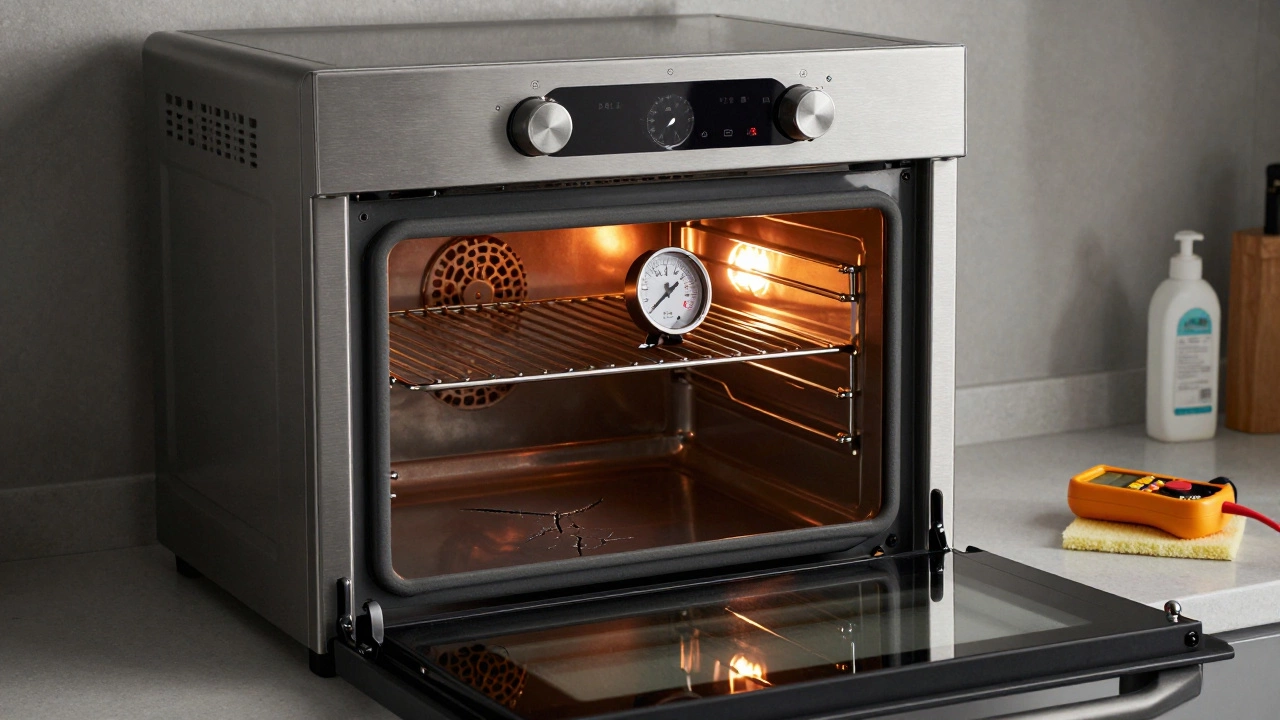
If the display works but the heating elements don’t glow, the problem is likely the heating element itself. Look inside the oven-both the top (broil) and bottom (bake) elements should glow bright orange when in use. If one looks dark, cracked, or has a bubbled section, it’s burnt out. These elements wear out over time, especially if you use the self-clean cycle often. A broken bake element is the number one reason electric ovens won’t heat.
The oven heats unevenly or too slowly
Ever put a cake in and find it burnt on one side and raw in the middle? That’s not your recipe-it’s the oven. Uneven heating usually points to a failing bake element or a faulty thermostat. The thermostat controls how hot the oven gets. If it’s off by even 20°C, your food will cook wrong. You can test this with an oven thermometer. Place it in the center of the oven, set the temperature to 180°C, and wait 20 minutes. If the thermometer reads 160°C or 200°C, the thermostat is misreading. Replacing it isn’t hard, but it requires some wiring knowledge.
Another cause? Blocked vents or a dirty oven. Grease and food debris can block airflow, especially around the fan in convection ovens. Clean the interior regularly, and make sure nothing’s touching the back wall where air circulates. A clogged fan motor can also cause slow heating. If the fan spins but sounds like it’s grinding, it might need lubrication or replacement.
The oven turns on and off randomly
If your oven heats for a few minutes, then shuts off, then comes back on again, it’s cycling. This sounds normal-but if it’s happening every 5-10 minutes instead of every 15-20, something’s wrong. The thermostat might be stuck, or the control board is sending mixed signals. In older models, the infinite switch (which controls the bake and broil settings) can wear out. You might notice the oven works on broil but not bake, or vice versa. That’s a classic sign of a failing switch.
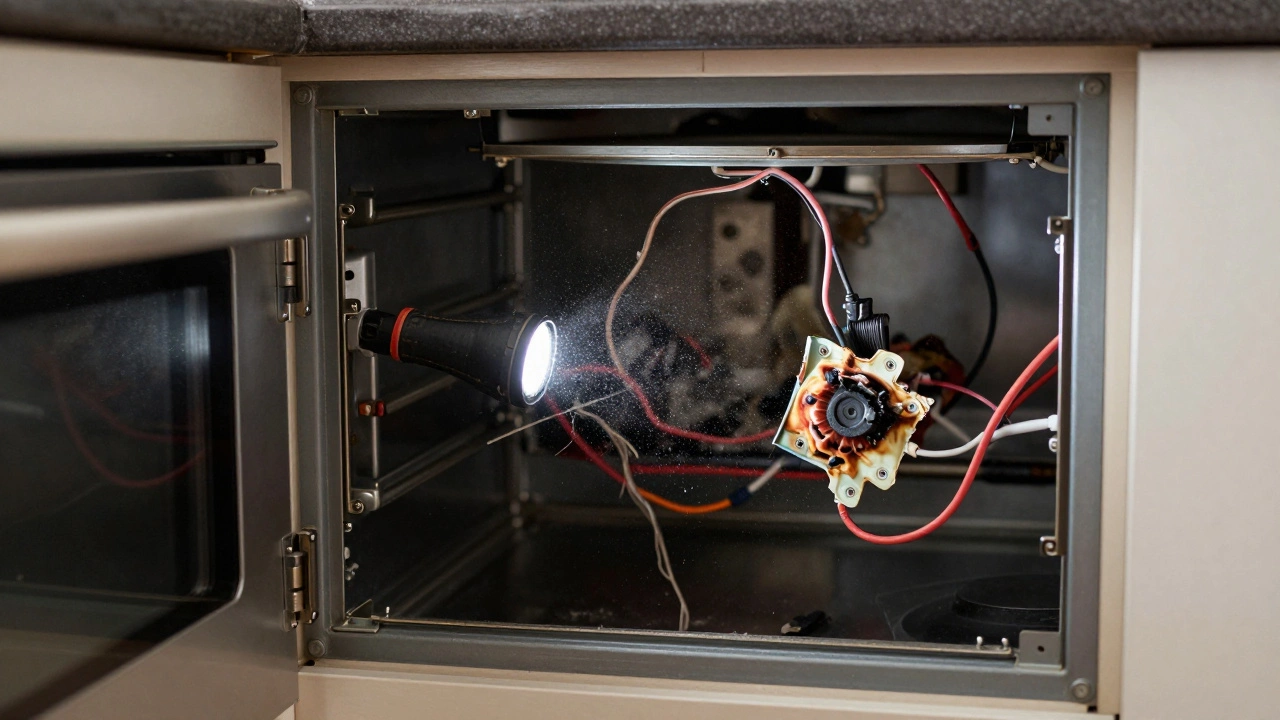
Also check for loose wires. Over time, vibration and heat cause connections to loosen. If you’re comfortable turning off the power and removing the back panel, look for any burnt, frayed, or disconnected wires. A loose neutral wire can cause erratic behavior. If you see melted insulation or a charred terminal, stop. This isn’t a DIY fix.
Error codes on the display
Modern electric ovens show error codes when something’s wrong. These aren’t random-they’re specific. For example:
- E1 or F1 = Temperature sensor fault
- E2 or F2 = Control board issue
- E3 or F3 = Oven overheat
- E4 or F4 = Door lock malfunction
These codes vary by brand. Whirlpool, Electrolux, and Samsung all use different codes. If you see one, look up your model number online. Most manufacturers have a quick guide. Don’t ignore these. They’re the oven’s way of saying, “Check this part.”
The oven smells like burning plastic or metal
A faint smell when you first turn on a new oven is normal. But if you smell burning plastic, scorched wire, or ozone (like after a lightning strike), shut it off immediately. This usually means:
- A wire insulation is melting
- The control board is overheating
- A component like the relay or capacitor is failing
These aren’t just inconvenient-they’re fire hazards. If you smell this, don’t try to fix it yourself. Call a technician. Even if the oven still heats, the problem could worsen quickly.
It makes strange noises
Ovens aren’t silent. A quiet hum from the fan is normal. But if you hear:
- Clicking every few seconds
- Loud buzzing or grinding
- Pop or bang when turning on
Something’s wrong. Clicking could mean the thermostat is cycling too fast. Buzzing often points to a failing relay on the control board. A loud pop? That’s usually the igniter or element failing under pressure. These sounds are early warnings. They don’t mean the oven is dead yet-but they do mean you shouldn’t wait.
What to do next
Once you’ve checked the basics-power, elements, thermostat, error codes-you can decide whether to fix it or replace it. Here’s a quick rule:
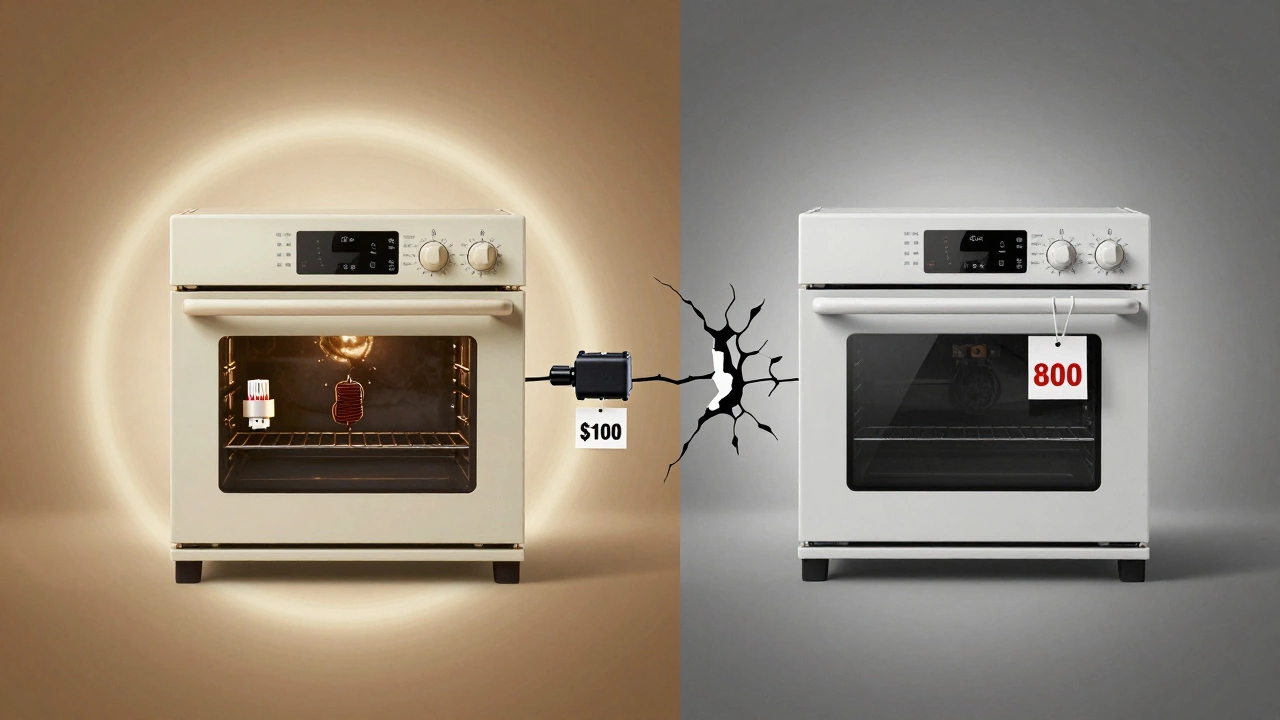
- If the oven is over 10 years old and the element or thermostat is faulty: replace it. Repair costs often hit 60-70% of a new unit’s price.
- If it’s under 7 years old and only one part is broken: repair it. Elements cost $40-$80, thermostats $60-$100.
- If you smell burning plastic or see melted parts: call a pro. Don’t risk a fire.
Most electric oven problems are fixable. You don’t need to buy a new one unless the control board is fried or the oven is ancient. With a little patience and these checks, you can save hundreds-and keep your oven working for years longer.
Why won’t my electric oven heat up even though the light is on?
The oven light and heating elements run on separate circuits. If the light works but the oven doesn’t heat, the bake or broil element is likely burnt out. Check both elements visually-they should glow bright orange when heating. A cracked, bubbled, or dark element means it’s failed and needs replacing. Also, check if the oven’s thermostat or control board is sending power to the element. A multimeter test can confirm if voltage is reaching the element.
Can a dirty oven cause heating problems?
Yes. Heavy grease buildup, especially around the fan and vents in convection ovens, can block airflow. This forces the oven to work harder, causing it to overheat and shut off early. It can also lead to uneven cooking. While a dirty oven won’t stop heating entirely, it can make the thermostat misread the temperature. Clean the interior every 3-6 months using non-abrasive cleaners. Avoid self-clean cycles if your oven is older than 8 years-they put too much stress on aging components.
Do electric ovens have fuses?
Some do, but not all. Most modern electric ovens use a thermal fuse built into the heating circuit. If the oven overheats, this fuse blows to prevent fire. Once blown, it can’t be reset-it must be replaced. The fuse is usually located near the broil element or on the back panel. If the oven has no power at all, even after checking the breaker and outlet, the thermal fuse might be the culprit. Testing it requires a multimeter. If you’re not experienced with electrical tools, it’s safer to call a technician.
Is it worth repairing a 12-year-old electric oven?
Usually not. Most electric ovens last 10-15 years. At 12 years, the components are near the end of their lifespan. Replacing a single part like the element or thermostat might fix it for now, but other parts-like the control board, fan motor, or wiring-are likely close to failing too. Repair costs can hit $200-$300, while a new mid-range oven costs $600-$900. If your oven is still energy-efficient and you’re happy with it, a repair might make sense. But if you’re noticing more frequent issues, upgrading is often the smarter long-term choice.
How do I know if the oven thermostat is bad?
The best way is to test it with an oven thermometer. Place the thermometer in the center of the oven, set the temperature to 180°C, and let it preheat for 20 minutes. If the thermometer reads more than 15°C off, the thermostat is inaccurate. You can also check for signs like food cooking too fast or too slow, uneven baking, or the oven turning on and off too frequently. A faulty thermostat doesn’t always show error codes, so physical testing is key. Replacing it costs $60-$100 and takes about an hour if you’re handy.