

Oven Repair vs. Replace Calculator
Enter Your Oven Details
Recommendation
You open the door to preheat for dinner, but nothing happens. Or worse, the temperature gauge is stuck at 200°C while your roast sits in a lukewarm haze. It’s a frustrating moment that strikes fear into any home cook. But before you panic about buying a brand-new kitchen centerpiece, there is a simple financial rule of thumb that can save you hundreds of dollars.
The decision to repair or replace an oven isn’t just about the immediate bill. It depends on the age of your unit, the specific part that failed, and whether your current model even meets modern energy standards. In Auckland, where electricity prices fluctuate and labor rates are high, making the wrong choice can feel like throwing money into the flame.
The Golden Rule: The 50% Threshold
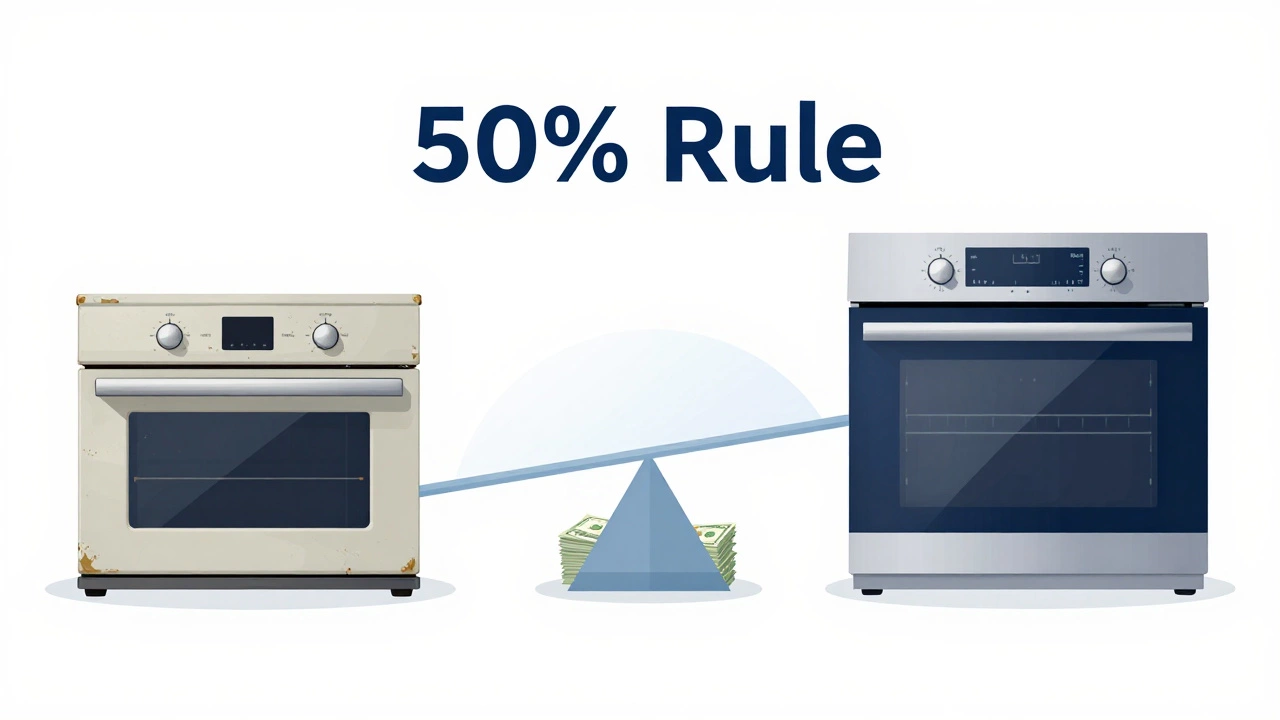
If you want a quick answer without digging into spreadsheets, use the 50% rule. This is the standard heuristic used by most appliance technicians. If the cost of the repair exceeds 50% of the price of a comparable new oven, you should generally replace it.
Why 50%? Because appliances degrade over time. Fixing one part today often means another part will fail next month. If you spend $400 to fix a $800 oven, you’ve essentially paid half its value back into a machine that has limited remaining life. Conversely, if the repair is $150, you get years of additional service for a fraction of the replacement cost.
However, this rule assumes your oven is relatively old. If your oven is only two years old and under warranty, the math changes completely. In that case, the repair cost might be zero, making replacement financially nonsensical unless you want an upgrade in features.
Breakdown of Repair Costs in New Zealand
To make an informed decision, you need to know what you’re paying for. In Auckland, labor rates for licensed electricians or gas fitters (depending on your oven type) typically range from $90 to $120 per hour. A standard diagnostic visit usually costs between $60 and $90.
Here is how common failures stack up against their parts costs:
| Issue | Estimated Part Cost (NZD) | Labor Estimate | Total Repair Cost | Verdict |
|---|---|---|---|---|
| Heating Element Failure | $30 - $60 | 1 Hour | $120 - $170 | Repair |
| Thermostat/Temperature Sensor | $40 - $80 | 1-1.5 Hours | $130 - $250 | Repair |
| Control Board/Electronic Module | $150 - $300 | 2 Hours | $330 - $540 | Replace (if >5 yrs old) |
| Door Seal/Gasket | $20 - $50 | 0.5 Hours | $65 - $110 | Repair |
| Gas Valve Assembly (Gas Ovens) | $100 - $200 | 2 Hours | $280 - $440 | Replace (if >7 yrs old) |
Notice the trend? Mechanical failures like heating elements and seals are cheap to fix. Electronic failures, specifically control boards, are expensive. When the brain of the oven dies, it’s often a sign that other components are nearing end-of-life too.
When Age Matters More Than Price
An oven doesn’t have a fixed expiration date, but it does have a useful lifespan. Most conventional ovens last between 10 to 15 years. High-end built-in models might stretch to 20 years with proper maintenance.
If your oven is less than five years old, lean heavily toward repair. You still have significant life left in the unit. Even a $400 repair makes sense here because you’ll likely get another 10 years out of it.
If your oven is between five and ten years old, look at the frequency of repairs. Has it been fine until now? Then repair it. Has it needed a new element last year and a broken hinge the year before? That’s a pattern of decline. Replace it.
If your oven is over ten years old, the economics shift dramatically. Older parts become harder to source. Manufacturers stop producing specific heating elements or control panels for discontinued models. You might find yourself waiting weeks for a part that costs more than a new entry-level oven. Plus, older ovens are significantly less energy-efficient. An oven from 2010 uses roughly 20-30% more electricity than a modern Energy Star-rated equivalent. Over three years, those energy savings can offset the difference in purchase price.
The Hidden Cost of Gas vs. Electric
In New Zealand, the split between gas and electric cooking is distinct. Your fuel source dictates who you call and how much they charge.
Electric Ovens are appliances powered by mains electricity, containing heating elements and electronic controls. These are generally easier and cheaper to repair because fewer specialized licenses are required for basic electrical work, though complex board replacements still need a qualified electrician. Parts are widely available.
Gas Ovens are appliances that burn natural gas or LPG to generate heat, requiring precise ignition systems and safety valves. Repairing a gas oven requires a licensed gasfitter in Auckland due to strict Health and Safety regulations. Their hourly rate is higher, often starting at $110-$130/hr. Furthermore, gas components like igniters and valves are critical safety devices. If a gas valve fails, it’s rarely worth the risk of a temporary patch job. Safety protocols dictate replacement of major gas components, which pushes the total cost higher faster.
If you have a gas oven that is leaking gas or failing to ignite consistently, do not attempt DIY fixes. The liability and danger outweigh any potential savings. Call a professional immediately.
Signs Your Oven Is Beyond Saving
Sometimes the numbers don’t tell the whole story. Here are physical signs that indicate replacement is the smarter move, regardless of the repair quote:
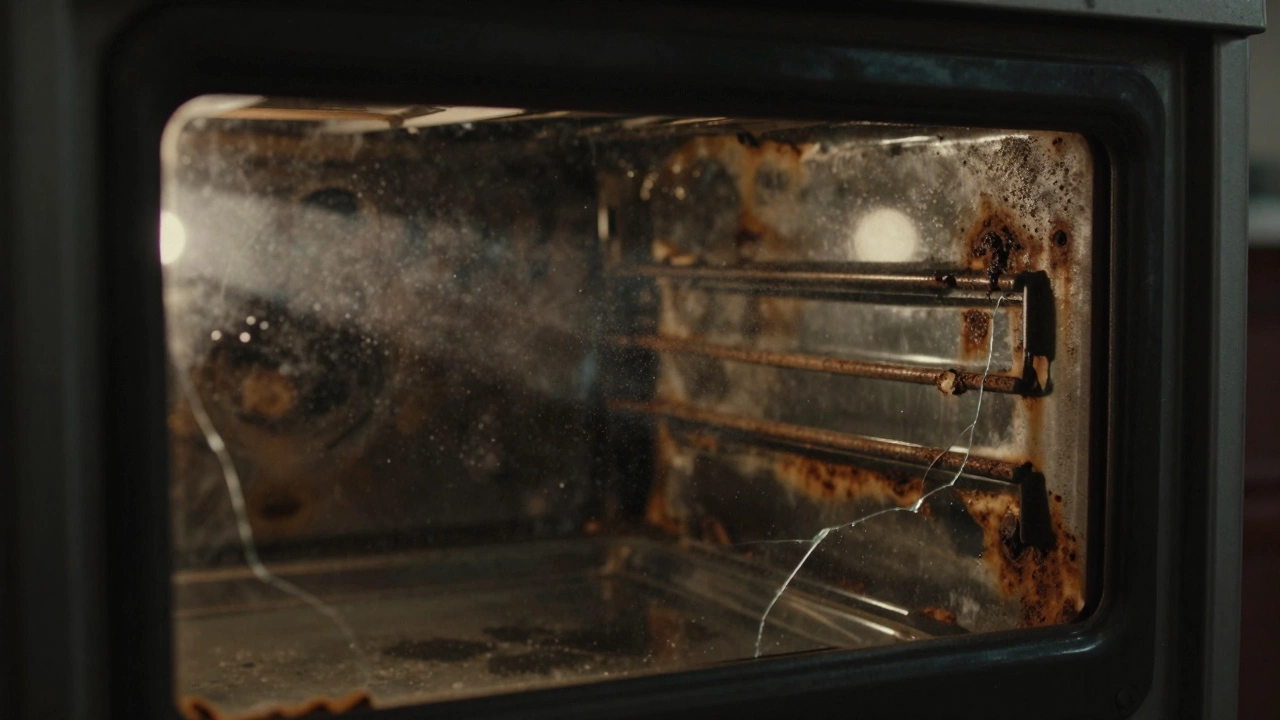
- Rust Inside the Cavity: Surface rust on the racks is normal. Rust inside the actual cooking chamber compromises the structural integrity and insulation. It won’t go away with cleaning.
- Warped Door Glass: If the glass on your oven door is cracked or bulging, it’s a severe burn hazard. While some manufacturers sell replacement glass kits, the labor to disassemble and reseal the door is intensive. Often, the cost approaches that of a new unit.
- Inconsistent Heating: If your food burns on one side and remains raw on the other, your thermostat or element is failing. If this happens repeatedly after repairs, the internal insulation may have degraded, leading to massive energy waste.
- Noisy Operation: Strange banging, popping, or humming noises can indicate a failing fan motor or loose internal components. Fan motors are expensive to replace ($200+ parts alone).
- Outdated Features: Modern ovens offer self-cleaning cycles, convection fans for even baking, and smart connectivity. If your current oven lacks these, replacing it improves your daily cooking experience, not just your bank balance.
DIY vs. Professional Help
Can you fix it yourself? For minor issues, yes. Replacing a heating element or a door seal is often a straightforward task involving a screwdriver and a multimeter. Many YouTube tutorials cover these specific models. However, you must disconnect the power supply first.
For anything involving the control board, wiring harnesses, or gas lines, hire a pro. Incorrect wiring can cause short circuits, fire hazards, or render the oven’s warranty void. In Auckland, ensuring your technician is registered with the relevant council bodies protects you from shoddy workmanship.
Making the Final Decision
Start by getting a written quote for the repair. Ask the technician for their honest opinion on the remaining lifespan of the unit. A good technician will tell you if the oven is “on its last legs.”
Then, check the price of a new oven that fits your needs. Don’t just compare like-for-like; consider an upgrade. If a new mid-range oven costs $1,200 and the repair is $300, and your current oven is eight years old, replace it. You gain efficiency, reliability, and modern features for a marginal increase in upfront cost.
If the repair is under $150 and the oven is less than seven years old, fix it. It’s the most economical path. Just keep a small emergency fund aside for the next inevitable wear-and-tear issue.
How much does it cost to replace an oven in Auckland?
The cost varies widely based on type and installation. A basic freestanding electric oven ranges from $600 to $900 NZD. Built-in models typically cost between $1,000 and $2,500 NZD. Gas ovens fall in the middle. Installation fees add another $150 to $300 depending on whether new electrical outlets or gas lines need modification.
Is it worth repairing a 15-year-old oven?
Generally, no. At 15 years old, your oven is at the upper limit of its lifespan. Parts may be obsolete, and energy efficiency is likely poor. Unless the repair is extremely minor (like a door handle), the investment is better spent on a new, efficient model.
What is the most common oven failure?
The most common failure is the heating element (in electric ovens) or the igniter/gas valve (in gas ovens). These components undergo thermal stress every time the oven is used, causing them to burn out over time. They are also among the cheapest parts to replace.
Does replacing an oven increase home value?
A new oven can improve curb appeal during a sale, especially if the old one looks worn or outdated. However, it rarely increases the market value dollar-for-dollar. Buyers expect functional appliances, but they don't usually pay extra for a new oven unless it's part of a full kitchen renovation.
How long does an oven repair take?
Simple repairs like replacing an element or thermostat usually take 1 to 2 hours. Complex issues involving control boards or gas valves can take 2 to 4 hours. If parts need to be ordered, the wait time can extend to several days or weeks, depending on stock availability in New Zealand.