
Boiler Health & Safety Checker
Select the symptoms you are currently experiencing:
Ready to Check
Select your symptoms above to get an assessment.
It’s the middle of a wet Auckland winter. The rain is hammering against the windows, and you’re relying on your heating system to keep the chill out. Suddenly, you hear a strange noise from the utility room, or maybe you notice a drop in water pressure. Your first instinct might be to ignore it and hope it goes away. But with boilers being complex pressure vessels that burn fuel, ignoring problems can turn a minor fix into a dangerous emergency. Knowing when to panic and when to wait is the difference between a quick service call and a costly replacement-or worse, a safety hazard. Here is exactly what you need to look for to decide if your boiler needs immediate attention.
The Smell of Gas: The Only Time to Panic Immediately
If you smell gas, do not read further. This is not a "wait and see" situation. Natural gas is odorless, but suppliers add a chemical called mercaptan to give it that distinct rotten egg smell so you can detect leaks. If you catch this scent near your gas boiler or anywhere in your home, act fast.
- Turn off the gas supply at the meter immediately.
- Do not use any electrical switches, including light switches or doorbells, as the spark could ignite the gas.
- Open all windows and doors to ventilate the area.
- Get everyone out of the house.
- Call your emergency gas line (in New Zealand, this is often handled by your local gas provider's emergency team) from outside.
This is the only scenario where you should worry instantly. All other issues are important, but they rarely require you to evacuate your home immediately.
Dropping Pressure: The Most Common Annoyance
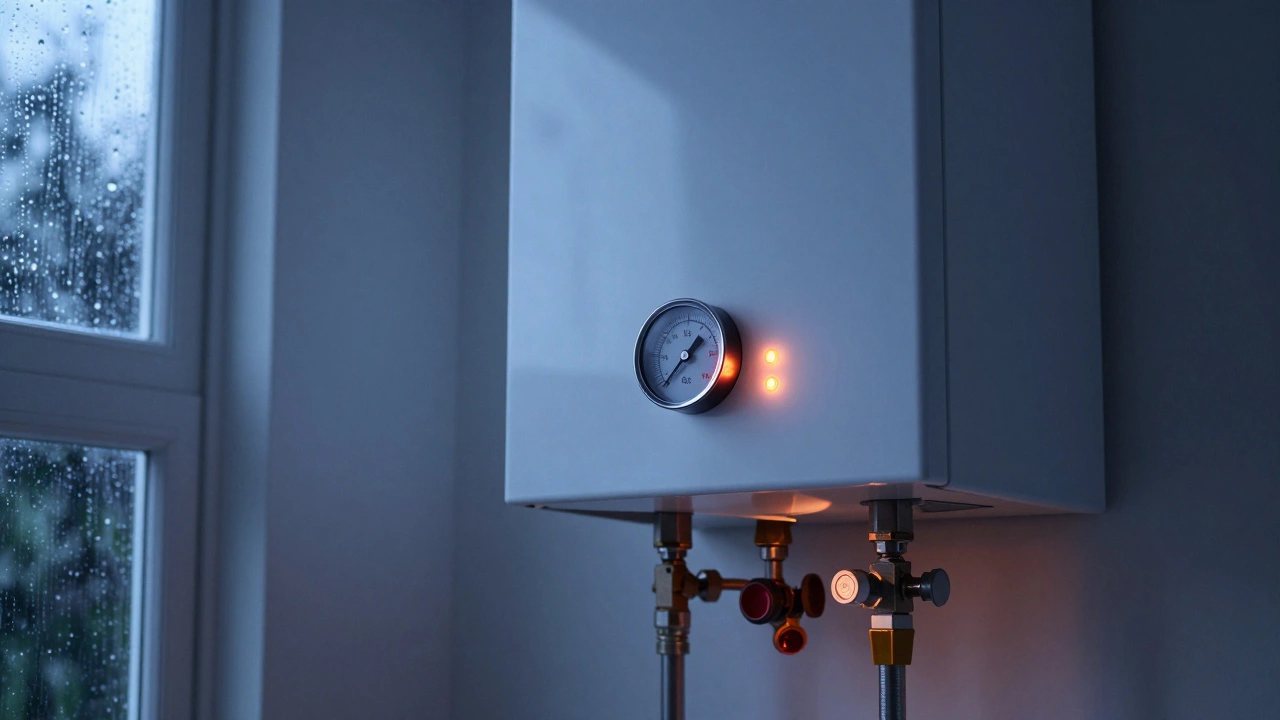
Most modern combi boilers and system boilers have a pressure gauge on the front panel. The ideal operating pressure usually sits between 1 and 1.5 bar when the system is cold. If you notice the needle dropping below 0.5 bar, your boiler will likely lock out and stop producing heat or hot water.
A slight drop over several months is normal due to natural expansion and contraction of the pipes. However, if you find yourself having to top up the pressure every week or two, you have a problem. This indicates a leak somewhere in the system-perhaps a rusty radiator valve, a cracked pipe, or a faulty expansion vessel inside the boiler unit itself.
While a low-pressure lockout isn't an immediate safety threat like a gas leak, it leaves you without heat. In Auckland’s damp climate, running without heat for days can lead to mold growth, which creates its own health hazards. If topping up doesn’t solve the issue within 24 hours, book a repair.
Strange Noises: Kettling, Gurgling, and Whistling
Your boiler should run quietly. If it starts making new sounds, it’s trying to tell you something is wrong. Here are the three most common noises and what they mean:
- Kettling: A rumbling or boiling sound, similar to an old electric kettle. This is caused by limescale buildup on the heat exchanger. Water gets trapped in the scale pockets and boils locally, creating steam bubbles that pop loudly. Over time, this can crack the heat exchanger, which is one of the most expensive parts to replace.
- Gurgling: This usually comes from the radiators, not the boiler itself. It means air is trapped in the system, preventing water from circulating properly. You can often fix this yourself by bleeding the radiators. If the gurgling persists after bleeding, there might be a sludge buildup blocking the flow.
- Whistling or Screeching: High-pitched noises often indicate high water pressure or a blockage in the pump. If the pump is struggling to push water through clogged pipes, it will strain and make noise.
Don’t ignore kettling. While it’s annoying, it’s a precursor to major component failure. Addressing limescale early through a power flush can save you thousands in replacement costs later.
Yellow Flame vs. Blue Flame: The Carbon Monoxide Check
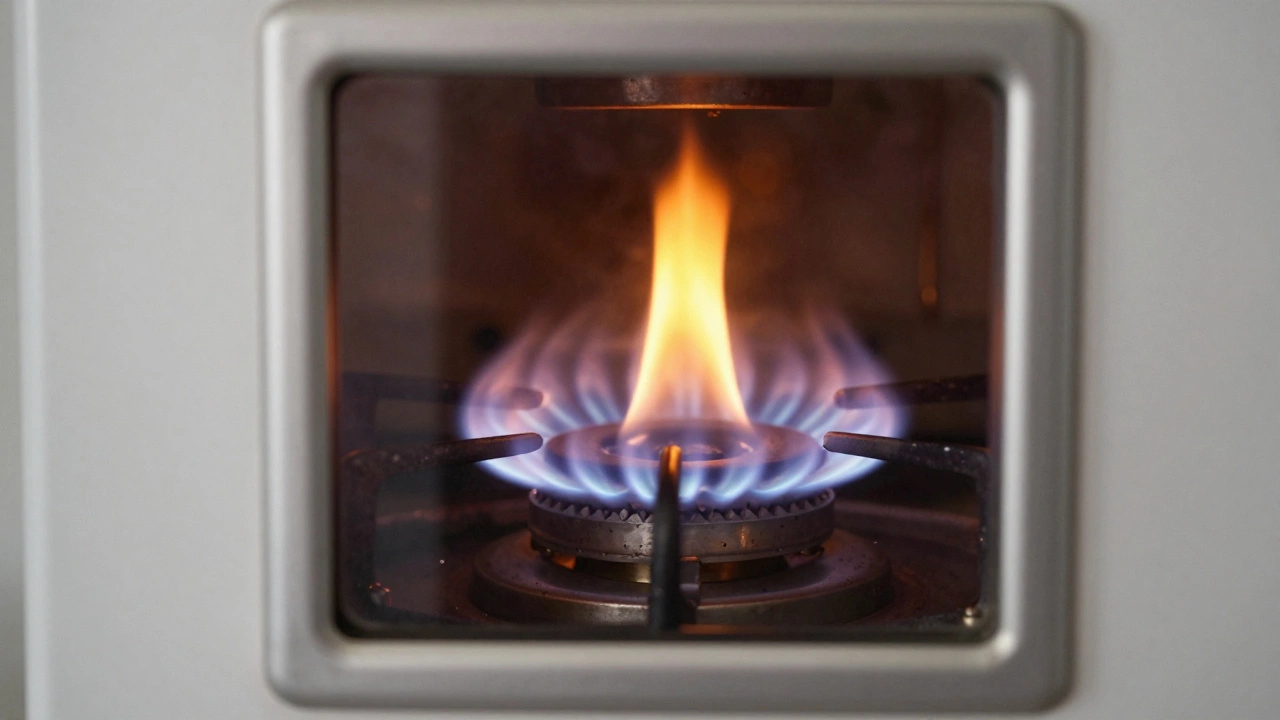
If your boiler has a visible flame window, take a look at the color of the fire. A healthy, efficient combustion produces a sharp blue flame. If you see a lazy, yellow, or orange flicker, your boiler is burning fuel inefficiently.
This incomplete combustion produces carbon monoxide (CO), a colorless, odorless, and deadly gas. Yellow flames can also leave soot deposits around the flue and on nearby walls. Black soot marks on the wall behind your boiler are a serious red flag.
In New Zealand, we rely heavily on gas heating. Ensure your carbon monoxide alarms are installed and tested regularly. If you suspect CO production based on flame color or soot, turn off the boiler and call a qualified engineer immediately. Do not attempt to clean the burner yourself; gas appliances require certified professionals to handle internal components.
Radiators That Stay Cold at the Bottom
You’ve turned up the thermostat, but some radiators remain lukewarm or cold at the bottom while the top is hot. This is a classic sign of sludge buildup. Iron oxide particles from corroding pipes settle at the bottom of the radiators, blocking the hot water from circulating evenly.
If you bleed the radiator and dark, dirty water comes out instead of clear water, you have a sludge problem. This isn’t just about comfort; sludge restricts flow throughout the entire system, forcing the boiler pump to work harder. This increases your energy bills and shortens the lifespan of the pump and heat exchanger.
A professional power flush can remove this debris. Ignoring it leads to uneven heating and eventual boiler failure due to overheating in blocked sections.
Condensation and Leaks Around the Unit
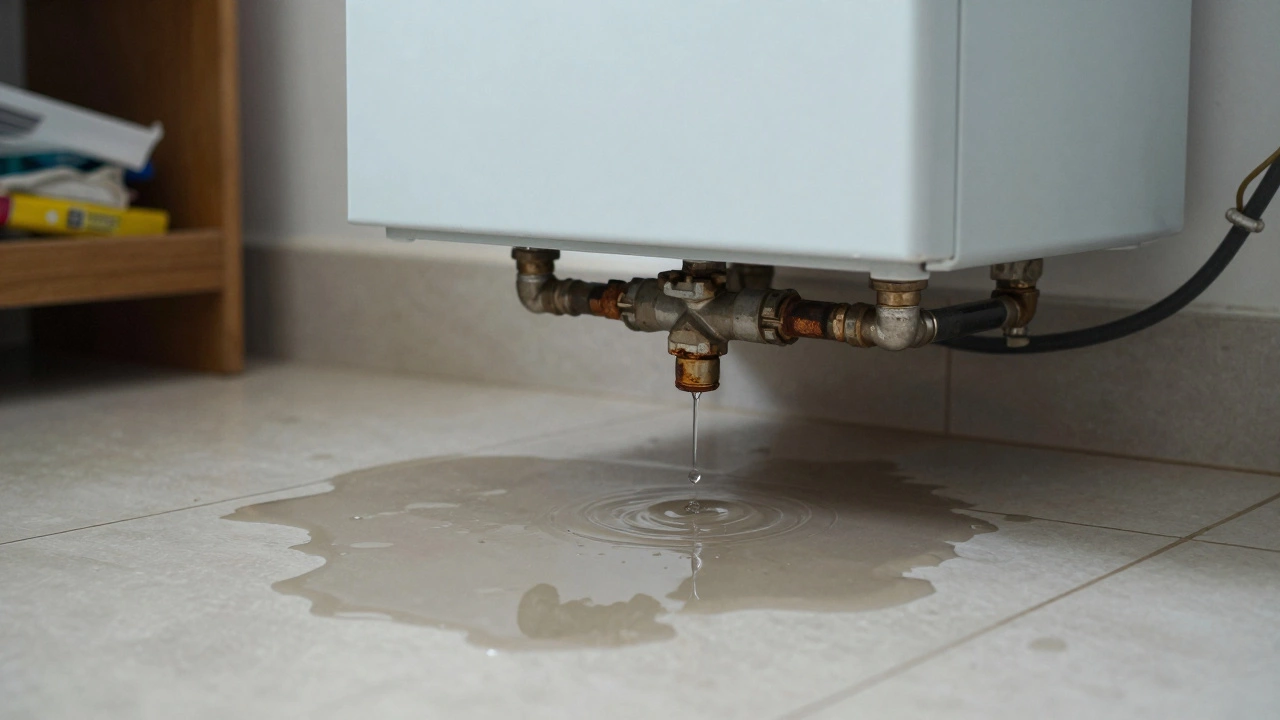
Modern condensing boilers are designed to expel moisture as part of their efficiency process. They have a small condensate drain pipe that runs outside. However, if you see water pooling directly under the boiler unit inside your home, that is not normal operation.
Internal leaks can come from:
- A failed seal on the pressure relief valve.
- Corroded connections on the central heating pipes.
- A cracked heat exchanger.
Water and electricity don’t mix well. Even though boilers are wired safely, standing water near electrical components poses a risk. Additionally, constant moisture can damage the flooring and cabinetry in your utility room. If you see active dripping, turn off the boiler and contact a technician.
Frequent Lockouts and Error Codes
Modern boilers have diagnostic systems that display error codes when something goes wrong. If your boiler keeps shutting down randomly, displaying codes like E1, F28, or flashing lights, it’s experiencing repeated faults.
One-off lockouts can happen due to temporary power surges or minor sensor glitches. But if your boiler locks out more than once a week, it’s fighting a losing battle. Common causes include a failing ignition electrode, a broken fan, or a malfunctioning thermostat communication.
Try resetting the boiler as per the manufacturer’s instructions. If it works for a day and then fails again, stop resetting it. You are masking a deeper issue. Write down the error code and show it to your repair technician; it saves them time diagnosing the problem.
When to Call a Professional in Auckland
In Auckland, humidity and salt air can accelerate corrosion in older units. If your boiler is over 10 years old and showing any of these signs, it may be nearing the end of its life. Regular annual servicing by a GasSafe-equivalent registered engineer (in NZ, look for licensed gasfitters) is crucial.
Don’t wait for total failure. Booking a repair during a minor issue phase is cheaper and safer. If you experience multiple symptoms from this list simultaneously-like low pressure plus strange noises-you need an urgent assessment. Your safety and warmth depend on it.
Is it safe to reset my boiler if it keeps locking out?
You can reset it once to rule out a glitch. If it locks out again within 24 hours, stop resetting it. Repeated resets mask underlying faults like gas supply issues or component failures, potentially leading to unsafe conditions or further damage.
How often should I service my boiler in New Zealand?
Annual servicing is recommended. In Auckland’s coastal environment, salt air can cause faster corrosion, so sticking strictly to yearly checks helps maintain efficiency and safety standards required by local regulations.
What does a hissing sound from my boiler mean?
A hissing sound often indicates a leak in the pressure relief valve or a blockage in the condensate pipe. It can also signal high pressure. Turn off the boiler and check for visible leaks. If the pressure is above 3 bar, release some pressure via a radiator valve, but call a pro if the hissing continues.
Can I fix a boiler leak myself?
No. Boilers operate under high pressure and involve gas lines. Attempting DIY repairs on leaks can lead to scalding injuries, gas exposure, or voiding your warranty. Always hire a licensed gasfitter for internal repairs.
Why is my boiler making a banging noise?
Banging is usually caused by 'water hammer'-a sudden change in water pressure direction-or severe sludge buildup causing turbulent flow. Bleeding radiators might help, but persistent banging requires a professional power flush to prevent pipe damage.