
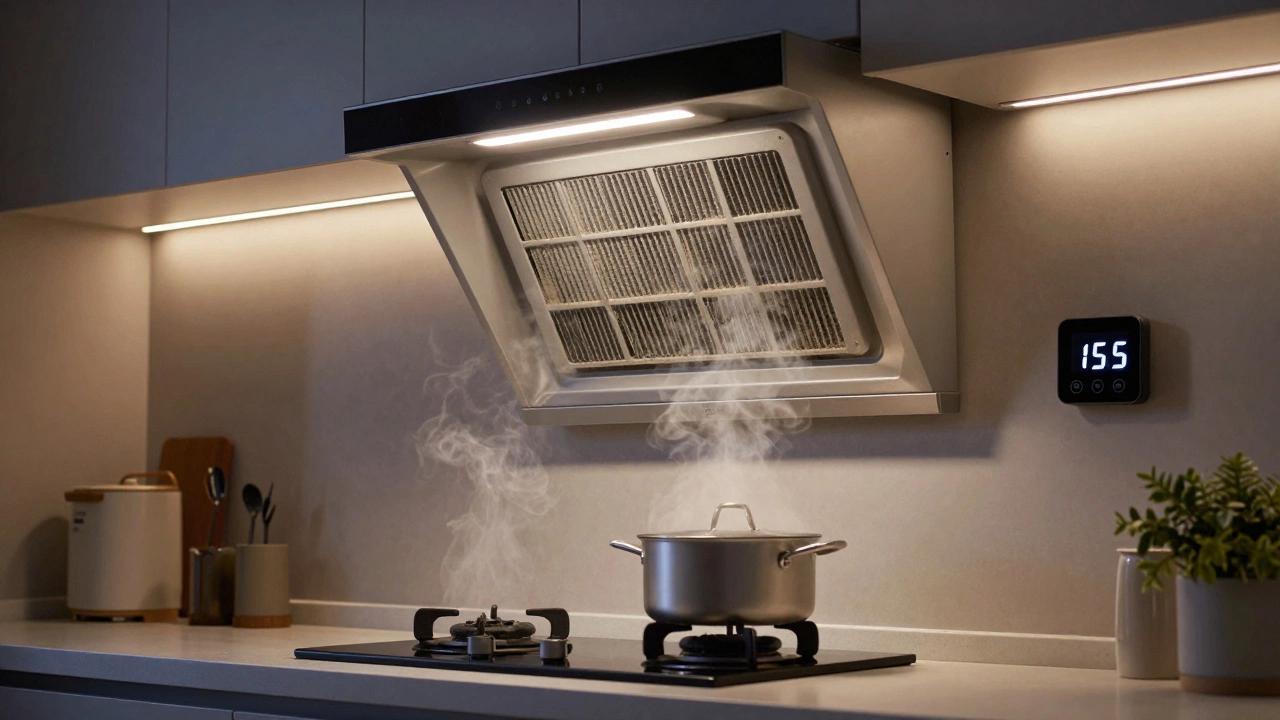
Extractor Fan Energy Calculator
Calculate Your Extractor Fan Costs
Fan Lifespan Impact
Every hour of unnecessary use shortens your fan's lifespan. Most fans last 8-12 years with normal use.
Warning: Running your fan extra hours daily may reduce its lifespan by years.
Leaving your extractor fan on for hours after cooking isn’t just a habit-it’s a common one. You’re done frying onions, but the fan keeps humming. Maybe you think it’s helping clear the air. Maybe you’re just too lazy to turn it off. But is it safe? Is it smart? And could it be costing you money-or even damaging the fan?
Why People Leave Extractor Fans On
Most people leave their extractor fans running because they believe it’s the only way to get rid of smells, steam, and grease. And honestly, they’re not wrong. A good extractor fan removes moisture from the air, which helps prevent mold on walls and ceilings. In Auckland’s damp climate, that’s not just about comfort-it’s about protecting your home from structural damage.
But here’s the catch: you don’t need to run it for hours. Most of the moisture and odors are gone within 10 to 15 minutes after you finish cooking. Running it longer doesn’t make your kitchen cleaner-it just uses more electricity and wears out the motor faster.
How Long Should You Actually Run It?
Manufacturers and building codes in New Zealand recommend running your extractor fan for 10 to 20 minutes after cooking. That’s enough time to clear steam from the air and prevent condensation buildup. If you’ve been deep-frying or boiling a big pot of soup, 20 minutes is fine. If you just boiled pasta or toasted bread, 10 minutes is plenty.
There’s no benefit to running it for an hour. The air in your kitchen isn’t magically cleaner after 30 minutes-it’s just the fan spinning, doing nothing useful. And if your fan is old or poorly installed, running it too long can cause overheating, especially if the ducting is blocked or the filter is clogged.
Energy Use: What It Costs to Keep It Running
Most standard extractor fans use between 15 and 60 watts. That doesn’t sound like much. But let’s do the math.
If your fan uses 40 watts and you leave it on for 8 extra hours a day (because you forget to turn it off), that’s 320 watt-hours per day. Over a month, that’s 9.6 kWh. At New Zealand’s average electricity rate of 30 cents per kWh, that’s $2.88 a month. Sounds small? Now multiply that by 12 months: $34.56 a year.
That’s not the real cost, though. The bigger cost is wear and tear. Every hour your fan runs, the motor spins. Bearings wear down. Brushes in the motor degrade. Dust builds up. Eventually, the fan starts making noise, spins slower, or stops working altogether. Replacing a fan motor costs $150-$300. Fixing ducting issues? That’s more. Running it unnecessarily shortens its life by years.
Can Leaving It On Damage the Fan?
Yes. Especially if it’s already struggling.
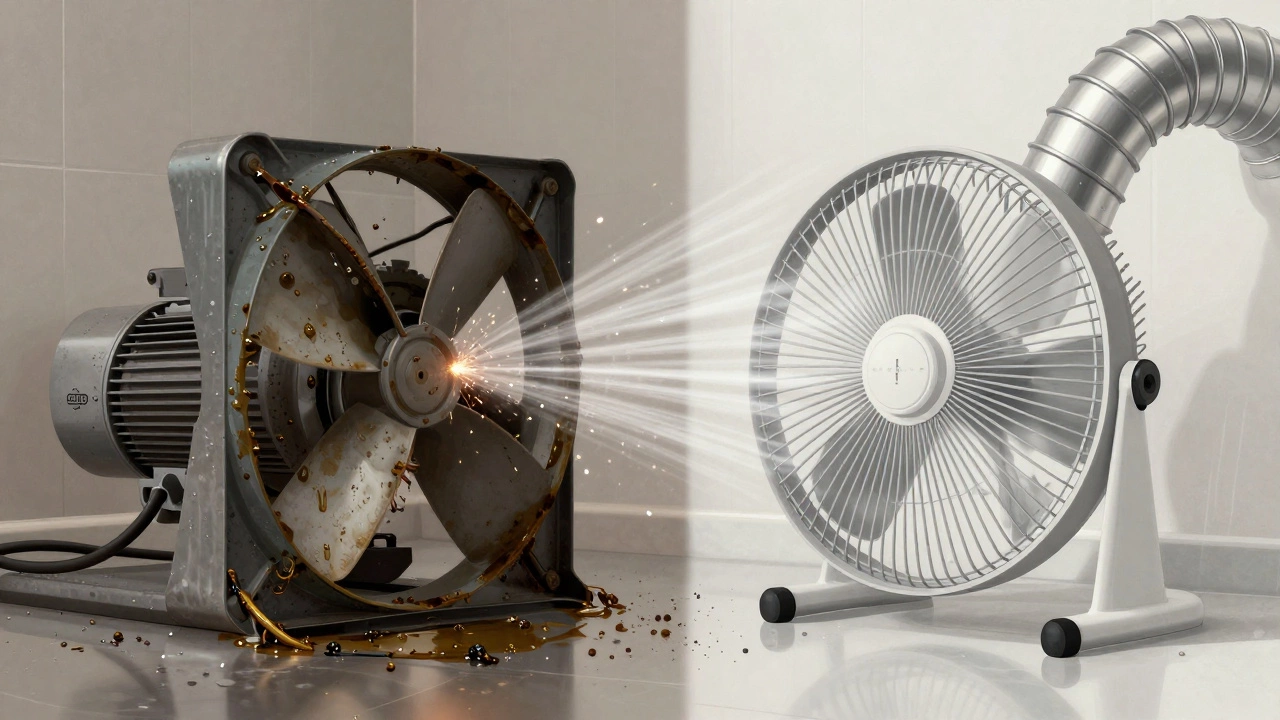
Extractor fans aren’t designed for continuous operation. Most are rated for intermittent use-maybe 1-2 hours per day max. If you’re running it 6-8 hours a day, you’re pushing it far beyond its design limits. In older homes, ducts are often too narrow, bent, or filled with grease. That increases resistance. The motor has to work harder. It gets hotter. Over time, that heat breaks down the insulation on the windings. That’s how motors burn out.
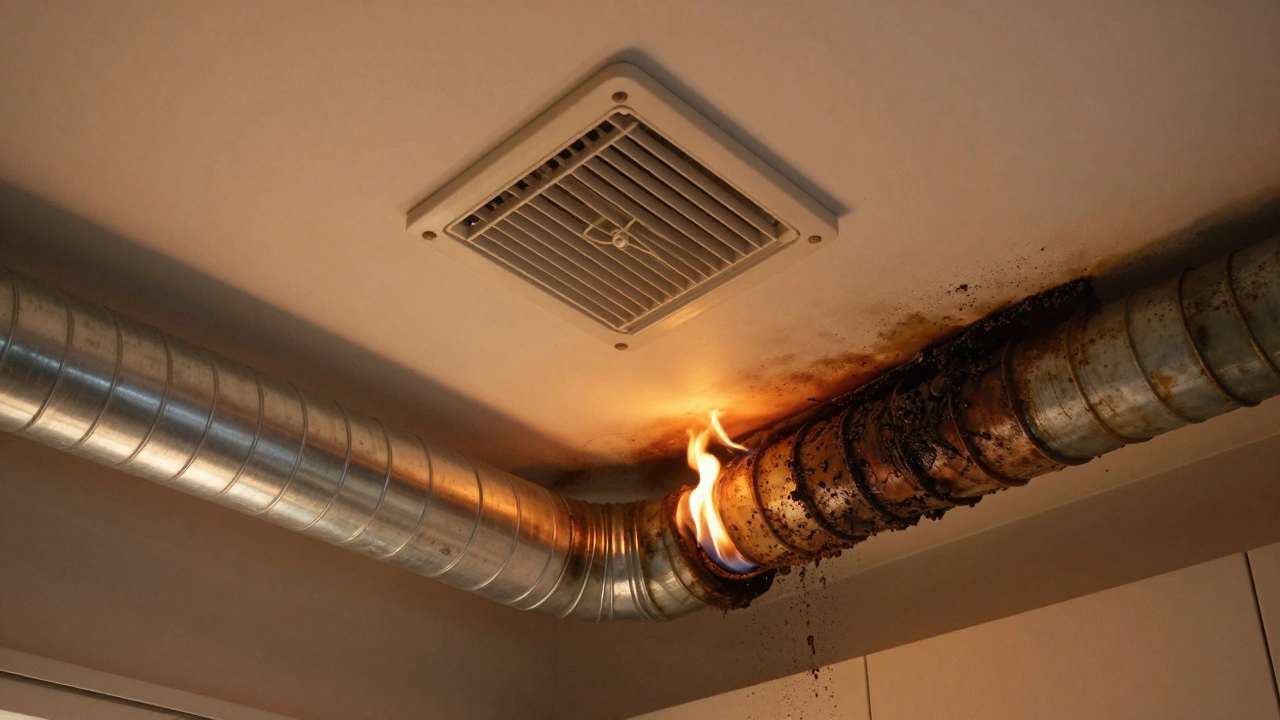
And if your fan has a grease filter? If it’s dirty and you keep running the fan, the grease builds up inside the housing. That’s a fire hazard. In 2023, Fire and Emergency New Zealand reported 17 kitchen fires linked to poorly maintained extractor fans. All of them involved grease buildup and prolonged operation.
When It’s Actually OK to Leave It On
There are exceptions. If you’re doing heavy-duty cooking-like smoking meat, roasting multiple trays of vegetables, or using a wok for hours-then leaving the fan on longer makes sense. But even then, 30-45 minutes is the max. After that, you’re just wasting energy.
Another case: if you have a high-end, commercial-grade extractor fan with a timer and auto-shutoff, it’s designed for longer runs. These fans often have better motors, larger ducts, and thermal protection. But if you’re using a standard $150 kitchen fan from a hardware store? It’s not built for that.
Signs Your Extractor Fan Is Wearing Out
If you’ve been leaving it on too long, here’s what to watch for:
- It’s louder than it used to be-grinding, rattling, or buzzing
- It doesn’t pull air as strongly-tissue test: hold a tissue near the grille. If it doesn’t stick firmly, airflow is weak
- Grease is leaking from the sides or dripping from the filter
- The fan turns on but doesn’t spin properly
- You smell burning plastic or overheating
If you see any of these, stop using the fan. Don’t wait for it to die. Get it checked. A simple cleaning or motor replacement can extend its life by years. Ignoring it might lead to a full replacement-and possibly a fire.
How to Use Your Extractor Fan Right
Here’s how to make your extractor fan last longer and work better:
- Turn it on before you start cooking. This clears the air before steam builds up.
- Run it for 10-20 minutes after you finish. No more, no less.
- Clean the grease filter every 2 weeks. Soak it in hot soapy water. Replace it if it’s cracked or warped.
- Check the ducting every 6 months. Make sure it’s not crushed, kinked, or full of grease. If it’s flexible plastic ducting, replace it with rigid metal.
- Don’t block the outlet. If it vents to the roof, make sure the cap isn’t covered in leaves or bird nests.
Install a timer switch if you keep forgetting. They cost under $40 at hardware stores and automatically shut off the fan after 15 or 30 minutes. It’s the easiest fix for lazy habits.
What Happens If You Don’t Use It at All?
Leaving it off is just as bad as leaving it on too long. Without ventilation, moisture builds up. In Auckland’s humid weather, that means:
- Mold growing on bathroom walls and ceiling corners
- Peeling paint from steam damage
- Musty smells that won’t go away
- Increased risk of asthma and allergies
One study by the University of Auckland found that homes without proper kitchen ventilation had 3 times more airborne mold spores than homes with regularly used extractor fans. The fan isn’t optional. It’s part of your home’s health system.
Final Answer: Is It OK to Leave It On?
No, it’s not OK to leave your extractor fan on for hours. Not because it’s dangerous in the short term-but because it’s wasteful, hard on the motor, and increases your risk of failure. You don’t need to run it all day. You don’t need to run it all night. Just run it for 10 to 20 minutes after cooking, clean the filter regularly, and check the ducting once a year.
If you’re already noticing problems-noise, weak airflow, grease buildup-it’s not too late. A quick service can save you hundreds. And if you’ve been leaving it on for years? You’re not saving time. You’re just buying a new fan sooner than you should.
Turn it on. Let it do its job. Turn it off. That’s all it takes.
Can I leave my extractor fan on overnight?
No. There’s no benefit to running it overnight. It won’t remove more moisture or smell after the first 20 minutes. It will just wear out the motor faster and use unnecessary electricity. If you’re worried about lingering smells, open a window instead.
Is it safe to run an extractor fan for hours?
It’s not safe if the fan is old, clogged, or poorly installed. Continuous operation causes overheating, especially when grease builds up in the motor or ducting. This increases fire risk. Most residential fans aren’t designed for more than 2 hours of total use per day.
How often should I clean my extractor fan filter?
Clean the grease filter every 2 weeks if you cook daily. If you cook less often, clean it once a month. Use hot water and dish soap. Rinse well and dry completely before putting it back. A dirty filter reduces airflow by up to 60% and forces the motor to work harder.
Why is my extractor fan so noisy all of a sudden?
A sudden increase in noise usually means the motor is wearing out or the bearings are dry. It could also be grease buildup inside the housing or a loose fan blade. If the noise started after you left the fan on for days, that’s likely the cause. Turn it off and get it inspected before it fails completely.
Should I replace my extractor fan if it’s 10 years old?
Yes, if it’s still the original unit. Most extractor fans last 8-12 years with normal use. If it’s been running nonstop or you’ve never cleaned the ducting, it’s probably worn out. Modern fans are quieter, more energy-efficient, and have better filters. Replacing it now saves you from a breakdown during a big meal.