Plug In Electric Oven: Common Problems, Fixes, and When to Call a Pro
When you plug in electric oven, a household appliance that uses electricity to generate heat for cooking. It’s not just a box with heating coils—it’s a system made of elements, thermostats, sensors, and wiring that all have to work together. If it doesn’t heat up, you might assume it’s broken beyond repair. But most of the time, it’s just one small part that’s failed—and you can often fix it without spending hundreds.
The heating element, the metal coil inside the oven that glows red when powered. It’s the most common failure point in electric ovens. If it’s cracked, burnt, or doesn’t glow at all, it’s dead. Easy to spot. Even easier to replace. Then there’s the oven thermostat, the control that tells the oven when to turn the heat on and off. If it’s off by even 20 degrees, your cookies burn or your roast stays raw. And don’t forget the power supply, the circuit breaker or outlet that feeds electricity to the oven. A tripped breaker or a loose plug can look like a broken oven. People waste money replacing whole units when all they needed was a reset or a new element.
Most plug-in electric ovens last 10 to 15 years, but they don’t die suddenly. They give you signs: slow preheating, uneven baking, or no heat at all. If your oven turns on but doesn’t get hot, check the element first. If the display shows error codes, look them up—most are simple fixes. If you hear a click but nothing heats, the thermostat or relay might be bad. These aren’t mysteries. They’re patterns. And the posts below show you exactly how to spot them, test them, and fix them—without calling a pro unless you absolutely have to.
Below, you’ll find real-world guides on diagnosing oven problems, checking elements, resetting controls, and deciding whether to repair or replace. No fluff. No theory. Just what actually works when your oven stops heating up.
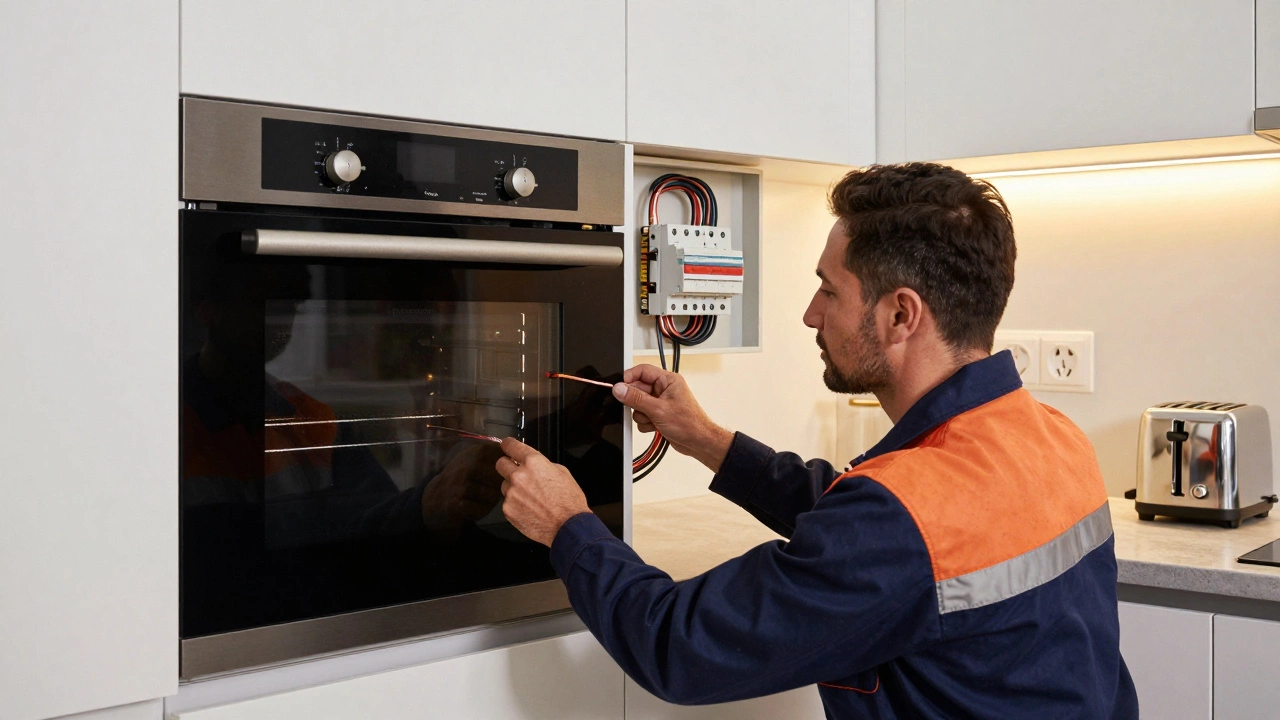
You can't just plug in a new electric oven like a toaster. It needs a dedicated 32-amp circuit, proper wiring, and a licensed electrician. Skipping this step risks fire, shock, and insurance claims being denied.